I listened to an old episode of the program “Hayat wa Nas” on Monte Carlo Doualiya Radio, which addressed the topic of adoption in the Arab world. Despite the importance of the discussion, I was surprised by what seemed to be an excessive push to grant Christians special social privileges—or as if the episode aimed [...]
I listened to an old episode of the program “Hayat wa Nas” on Monte Carlo Doualiya Radio, which addressed the topic of adoption in the Arab world. Despite the importance of the discussion, I was surprised by what seemed to be an excessive push to grant Christians special social privileges—or as if the episode aimed to prove there is some flaw or injustice in Islamic jurisprudence because of its prohibition of adoption.
Although I do not oppose the right of any religious group to organize its affairs in accordance with its beliefs, the presentation of the episode was emotionally charged and one-sided. It focused heavily on highlighting the Christian experience as if it offers the ideal model, while ignoring the fact that Islam has not neglected this issue. On the contrary, it offered a precise and humane solution through its legislation and encouragement of kafala (guardianship), which preserves the child’s dignity, lineage, and identity.
Islam came to correct pre-Islamic deviations in adoption, where a child was attributed to someone other than their biological father—leading to illegitimate legal implications. Nevertheless, Islam did not prohibit caring for orphans. In fact, it elevated it to one of the greatest virtues, as the Prophet ﷺ said in a hadith narrated by al-Tirmidhi: “I and the one who sponsors an orphan will be in Paradise like these two,” and he gestured with his two fingers.
The episode, in general, was not a balanced dialogue but rather an overtly directed, proselytizing presentation. It portrayed Islamic law as a harsh barrier to compassion, which urgently calls for a more balanced critical review.
From the outset, the episode took a clear stance by hosting Dr. Naguib Gabriel, advisor to the Egyptian Church and President of the Egyptian Union for Human Rights. He passionately defended the necessity of enacting a legal framework allowing Christians in Egypt to adopt children of unknown parentage.
What was striking in his remarks, however, was that he did not stop at the legal demand. He introduced strange claims, such as: “Every foundling in Egypt is registered as a Muslim,” even if discovered at the door of a church or if the child is clearly of Christian background! But how can a child who is still an infant—unknown parentage—be classified religiously? And how can a majority-Muslim society allow a newborn, born upon the natural disposition (fitrah), to be assigned to another religion when their parents have relinquished all rights?
This reflects an odd and desperate appeal to increase the number of Christians by any means—even through public demands in media cloaked in flawed logic that belittles state legislation with fabricated humanitarian claims.
Even more troubling was how the episode casually passed over the input of Dr. Amina Nussair, former dean at Al-Azhar University. Her contribution was limited to a recorded voice-over report, without the chance to engage in dialogue or respond—unlike the other guests.
And yet, her statement was decisive. She clearly outlined the dangers of adoption from an Islamic legal standpoint and emphasized that Islam eradicated the issue at its roots by prohibiting adoption while offering kafala as a precise and humane alternative. However, her viewpoint was presented as nothing more than a marginal footnote in an episode dominated by a pro-church narrative.
Even Dr. Jassim Al-Khawaja, the Kuwaiti psychologist, pointed out that the State of Kuwait has implemented practical solutions for children of unknown parentage, as it grants them Kuwaiti nationality directly and provides them with a monthly stipend—even if they are placed in kafala (guardianship) by a family.
Despite this progressive model, the episode continued to diminish the role of Islamic legislation, and instead of expanding on this successful experience, the questions directed at Dr. Al-Khawaja focused on the psychological disorders that kafala children might face. This seemed to be an indirect attempt to reinforce a negative image of the Islamic alternative to legal adoption.
What was truly surprising came from Mohammad Barakat, Director of Social Welfare Institutions – Islamic Orphanage House in Lebanon, who offered a strange explanation for the Islamic prohibition of adoption. He claimed that it was due to Roman practices in which some parents sold their children—suggesting, erroneously, that Islamic law came merely as a reaction to that historical context.
This interpretation completely ignores the core religious foundation, and is a misleading and deliberate distortion of the clear Qur’anic text, which ties the prohibition of adoption directly to the preservation of lineage and the prevention of identity confusion. As stated in Surah Al-Ahzab: “…And He has not made your adopted sons your [true] sons. That is [merely] your saying by your mouths, but Allah says the truth, and He guides to the [right] way. Call them by [the names of] their fathers; it is more just in the sight of Allah…” (Surah Al-Ahzab: 4–5)
It comes as no surprise that Monte Carlo Doualiya, ultimately, serves the French agenda hostile to Islam—a stance that can be better understood in light of a statement by Professor Olivier Le Cour Grandmaison, a French political science professor at the University of Évry-Val d’Essonne. In an interview with Anadolu Agency, he linked France’s hostility toward Islam to its colonial past, stressing that its current stance cannot be understood without considering this historical context.
Grandmaison further noted that French media devotes as much space to attacking Islam as it does to covering global issues like the COVID-19 pandemic, and that this antagonism is not just a reaction to recent events—it is a continuation of a long history of colonialism and discrimination, highlighting the urgent need for a deep policy review to ensure justice and equality for all citizens.
Another example of France using its media as a tool to incite Islamic societies against their own religious foundations, under the guise of “children’s rights” and “social justice,” appeared in a France 24 episode titled “Adoption Between the Permissible and the Forbidden.”
The episode cannot be described as anything other than another example of what seems to be a soft campaign by official French media to undermine Islam—or at the very least, to portray it as a faith that restricts compassion and justice, particularly in deeply humanitarian issues like adoption and kafala.
Just as in the Monte Carlo program “Hayat wa Nas”, we once again see the same strategy employed by the host—feigning neutrality in selecting guests, framing questions, and presenting the issue—particularly in the case of Baby Shenouda, who was found inside a church, adopted by a Christian family, and later taken from them and re-registered as a Muslim. This sparked widespread controversy over identity.
The narrative fueled a bias toward the Church against Islamic rulings, portraying Islam as an obstacle to the child’s right to safety and belonging, and promoting Christian adoption as the solution.
The issue is that the episode did not stop at legal or social framing—it went further to directly distort Islamic law, either by denying its textual foundations or calling for reinterpretations that strip it of its original meaning.
Thus, it appears that France, through its media, not only restricts Islamic freedoms within its own borders but extends its influence to undermine Islamic legislation itself within Muslim societies via its Arabic-language channels.
I am not surprised to see the distortion of Islamic child care models and the kafala system on Western media platforms. However, I am deeply disturbed when such distortion comes from among us. In a shocking article published on the Moroccan website Hespress, a so-called specialist proposed abolishing the Islamic kafala system, claiming it is insufficient and fosters discrimination.
This position is not only superficial and unjust, but also reflects a deep ignorance of Islamic jurisprudence and a deliberate attempt to distort its intent. Kafala in Islam is not a simple administrative procedure—it is a profound moral and legal value that serves the best interest of the child while preserving lineage and dignity, without violating Sharia rulings.
What is particularly concerning in the article is the complete disregard for the psychological, legal, and social consequences of full adoption, focusing only on kafala as an obstacle to belonging—forgetting that Islam does not forbid care and affection, but rather honors those who take on this responsibility.
Such arguments do not represent constructive criticism but rather a form of cultural alienation and uncritical adoption of foreign models, with no regard for identity or Islamic objectives.
Although adoption is legally and religiously prohibited in Morocco, many Moroccan families still tend to favor it over kafala, driven by complex emotional, social, and cultural motivations.
This preference does not necessarily reflect ignorance of religion or law, but rather a deep emotional need among couples who are unable to have children, viewing adoption as a complete emotional and legal substitute for parenthood—since the child can be named after them and formally considered part of their lineage, which kafala does not allow. This leaves them with a persistent sense of relational incompleteness and emotional disconnect.
This desire is often intensified by harsh social experiences. The kafil child is frequently viewed as an outsider or a perpetual guest, and official documents that distinguish between the biological child and the kafil child cast a shadow on the latter’s sense of identity and belonging.
Procedurally, kafala in Morocco goes through complex legal pathways that deter many families from pursuing it—leading some to seek unofficial adoption as a way to avoid bureaucratic hurdles.
Moreover, some people believe that adoption grants the child full legal security and clarity in identity and rights, especially in terms of inheritance and family name—benefits they feel are not clearly guaranteed by the kafala system.
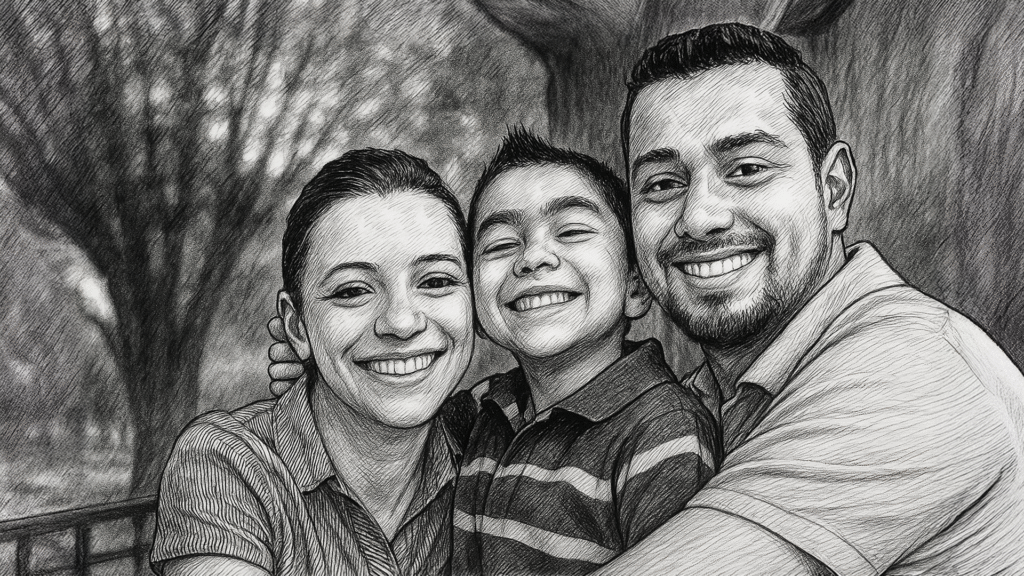
On the other hand, the “Hayat wa Nas” episode highlighted the psychological impact on children of unknown parentage. According to Dr. Al-Khawaja, these children often experience a deep psychological crisis when they later discover they were adopted. It begins with painful existential questions: Who am I? Who is my mother? Who is my father? These are not fleeting thoughts—they take root and create a sense of disconnection, a painful detachment from any feeling of human belonging. Over time, the child begins to feel worthless, losing a vital sense of inner safety and identity.
This emotional state can develop into chronic depression, especially when the child becomes convinced that their biological parents rejected them. This breeds a deep-seated belief that they are unworthy of love or care, which undermines their self-esteem and distorts their self-image.
In response to this emotional void, some children may turn to escapist behaviors, such as addiction, homelessness, or unstable relationships—seeking refuge from feelings of abandonment and blame for a guilt they never committed.
Thus, Dr. Al-Khawaja stressed the necessity for families who foster or adopt these children to be psychologically qualified, and to undergo thorough evaluations, so as not to transfer their own unresolved emotional struggles onto the very children they are supposed to protect.
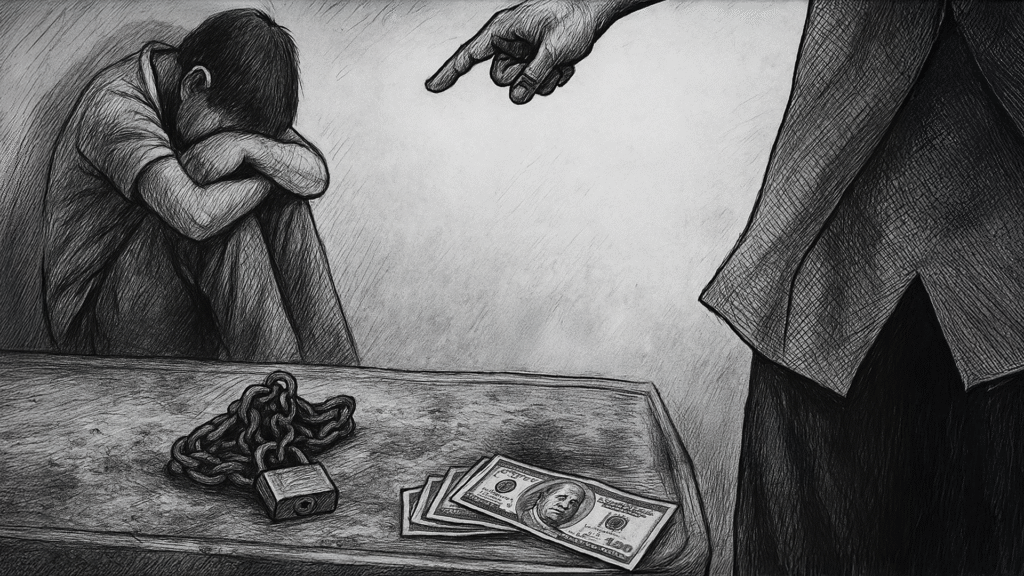
The episode did not stop at the religious and legal debates surrounding adoption—it went further to expose a dark and dangerous aspect tied to human trafficking networks, where the absence of clear legislation or weak legal oversight is exploited to smuggle children under the guise of humanitarian adoption.
One of the guests, lawyer Wafiqa Mansour, revealed that what appears to be a decline in the number of children in care homes is not necessarily a positive sign. It may simply indicate that these children have left protective institutions only to end up in black markets, sold to foreign entities who exploit them—whether through prostitution networks, organ trafficking, or illegal adoption for experimental or military purposes.
The episode also warned of the rise of “online adoption,” a digital black market where a child’s fate is determined by the highest bidder—regardless of qualifications or intentions. In such a context, adoption, when stripped of regulations, becomes a modern tool for concealed human trafficking.
And just as the internet has transformed global commerce and communication, it has also exposed a dark side that would never have emerged without such unregulated openness. As writer Fahd ‘Amer Al-Ahmadi states in Al-Riyadh newspaper: “Child trading and surrogate motherhood now thrive on the dark web… where, with a single click, one can choose a child from around the world as if selecting a product—with price tags and bidding deadlines displayed alongside.”
What once occurred in the shadows has become a digital black market, run behind glowing screens and credit card payments, and wrapped in false humanitarian slogans like “the right to adopt” or “helping the poor.”
Reducing a child to a commodity and motherhood to a contract is not only a violation of morality and religion, but an inversion of ethical values—calling for a firm stance against all that is marketed as compassion when it is, in fact, a polished front for human trafficking.
In contrast, Islamic kafala remains a compassionate and legally structured model, one that preserves the child’s dignity and rights without compromising religious principles. Any attempt to distort this system, or pressure societies to replace it with foreign models, is nothing short of an identity crisis and a disregard for the essence of Islamic justice. The solution is not in dismantling the foundations, but in activating them within clear legal frameworks that protect and honor the child.
Just as there’s no difference between a surgeon’s scalpel and a killer’s knife—except in the rules that govern their use—intentions alone are meaningless in the eyes of a society blinded by suspicion and doubt. That’s why we need neutral standards that neither bend nor falter.
Just as there’s no difference between a surgeon’s scalpel and a killer’s knife—except in the rules that govern their use—intentions alone are meaningless in the eyes of a society blinded by suspicion and doubt. That’s why we need neutral standards that neither bend nor falter.