Cryptocurrencies represent a form of digital money that relies on cryptography to secure transactions and control the creation of new units. They operate through decentralized computer networks without the control of a single central authority such as banks or governments, and are used as a medium of exchange, a store of value, or a unit [...]
Cryptocurrencies represent a form of digital money that relies on cryptography to secure transactions and control the creation of new units. They operate through decentralized computer networks without the control of a single central authority such as banks or governments, and are used as a medium of exchange, a store of value, or a unit of account in various digital environments.
Bitcoin emerged as the first cryptocurrency in 2009, and since then a full ecosystem of digital assets has developed around blockchain technology, which records all transactions in a distributed and secure manner, making manipulation of records or transaction forgery extremely difficult. Bitcoin and other cryptocurrencies have become part of broader economic and legal debates about the future of money and how it should be regulated and protected, sparking wide controversy between advocates of decentralization and critics concerned about financial and regulatory risks.
The actual beginning of modern cryptocurrency history dates back to 2008, when an individual or group under the name Satoshi Nakamoto published a paper titled Bitcoin: A Peer-to-Peer Electronic Cash System, proposing a digital monetary system that operates without a central intermediary.
In 2009, the Bitcoin network was officially launched, marking the starting point of this new world of digital assets. Bitcoin soon became a key reference in the technological and economic development of the cryptocurrency space.
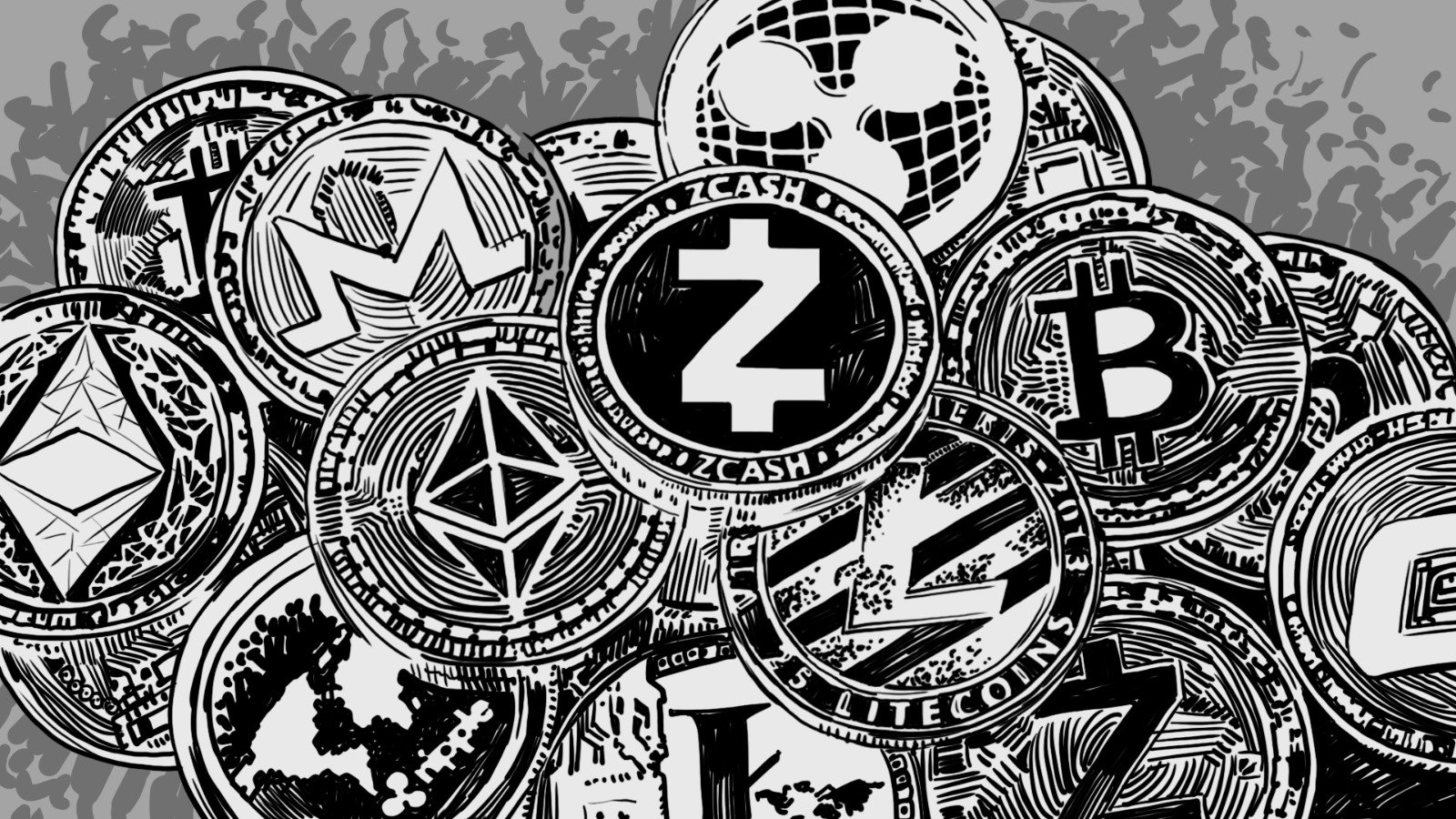
In the years following Bitcoin’s launch, other cryptocurrencies emerged, such as Litecoin, Ripple, and Namecoin, each attempting to modify certain features including transaction speed, privacy, or use cases. This expansion contributed to the growth of the cryptocurrency ecosystem and stimulated innovation within it.
Another major milestone came in 2015 with the launch of the Ethereum network, which introduced the concept of smart contracts capable of automated execution. This development expanded the role of cryptocurrencies from a simple means of payment to platforms capable of running decentralized applications and non-traditional financial systems, triggering a new wave of financial innovation.
Despite the strict digital currency frameworks and cryptographic technologies on which cryptocurrencies are built, practical experience has revealed the emergence of various crimes in this field. These have included the collapse of major platforms, fraudulent projects, mismanagement, money laundering, and regulatory violations.
In an article by Ryan Browne and Mackenzie Sigalos published on CNBC titled Mt. Gox Exchange Begins Repaying Creditors in Bitcoin After a Decade-Long Collapse—What Does It Mean? , the authors point to key milestones in the history of cryptocurrencies, most notably the collapse of the Mt. Gox Bitcoin exchange, which was based in Tokyo and once processed more than 70% of all Bitcoin transactions worldwide before abruptly halting operations in 2014 and freezing customer accounts.
The company later announced that approximately 950,000 bitcoins—now worth tens of billions of dollars—had disappeared. According to the company, the loss was due to a technical vulnerability exploited by hackers over several years, amid accusations of mismanagement and weak security practices.
In the wake of this shock, the platform turned to the Japanese courts and filed for bankruptcy. Over time, authorities managed to recover only 140,000 bitcoins, which were placed under legal custody as part of procedures to restore creditors’ rights.
With Bitcoin’s price rising from around $600 at the time of the collapse in 2014 to over $85,000 today, many affected creditors who waited more than a decade are now set to recover their funds—and potentially realize unexpected gains.
This sudden collapse highlighted serious risks related to security and management in emerging digital systems and had a significant impact on financial awareness regarding this market.
As outlined in an official announcement issued on July 5, 2024, by Mt. Gox regarding its civil rehabilitation proceedings following the collapse—released by Nobuaki Kobayashi, the rehabilitation trustee and legal authority responsible for managing creditor assets and implementing the court-approved repayment plan—the rehabilitation process has effectively begun with partial repayments to some creditors in Bitcoin and Bitcoin Cash, carried out through approved cryptocurrency exchanges in accordance with the court-approved plan.
The document also clarifies that the remaining repayments will be completed at a later stage, after fulfilling several requirements, most notably verifying registered creditor accounts, concluding agency receipt agreements with approved exchanges, completing technical and procedural coordination with those platforms, and ensuring that transfers can be executed safely and securely.
The announcement concludes by urging eligible creditors to remain patient until the necessary procedures for the remaining payments are completed.
Over the years, the cryptocurrency market has seen significant growth in interest and investment, including the emergence of so-called stablecoins backed by real assets such as the US dollar. These have become a major focus of regulatory attention due to the risks they may pose to financial stability and monetary sovereignty. International financial institutions such as the Bank for International Settlements (BIS) have warned about the dangers of these currencies and the weak regulatory frameworks surrounding them.
Within just a few years, stablecoins moved from being a marginal and poorly understood technical tool in the crypto world to one of the most serious challenges threatening the very existence of traditional banks since their inception. The biggest problem with cryptocurrencies has always been their extreme price volatility: Bitcoin, for example, can rise or fall by 10–15% in a single day, making its use as a daily currency or means of payment highly risky.
From this reality emerged the idea of stablecoins—digital currencies that are not issued by governments and are not printed on paper, yet maintain a nearly fixed value of around one US dollar per unit. In this way, they combine the speed and automation of cryptocurrency transactions on the one hand, with the stability of the US dollar or euro on the other.
This concept materialized in 2015 with the launch of Tether (USDT), followed later by other coins such as USDC. The primary goal of these currencies in their early stages was to act as a bridge between the world of cryptocurrencies like Bitcoin and Ethereum and traditional fiat currencies such as the dollar.
In July 2025, a major turning point occurred when US President Donald Trump signed the GENIUS Act, regulating stablecoins. This law granted full legal recognition to stablecoins backed by the US dollar or Treasury bonds within the traditional financial system. The results were truly revolutionary: international transfers using stablecoins could be completed within minutes instead of waiting three to five days through the SWIFT system, at significantly lower cost. Companies could also settle payments with one another instantly, without relying on slow checks or bank transfers.
In addition, the legislation allowed banks to open stablecoin accounts alongside traditional accounts, effectively integrating this new form of money into existing financial channels. It also became possible to link stablecoin balances to debit or credit cards used in shops, hotels, and restaurants just like conventional bank cards.
Andrea Maechler, Deputy General Manager of the Bank for International Settlements, said in an article titled “BIS Issues Stark Warning on Stablecoins” by Mark Jones on Reuters: The whole issue comes down to disclosure, and this is precisely where some stablecoins differ. She added, “You will always have questions about the quality of the assets backing them—does the money really exist, and where is it?”
Among the major events of the past two decades, Reuters reported that the collapse of projects such as the Terra blockchain created widespread market chaos and led to legal investigations against their founders on charges of financial fraud. This demonstrates how unregulated environments can generate massive losses for investors and trigger international judicial intervention.
According to Reuters, the cryptocurrency market has not evolved solely on a technical level; it has also become the subject of extensive debate over how it should be regulated and integrated into the broader financial system. While some view it as a technological financial revolution capable of delivering decentralized and secure financial services, others warn that extreme volatility and shock events—such as the collapse of major platforms and poorly founded projects—could threaten financial market stability if their links to traditional systems continue to expand.
Thus, the history of cryptocurrencies reflects a path of rapid innovation, experimental ambition, and high risk all at once. It is a trajectory shaped by technological, regulatory, and social developments, and it continues to attract global attention as a financial and technological phenomenon with multiple dimensions.
The year 2025 proved to be an earthquake that reshaped the contours of this emerging economy. After years of promoting an idealized model of decentralized finance, major legal cases came to light, and figures who had until recently been showcased at international conferences as icons of financial innovation fell from grace.
That year, the existential question was raised with renewed urgency: are we witnessing the bursting of a traditional bubble, or the alarming exposure of an entire system built on the illusion of self-regulation and the absence of oversight?
The Arrest of Do Kwon, Net Worth Executive and Founder of Terra Labs, in 2023
The events of 2025 painted a highly complex picture of the intersection between money and technology, ranging from collapses worth billions of dollars to the largest seizure of digital assets in British history, and extending to political controversy in Washington.
The name Do Kwon, co-founder of Terraform Labs, emerged at the heart of what became known as the crypto winter, cast as a tragic protagonist in a global fraud saga. His flagship project was not merely a speculative asset, but an ambitious attempt to create a stablecoin known as UST.
This currency was promoted as a safe alternative to the US dollar, one that did not rely on cash reserves but on a “smart” algorithm. However, according to court documents and charges brought by the US Securities and Exchange Commission (SEC), the matter was not a purely technical failure, but deliberate fraud.
Investigations revealed shocking facts about the system’s collapse due to human intervention. When the currency lost its peg during early stress tests, Kwon claimed the algorithm had corrected itself. In reality, the recovery resulted from a secret intervention involving a trading firm that purchased large quantities to manually support the price.
The scale of the disaster ultimately erased nearly $40 billion of investors’ funds, sending shockwaves through global markets.
In the ruling published in a statement by the US Securities and Exchange Commission, the federal court’s reasoning in approving the massive settlement stated that “the scale of fraud here is not merely a matter of numbers, but an epic betrayal of public trust, requiring a historic settlement of $4.5 billion to deter any future manipulation of this magnitude.”
On the other side, British court cases demonstrated that fraud does not always require programming genius. The case of Qian Zhimin, known as Yadi Zhang, or the “Bitcoin Queen,” exposed a more traditional dark side.
In China, Zhimin ran a fraudulent network that raised more than $6 billion through a fictitious investment scheme targeting over 100,000 victims, most of them elderly. The scheme relied on small payouts to build trust through modest daily returns, along with social cover provided by organizing large-scale events to create an appearance of legitimacy.
After fleeing to London, Zhimin drew attention by attempting to purchase a luxury mansion. This mistake led British police to seize wallets containing 61,000 bitcoins—the largest cryptocurrency seizure in the United Kingdom’s history.
The third case was not about a rogue individual, but about a system in itself—Binance—in an unprecedented development. The platform pleaded guilty to failing to implement anti–money laundering programs and paid a record fine of $4.3 billion, while founder Changpeng Zhao stepped down as part of the settlement.
However, 2025 witnessed a dramatic shift, according to the report, as the Changpeng Zhao file moved from being a criminal case to a political bargaining chip, amid debates over pardons and the influence of financial lobbying.
Legal analysts noted in a study titled The Wild West of Digital Currencies Shows Signs of Taming that this transformation highlights a dangerous trend in the crypto sector: when multibillion-dollar fines become merely a cost of doing business in exchange for immunity or political pardon, the principle of deterrence is effectively undermined.
Despite the noise surrounding the verdicts, a significant legal challenge has emerged in the “Bitcoin Queen” case, as highlighted by the UK Crown Prosecution Service. The seized assets have skyrocketed in value since the fraud occurred in 2017. The legal question is whether victims should recover only their original losses, or whether they are entitled to the inflated value of the confiscated Bitcoin—and what should happen to any surplus. This debate places governments in an ethical and legal dilemma over how to handle the proceeds of crime when their value multiplies dramatically.
The events of 2025 reveal that the world of digital currencies has moved beyond being a marginal economic phenomenon to becoming a cross-border financial and political force. Amid strict prosecutions, historic asset seizures, and controversial pardons, the question remains open: are we witnessing the beginning of genuine regulation of this sector, or merely a reordering of chaos within more legitimate frameworks?
The events of 2025 reveal that the world of digital currencies has moved beyond being a marginal economic phenomenon to becoming a cross-border financial and political force. Amid strict prosecutions, historic asset seizures, and controversial pardons, the question remains open: are we witnessing the beginning of genuine regulation of this sector, or merely a reordering of chaos within more legitimate frameworks?