International Literacy Day
According to a UNESCO report titled Illiteracy 1965-1967, in 1966, the Shah of Iran hosted the Conference of Ministers of Education on the Eradication of Illiteracy in Tehran.
Representatives from 88 countries participated in the conference, condemning the presence of over a billion illiterate or semi-literate individuals and emphasizing the need for global cooperation to combat this issue.
The conference highlighted the stark contradiction between scientific and technological progress and the grim reality, noting that 40% of the world’s population could not participate in this progress due to illiteracy. It also underscored the gap between countries where young people have broad access to higher education and those suffering from high illiteracy rates.
Following the Tehran Conference, UNESCO member states and international organizations began coordinated efforts to eradicate illiteracy and agreed to designate September 8 as International Literacy Day. To use this day as an opportunity to measure progress, many countries integrated literacy programs into their educational, social, and economic development plans, countering the concept of “functional illiteracy” as a deterrent to productivity rather than simply attending work without adding value to society.
Statistics

Despite the rise in literacy rates over the past fifty years, there are still 754 million illiterate adults worldwide, most of whom are women, highlighting the challenge of achieving the goal of ensuring that all youth and most adults acquire reading and writing skills globally by 2030.
Data published by the World Bank Group under Literacy Rate for Individuals Aged 15 and Above in Arab Countries for 2022 reveals disparities between countries with good performance and those still facing significant educational challenges. This underscores the need for targeted interventions to improve adult literacy levels in underperforming areas.
Some countries have high literacy rates, such as Bahrain, Jordan, Oman, Qatar, Saudi Arabia, the UAE, and Palestine, reaching 98% or higher, indicating solid educational systems and effective literacy programs.
In other countries, literacy rates appear moderate, such as in Algeria (81%), Egypt (75%), Iraq (86%), Lebanon (87%), Libya (77%), Morocco (77%), and Tunisia (81%), reflecting a general level of literacy among adults with room for improvement.
Lower literacy rates are notably found in Somalia (41%), Yemen (54%), and Sudan (61%), highlighting significant challenges in access to and quality of education, often due to conflicts, poverty, and resource shortages.
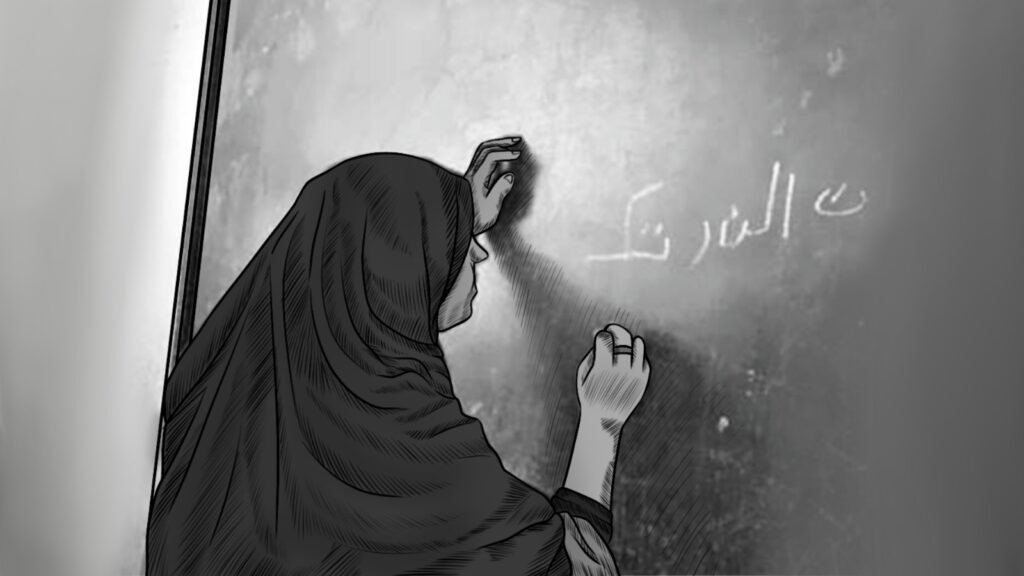
Some countries continue to struggle with high illiteracy rates due to economic and political challenges, which negatively affect their educational systems and degrade the quality of education, particularly in conflict zones like Yemen, Somalia, and Sudan. Continuous wars and instability lead to the destruction of schools, the displacement of teachers, and the inability of students to attend classes safely.
In contrast, the literacy rate among Palestinians is very high, which should be considered a model for other countries facing similar circumstances. Tawjane Faisal, in her article for Al-Raya newspaper, highlights that Palestinians have developed a strong drive, given their national cause, making education “a part of the struggle, closer to an individual obligation than a collective one, producing a society with one of the lowest rates of female illiteracy despite occupation, blockade, and declining services of UNRWA.”
Faisal adds that “alongside UNRWA teachers and school administrators, a volunteer group of Palestinian men and women contributed to providing various educational and cultural services, blending the community’s basic living needs with its educational and intellectual needs, thereby enhancing and deepening this drive within the new local community structure emerging under improvisational and far-from-positive conditions.”
The Right to Education
Regional and international charters affirm that everyone has the right to education. For example, the Arab Charter on Human Rights, adopted at the 16th Arab Summit held in Tunisia in 2004, emphasizes in Article 41 the right to education and the pursuit of literacy.
The same article also states that all member states should strive to ensure “free education, at least in its primary and fundamental stages, making primary education compulsory and accessible to all in its various stages and forms without discrimination.” It also emphasizes the need to provide “education that targets the full development of the human personality” and to establish “mechanisms to ensure lifelong learning for all citizens and develop a national plan for adult education.”
The texts of the Arab Charter and the United Nations Universal Declaration of Human Rights are similar, particularly in Article 26, which stipulates the right to free education. The Declaration further adds that “technical and vocational education should be made generally available, and higher education should be equally accessible to all based on merit.”
The United Nations believes that education is an integral part of the full development of the human personality. Without education, there can be no respect for human rights or fundamental freedoms. It promotes understanding, tolerance, and friendship among all nations and racial and religious groups and supports the activities undertaken by the United Nations to maintain peace.
The UN views education as a means to achieve peace characterized by “respect for equality, non-discrimination, rule of law, solidarity, justice, diversity, and tolerance, as well as fostering harmonious relations with oneself, others, and the planet,” as stated on their page dedicated to International Literacy Day.
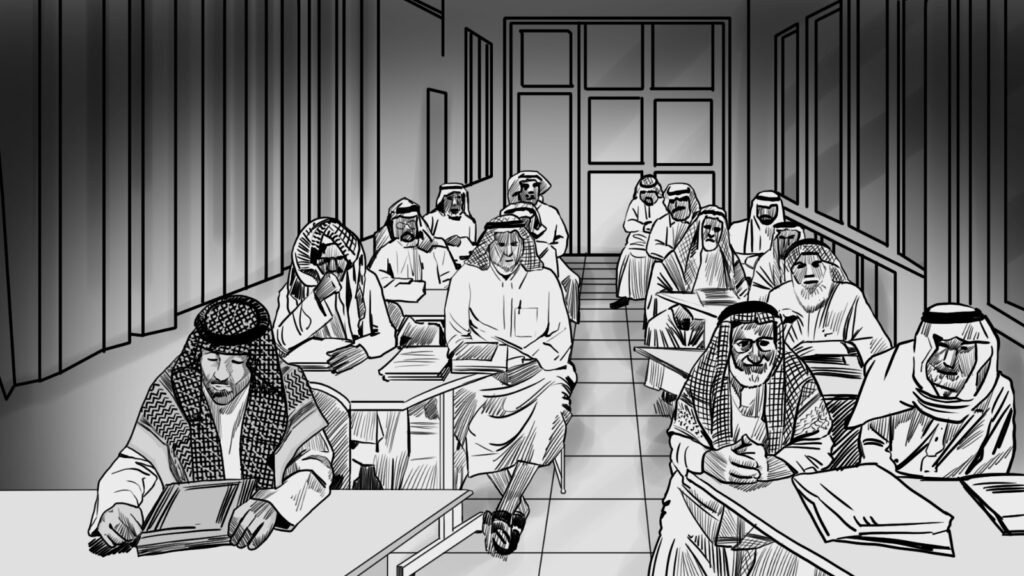
All societies must recognize the far-reaching implications of illiteracy, as it is a significant obstacle to achieving development and fostering social cohesion among individuals. Illiteracy hinders progress and limits both genders from contributing fully to society. The gravest issue is that an illiterate person is more susceptible to misleading propaganda or false rumours, whereas an educated individual is better equipped to discern right from wrong.
International Literacy Day 2024
The theme for International Literacy Day 2024 is “Promoting Multilingual Education: Literacy for Mutual Understanding and Peace,” emphasizing the effectiveness of adopting a multilingual approach in developing education and literacy skills. This approach offers cognitive, social, and economic benefits and can enhance mutual understanding and respect and strengthen community identities.
Dr. Ahmed Nazari, Director of the Language Center at the College of Humanities and Social Sciences at Hamad Bin Khalifa University, notes that there was once a belief that learning a second language might hinder the acquisition of the mother tongue. However, recent research has shown that learning multiple languages enhances cognitive, social, psychological, and cultural growth.
Nazari highlighted studies showing that humans are naturally equipped with the ability to learn languages, and this skill helps in learning additional languages by drawing on a comprehensive linguistic reservoir. The theory of multilingualism suggests that languages can support each other and that prior linguistic knowledge is an asset that facilitates more efficient learning of new languages.
Nazari adds that research has proven that bilingualism enhances cognitive abilities and cultural awareness, such as problem-solving, focus, and mental flexibility, alongside personal benefits that improve job opportunities and cross-cultural communication. It also strengthens family bonds, identity, and belonging, contributing to broader societal benefits.
Therefore, learning multiple languages has become a global standard today and should be encouraged among younger generations to enhance personal and community skills.
The culture of literacy refers to a supportive environment that encourages reading and writing through skill training and the use of information in daily life. This culture strengthens literacy skills learned not only through formal education but also in work environments, families, communities, and streets.
This culture also includes investing in policies, training, and developing educational materials that fit the cultural and linguistic backgrounds of the community. Everyone should strive to promote the culture of literacy by providing necessary resources, encouraging book ownership, creating programs that foster reading and writing among children and the elderly, and continuously promoting this culture.
Libraries have the potential to play a pivotal role in supporting literacy. They can help provide necessary materials and training, enhance cooperation among stakeholders, and use marketing to encourage people to read and make reading a part of their lives. They also offer opportunities to share reading experiences and support reading as a creative activity.
Libraries have the potential to play a pivotal role in supporting literacy. They can help provide necessary materials and training, enhance cooperation among stakeholders, and use marketing to encourage people to read and make reading a part of their lives. They also offer opportunities to share reading experiences and support reading as a creative activity.