


The Right to Belief in Arab and International Laws
Freedom of belief is one of the fundamental rights enshrined in international charters. Foremost among these is the Universal Declaration of Human Rights (1948), which in Article 18 states
“Everyone has the right to freedom of thought, conscience, and religion; this right includes freedom to change his religion or belief, and freedom, either alone or in community with others and in public or private, to manifest his religion or belief in teaching, practice, worship, and observance.”
The International Covenant on Civil and Political Rights reaffirms this right in the same article, adding that:
“Freedom to manifest one’s religion or beliefs may be subject only to such limitations as are prescribed by law and are necessary to protect public safety, order, health, or morals, or the fundamental rights and freedoms of others.”
A study from the University of Minnesota clarifies that this right extends beyond internal freedom of belief to include legal protection for the public expression of religious rituals and practices, emphasizing that any restrictions must be interpreted narrowly and not arbitrarily.
International legal language emphasizes the independence of human conscience and the right not to be forced to express a belief one does not hold. It also obliges state parties to protect this freedom even during crises or emergencies.
Despite the clarity of these international agreements in affirming freedom of belief, the legal reality does not permit this freedom to be absolute. It remains subject to legal restrictions governing its practice in the public sphere. In principle, freedom of belief is protected, but it is not without limits or conditions.
As for Arab legislation, approaches vary in how they enshrine freedom of belief, though most constitutions include some form of recognition of this right.
For example, Article 64 of the Egyptian Constitution states:
“Freedom of belief is absolute. The freedom to practice religious rituals and to establish places of worship for the divine religions is a right regulated by law.”
Similarly, Article 3 of the Moroccan Constitution affirms:
“Islam is the religion of the state, and the state guarantees to everyone the freedom to practice their religious affairs.”
In a 2023 study by Dr. Saber Fayez Ali Saber titled Freedom to Manifest Religion in International Law, it was emphasized that most Arab constitutions acknowledge freedom of belief, but often qualify it with phrases like public order and public morals. These terms leave room for executive or judicial interference, potentially restricting the right.
Some states also practically discriminate between recognized religions and others, limiting the freedom of followers of less recognized or minority faiths.
The Algerian Constitution illustrates this tension between recognition and restriction. Article 42 states:
“The inviolability of freedom of belief shall not be infringed.”
However, actual practice is governed by strict procedures, particularly regarding non-Muslim religious practices, as outlined in Order No. 06-03 of 2006.
Overall, Arab legislation tends to prioritize the official state religion in managing public religious affairs, which may undermine the neutrality needed to guarantee freedom of belief for all citizens without discrimination fully.
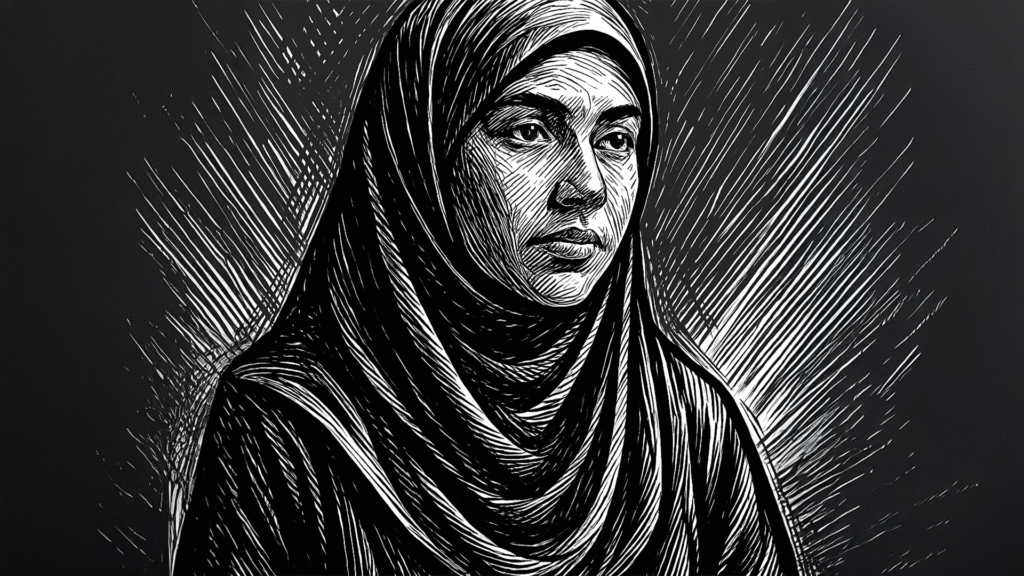
Persecution of Muslims Around the World
Despite international texts guaranteeing freedom of religion and belief, Muslims in several regions across the globe continue to face systematic discrimination and religious persecution.
One of the most prominent examples is the situation of Uyghur Muslims in Xinjiang, northwest China. According to various reports, including a BBC report in September 2017 citing UN sources, nearly one million Uyghur Muslims have been detained in camps officially referred to as “re-education centers” or “counter-extremism centers,” though many international bodies label them as mass internment camps. China denies these accusations, claiming the centers aim to re-educate individuals it deems extremists.
Uyghur religious and cultural practices face severe restrictions, including bans on prayer and fasting, forced contraception or sterilization of women, and the separation of children from their families into boarding schools aimed at erasing Uyghur cultural and linguistic identity. Numerous mosques have also been destroyed.
Chinese authorities use advanced surveillance technologies, including facial recognition software, to monitor Uyghur movements. Some Chinese tech firms have been linked to the development of tools that specifically identify individuals of Uyghur origin, despite their denials of direct involvement.
These policies have drawn widespread international condemnation. The United Nations and various human rights organizations have expressed grave concern, calling for the release of detainees and the protection of Uyghur rights. However, China continues to reject the accusations, maintaining that its actions are necessary for combating extremism and safeguarding national security.
In India, Muslims are also experiencing growing repression under the guise of citizenship and demographic laws. Numerous instances of sectarian violence and hate speech have been documented, alongside a decline in the official protection of Muslims as equal citizens.
According to Reuters, Muslims in India face increasing challenges due to hate speech and discrimination, especially amid rising anti-Muslim rhetoric in recent years. Reports indicate that 2024 saw a 74% increase in hate speech incidents targeting minorities, 98.5% of which were directed at Muslims, predominantly in states governed by the Bharatiya Janata Party (BJP).
The New York Times has reported that Muslims in India increasingly feel like second-class citizens, marginalized and invisible in their own country. Many documented cases highlight violence, restrictions on religious practices, and legislation indirectly targeting the Muslim community.
These developments reveal a hostile environment for Muslims in India, raising international concerns, as highlighted by Euronews Arabic regarding minority rights in the country.
In some Western countries, incidents of Islamophobia have intensified in recent years, especially following terrorist attacks that have been used to justify increased surveillance of Muslim communities and restrictions on religious symbols such as the hijab in schools and public institutions.
A TRT Arabic report sheds light on the increasing restrictions faced by Muslims in France, particularly after the enactment of the anti-separatism law, which many view as targeting Muslims under the pretext of defending republican values.
Muslim associations and mosques have faced restrictions, and visibly Muslim women—especially those wearing the hijab—experience clear discrimination in employment and education. Political and media discourse contributes to the rise in Islamophobia, with attacks on mosques and Muslims on the rise, fueling a sense of marginalization among French Muslims and prompting questions about France’s true commitment to freedom of belief.
The UN Declaration on the Elimination of All Forms of Intolerance and of Discrimination Based on Religion or Belief (1981) states that religious intolerance constitutes a violation of fundamental rights and leads to systematic discrimination. Yet, adherence to this declaration remains inconsistent, highlighting the gap between legal frameworks and the actual treatment of Muslims in many parts of the world.
Freedom of Belief in Islam
The gateway to Islam begins with a negation followed by an exclusive affirmation: the shahada—the first of the five pillars of Islam—proclaims, “I bear witness that there is no god but Allah and that Muhammad is the Messenger of Allah.” This declaration first negates all forms of divinity, affirming it solely for Allah, and identifies Muhammad ﷺ as His messenger.
Islam’s absolute belief in its truth does not imply intolerance toward followers of other religions. True tolerance doesn’t require mutual theological recognition—it simply means peaceful coexistence and respect.
Freedom of belief is a foundational principle in Islamic law, as affirmed by many contemporary scholars and rooted in Quranic verses such as “There is no compulsion in religion” (Surah Al-Baqarah) and “Let whoever wishes believe, and whoever wishes disbelieve” (Surah Al-Kahf). These verses reflect Islam’s acknowledgment of an individual’s right to choose their faith without coercion.
A 2022 study by Khaled Karfouf titled Freedom of Belief Between the Islamic Jurisprudential Perspective and Legal Texts highlights that Islamic law not only permits non-Muslims to hold their beliefs but also guarantees their right to religious practice and the protection of their places of worship, as exemplified in the Prophet’s covenant with the Christians of Najran. Karfouf emphasizes that Islamic law bases this right on peaceful coexistence, considering it part of the higher objectives of sharia (maqasid) concerning the protection of religion and reason.
The Prophet Muhammad’s ﷺ treaty with the people of Najran stands as a rare historical example combining religious tolerance with practical recognition of pluralism. The agreement granted them God’s protection and the Prophet’s guarantee over their persons, religion, churches, and prayers. This demonstrates Islam’s respect for others’ religious autonomy and a commitment not to interfere in non-Muslim communities’ internal affairs.
The treaty’s specifics reinforce this principle, stating that bishops and monks were not to be removed from their positions, and their religious endowments were to remain untouched. Such clauses reflect Islam’s perspective that religious diversity is a natural feature of human society that must be respected and governed justly.
The treaty also emphasized justice and equality, affirming that anyone who claims a right between the two parties shall receive fair treatment—“he shall have half” (meaning equitable resolution)—with neither oppressor nor oppressed. This reflects Islam’s view of justice as a foundational principle in its relationship with others, whether they share the same faith or not.
In terms of individual responsibility, the treaty clarified that no person would be held accountable for another’s wrongdoing. This underscores the Islamic principle of personal liability (istiqlāl al-dhimma), which serves as both a legal and moral safeguard against discrimination or collective punishment.
The treaty concluded by affirming its validity so long as the Najran community upheld the terms peacefully and justly. This indicates that Islamic freedom is not without structure but is a responsible freedom governed by justice and public peace.
This treaty, issued by the head of the Islamic state, was not merely a political accord but a profound expression of Islam’s commitment to religious freedom—centuries before this concept was embraced by other civilizations.
However, classical Islamic jurisprudence did place limits on this freedom concerning apostasy (ridda), often viewing the apostate as having left the Muslim community and prescribing penalties that varied among the schools of thought. This limitation has sparked extensive debate as scholars attempt to reconcile traditional rulings with modern human rights standards. Nonetheless, contemporary Islamic scholars argue that such penalties are not absolute and must be revisited in light of sharia’s objectives and contemporary realities.
As argued in an article by Ahmad Okbelbab in Qawl Fassel magazine titled The Punishment for Apostasy in Islam, apostasy is a contested issue between traditional jurisprudence and contemporary reformist readings. While most classical jurists considered it a punishable offense, often based on certain hadiths, modern scholars suggest that these interpretations need revision. They point out that the Qur’an does not explicitly mandate a worldly punishment for apostasy and that the relevant hadiths may be linked to political or military rebellion rather than mere belief.
These scholars note that the Prophet ﷺ did not punish apostates unless they posed a threat to the Muslim community, indicating that belief alone, without rebellion or violence, was not criminalized.
Thus, under this reading, freedom of belief is an integral part of Islam—only limited in cases where it threatens public peace or is weaponized for incitement or betrayal. This calls for a renewed understanding of apostasy, one rooted in Islam’s broader ethical framework that upholds human dignity, conscience, and accountability before God alone.
Ultimately, freedom of belief is not only a legally protected individual right—it is a human necessity for peaceful coexistence in diverse societies. Although legal texts—international, Arab, and religious—affirm this right, its actual practice remains dependent on political and cultural contexts. The greatest challenge is ensuring this freedom is upheld in full, for Muslims and non-Muslims alike, in a world that too often leans toward conflict over understanding.
Ultimately, freedom of belief is not only a legally protected individual right—it is a human necessity for peaceful coexistence in diverse societies. Although legal texts—international, Arab, and religious—affirm this right, its actual practice remains dependent on political and cultural contexts. The greatest challenge is ensuring this freedom is upheld in full, for Muslims and non-Muslims alike, in a world that too often leans toward conflict over understanding.