





In its eighth issue, Qawl Fassel continued publishing its in-depth articles, exploring texts and laws through their social reflections, offering diverse scenes from courtrooms to the deserts of the Arabian Peninsula, and from financial investigation offices to dialogues in social gatherings.
The magazine opened with the article Billions on the Loose Under Absent Law by Yousif Al Hamadi, in which he analytically addressed the issue of money laundering as a global, cross-border phenomenon, beginning with criminal organisations like the Kinahan Cartel and extending to governments and influential figures.
Al Hamadi examined the legal loopholes exploited by financial crime, especially in post–Arab Spring countries, and analysed how some financial safe havens turned into incubators of corruption. He concluded by posing the recurring question in money laundering discourse: “Where did you get this from?”—calling for a comprehensive review that linked law to conscience.
As for writer Mariam Mortada, she raised provocative questions in her article The Witchcraft Market in the Age of Reason about the ongoing prevalence of magic in educated societies, both politically and in daily life. She discussed the dimensions of the phenomenon from legal, religious, and psychological perspectives, reviewing how Qatari law criminalised sorcery in the 2015 amendment, along with the challenges of proving such crimes in court.
The article also explored the relationship between sorcery and power in both Arab and Western contexts, touching on the West’s double standards in dealing with it. Mortada ended her piece with a clear call to embrace the “magic of kind words and noble character.”
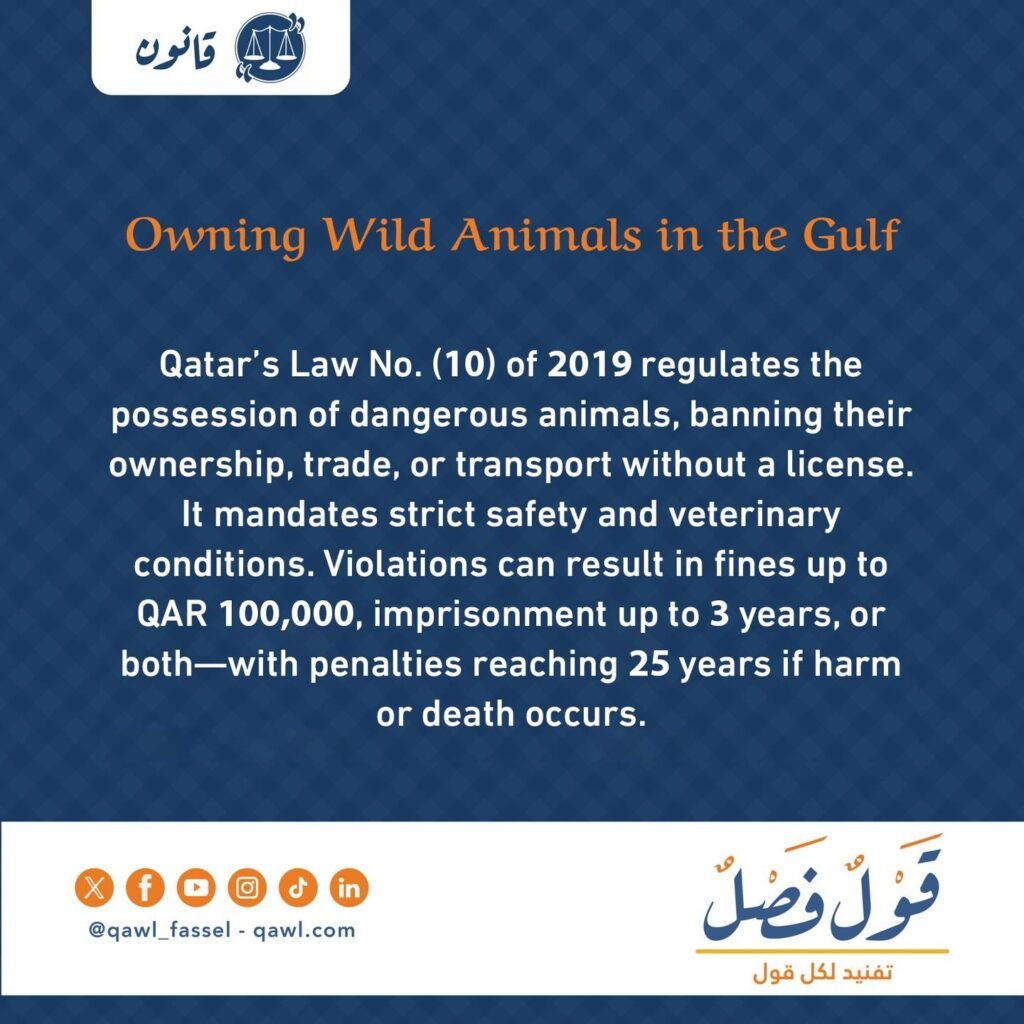
As for Rand Saad, her article Owning Wild Animals in the Gulf took readers into a legal and environmental perspective. She discussed the phenomenon of acquiring wild animals as a mix of vanity and thrill-seeking, then reviewed the legal framework in Qatar and other Gulf countries, warning of smuggling loopholes and the risks posed to public safety and ecological balance.
Through her article, Saad called for stricter penalties, stronger oversight, and the provision of safe alternatives that uphold animal rights and protect human safety, emphasising that some creatures were created to live in freedom, not in luxurious cages.
The article The Official Gazette in the Light of Sharia and Law by Ahmad Okbelbab traced the development of Qatar’s Official Gazette from its inception in 1961 to the present day, highlighting its role as a legal platform that ensured public access to legislation.
Okbelbab connected this role to the Islamic principles of transparency and accountability, stressing that “there is no excuse after notification.” He also discussed the impact of artificial intelligence on legal publishing and the accessibility of legislation, warning of the dangers that arise when evidence is absent or knowledge is withheld from the public.
In his article Kafala vs. Adoption, Yousif Al Hamadi offered a critical perspective on Western and Arab media narratives that promoted Christian adoption while portraying Islamic guardianship (kafala) as inferior. He explained the psychological, religious, and social dimensions of kafala, showing how it preserved a child’s dignity and lineage without denying their right to care.
Al Hamadi also warned against the use of adoption as a cover for human trafficking, calling for the implementation of kafala within strict legal frameworks that protected children and upheld core values.
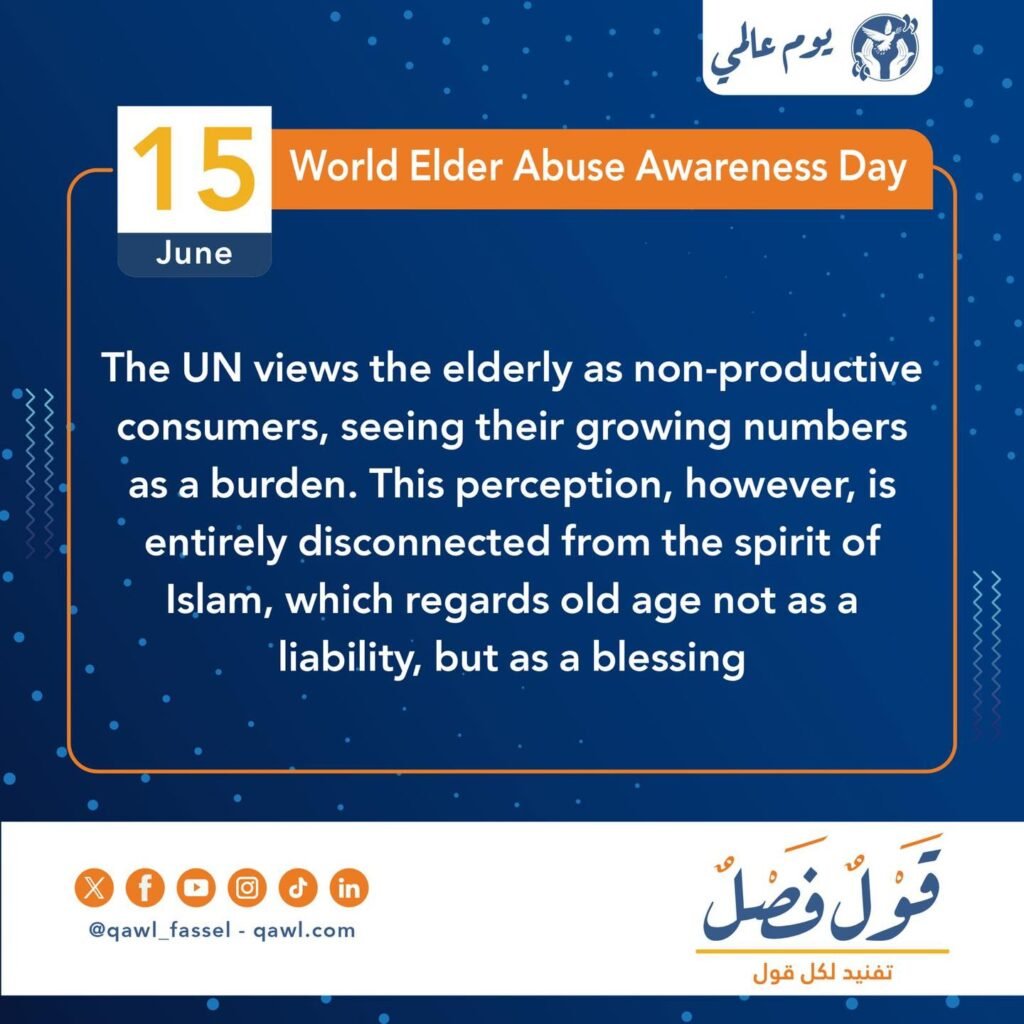
The magazine also shed light on the complex relationship between the elderly and society through a deeply analytical article by journalist Huda Mohamed titled World Elder Abuse Awareness Day – June 15. In it, she critiqued the discourse promoted by the United Nations on this international day, arguing that some initiatives—despite their humanitarian appearance—carried materialistic values that isolated the elderly from their families and reduced them to mere numbers in institutional systems.
The article presented Western examples such as the experiences of Poland and Australia, warning against the uncritical adoption of these models in Islamic societies. It reminded readers that Islam did not view old age as a burden, but rather as a blessing and honour. Mohamed called for the revival of filial piety, the strengthening of the family’s role, and the rejection of imported models that lacked cultural awareness.
During the blessed days of pilgrimage, Ahmad Okbelbab recounted his journey to perform Hajj in 2005 in his article titled Hajj Is a Duty Upon Those Who Are Able. Torn between accepting a job offer and fulfilling the religious obligation, he ultimately chose the pilgrimage. He narrated its spiritual and physical dimensions—from circumambulation (tawaf) and the ritual walk (sa’i) to the stoning of the pillars (ramy al-jamarat).
The author offered symbolic reflections on these rituals, contemplated their meaning, and invoked the views of Dr. Mostafa Mahmoud in refuting allegations of “paganism.” He then explored the spiritual, organisational, and historical aspects of Hajj, affirming that it was a gathering of unity, not a rigid ritual.
In the article From the Waiting Room to Monopoly Laws, Al-Hamadi returned once more to explain to readers the nuanced differences between exclusive agency and monopoly. He pointed out that certain forms of market dominance were not crimes, but rather examples of commercial superiority. He clarified the distinction between exclusivity in commercial agency and actual monopoly, referencing the laws regulating commercial agents, specifically the Competition Protection and Anti-Monopoly Law and the Law on Tenders and Auctions. He also outlined the state’s role in protecting consumers from corporate overreach.
Al Hamadi further deconstructed the concept of franchise contracts, using the example of WOQOD (Qatar Fuel Company), and concluded that business acumen and legal insight mattered more than dominance itself. What might have seemed like a monopoly could, in fact, have been a legitimate success stemming from smart business practices and strategic marketing.
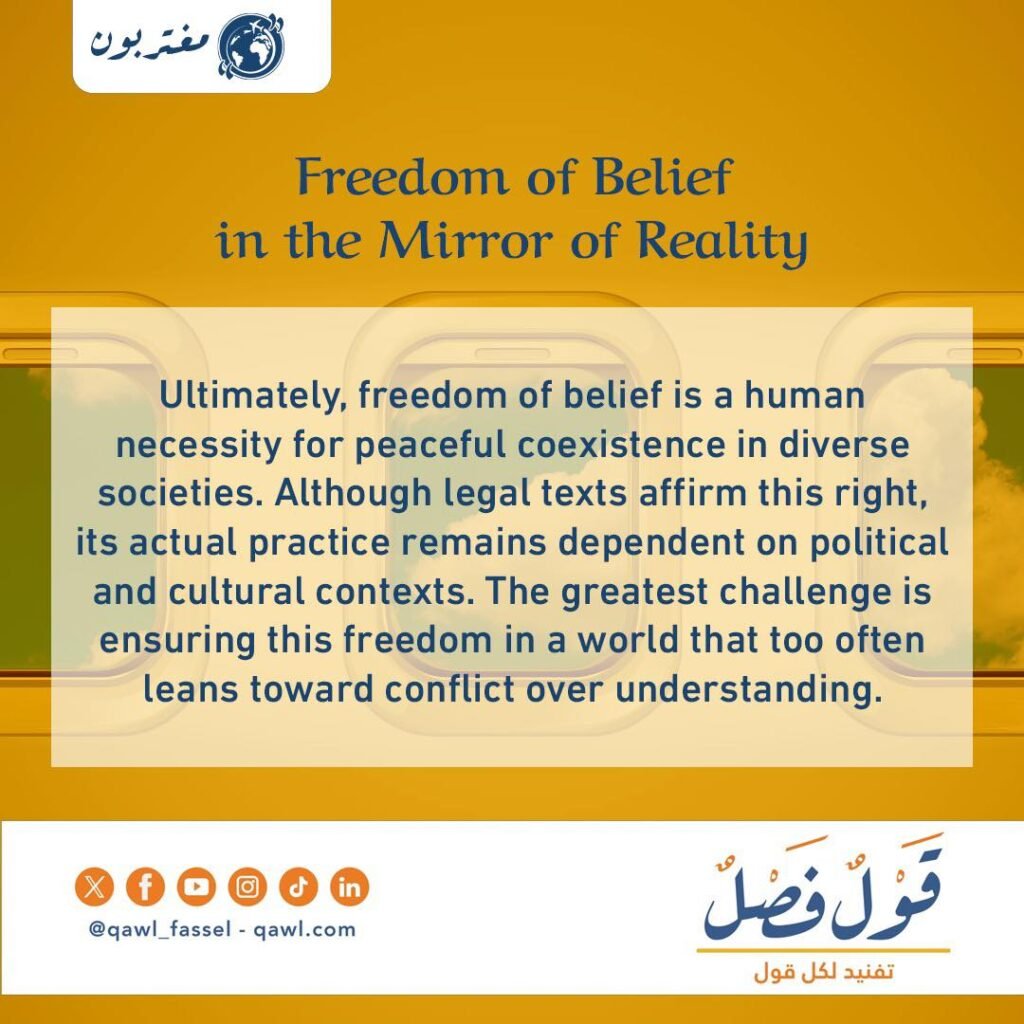
In her article Freedom of Belief in the Mirror of Reality, Rand Saad opened a complex and sensitive file, addressed a political reality marked by oppression and violations—particularly against Muslims—and highlighted the contradiction between politicians’ rhetoric around the world and the actions of their governments.
On the other hand, Saad offered a precise analysis of Quranic verses and Islamic concepts, clarifying that freedom was not a conditional exception but rather a clear and foundational principle in Islamic law. Islam guaranteed and protected it in its relationship with others, without coercion or discrimination.
The issue also included lighter themes. Mariam Mortada, in her article Myths and Strange Traffic Facts Around the World, took readers on a fascinating global tour, presented strange traffic laws and common driving practices that people assumed were legal but were not. She revealed how many popular beliefs about driving were based on cultural folklore rather than actual legal texts.
The article combined both knowledge and enjoyment, highlighting the importance of legal awareness for drivers—so that their behavior behind the wheel was guided not by hearsay, but by actual understanding of the law.
The issue concluded with a compelling article by Rand Saad titled The Tribal System in the Arabian Gulf Before Islam, in which she presented a detailed portrait of the tribal order in the pre-Islamic Gulf. She explored the features of governance, legislative mechanisms, forms of punishment, and property rights, showing that the tribe functioned as an integrated political and social institution. Customary law served as the constitution, and the tribal council acted as a court.
The article noted that the system was decentralised. Yet, it was disciplined by inherited values—until Islam arrived and brought about a profound transformation, replacing tribalism with equality, and shifting the focus from the sanctity of the tribe to the elevation of human dignity.
During the publication of this issue’s articles, three notable episodes of Huda Mohamed’s Salt of the Kalam program and Hassan al-Mandani’s Ta’al Qalik program were published.
The episode of Salt of Speech featured Professor Dr. Hassan Al-Sayyed, a constitutional law expert. The discussion highlighted key issues related to Qatar’s constitutional system, drawing from his book Constitutional Reflections, which addressed topics such as the principle of separation of powers, mechanisms of constitutional oversight, and the role of the constitution as the foundational reference in the relationship between citizen and state.
The Censorship episode of Ta’al Aqulak raised bold questions on the subject, reviewed the 1979 Press and Publications Law, which remained in effect. It examined how censorship addressed political, religious, and moral content, and the challenges it faced in light of the global surge in media production. The episode also critiqued the concept of “public morality,” describing it as vague and overly broad.
Al-Mandani presented examples of films banned for promoting homosexuality or undermining social values. He concluded with a call to redefine censorship in a way that preserved identity without isolating us from the modern world, stressing that protecting children began with awareness, not just prohibition.
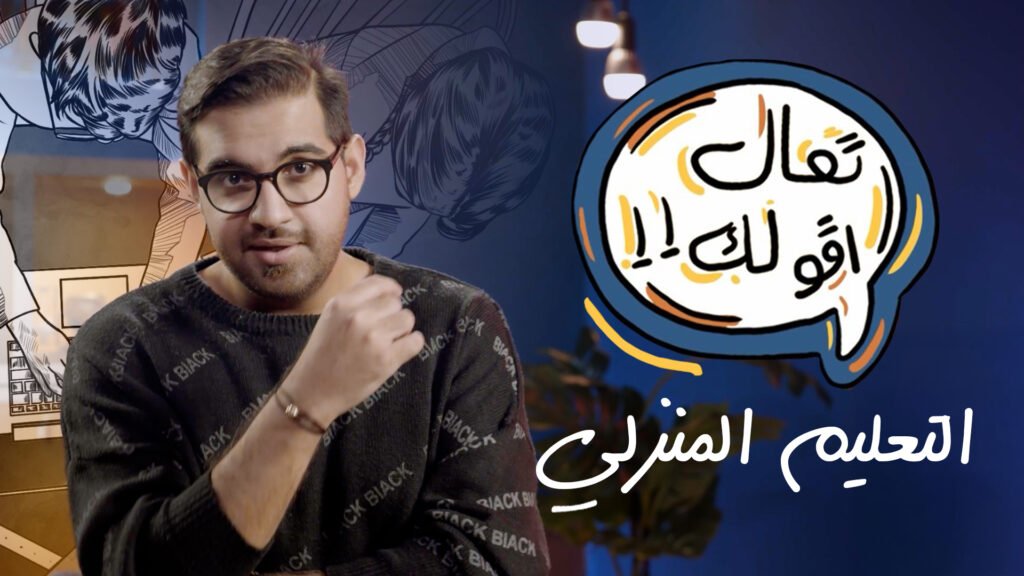
In the Homeschooling episode, Al-Mandani delved into the history of formal education and its origins, then explored homeschooling as a flexible alternative tailored to individual student needs and family circumstances. He cited inspiring examples of world-class athletes who were homeschooled, while also acknowledging downsides like social isolation and organisational challenges.
The episode also addressed the legal dimension, especially in Qatar, where education was compulsory and regulated. It highlighted the legislative gaps in the Arab world and called for the recognition of homeschooling as a viable option, concluding with a plea to spare children from rigid rote learning and instead raise them to think critically and independently—preparing them for a changing world that no longer resembled the past of traditional schooling.
Amid major issues and provocative questions—through articles, investigations, and visual dialogue—the eighth issue of Qawl Fassel continued its mission: to reshape the relationship between readers and knowledge. Not to finalise answers, necessarily, but to stimulate thought and open new windows of awareness in an era of repetition and indoctrination—so that the free word remained the defining line, and deep understanding the way forward.


