


Imam al-Shafi‘i
In the pages written by Dr. Muqtadir Hamdan al-Kubaisi in his study Imam al-Shafi‘i and His Life, the reader encounters the portrait of a man unlike others—Abu ‘Abdullah Muhammad ibn Idris ibn al-‘Abbas ibn ‘Uthman ibn Shafi‘—whose birth marked the beginning of a remarkable intellectual and human journey.
Al-Shafi‘i was born in Gaza, but after the death of his father, his mother moved with him to Mecca when he was still a child. There, in the sacred precincts of the Ka‘bah, his pursuit of knowledge began. He grew up as an orphan in poverty, yet his sharp intellect and thirst for knowledge led him to memorize the Qur’an at a young age. He then eagerly attended circles of Hadith and language, never tiring, never ceasing.
Al-Kubaisi recounts that Imam al-Shafi‘i had a deep attachment to the Arabic tongue, recognizing from an early age that true understanding of the Shari‘ah required mastery of the language of revelation. For this reason, he journeyed to the deserts of Hudhayl, immersing himself in the ancient poetry of the Arabs and refining his eloquence.
His ambition then led him to Madinah, where he studied under Imam Malik, author of Al-Muwatta’. There, he absorbed Hadith and the manners of scholars, and thus began to develop his unique blend of transmitted tradition and analytical reasoning.
Yet his inquisitive spirit was not content with what he had gained in the Hijaz. He traveled on to Iraq, attending the circles of the jurists of opinion (ra’y), studying under Muhammad ibn al-Hasan al-Shaybani, a student of Abu Hanifah. There, al-Shafi‘i began to shape his great intellectual project: to bridge the schools of jurisprudence and establish the foundational principles that would govern the paths of legal reasoning.
Al-Kubaisi highlights that what most distinguished Imam al-Shafi‘i was his role as the founder of the science of Usul al-Fiqh—being the first to systematically codify it, giving jurists a framework and standard by which to guide their reasoning and judgment.
The Two Schools: Reason and Hadith

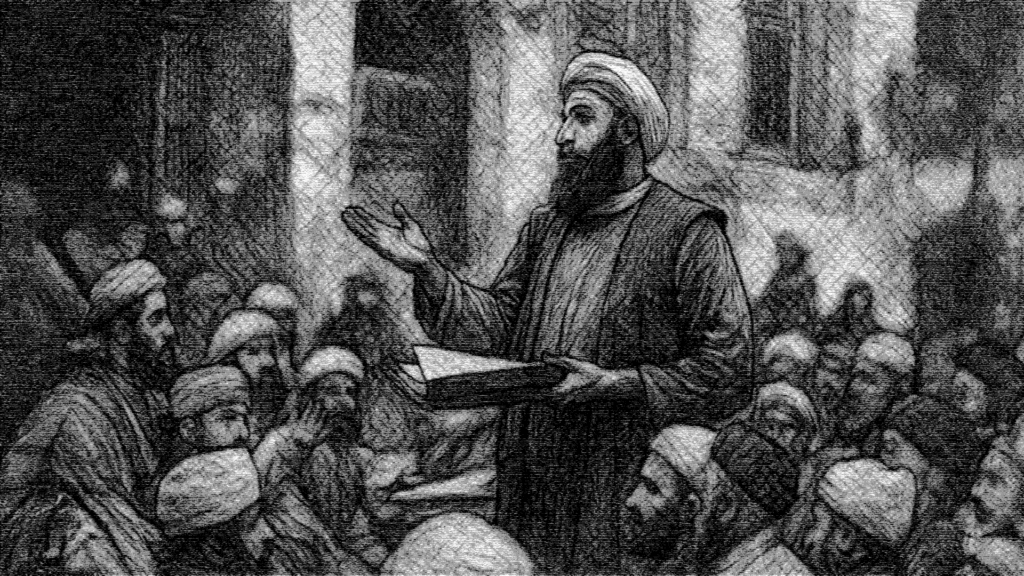
When Islamic jurisprudence first began to take shape and define its features after the era of prophethood, scholars did not follow a single path in interpreting texts or deriving rulings. Rather, the disciples of the Companions developed along two primary lines: the School of Hadith and the School of Reason (ra’y).
The School of Hadith emerged in Madinah, where many of the senior Companions resided. The traditions and reports (sunna and athar) were preserved and widely circulated among them; they would transmit and refer to them in every matter.
As Khalid Abd al-Jabbar al-Sulaibi notes in his study Imam al-Shafi‘i Between the Two Schools of Reason and Hadith:
“The people of Hadith were distinguished by their strict adherence to transmitted reports. They would not go beyond them, nor issue fatwas except based on what they heard or saw from the Prophet ﷺ or from an established report from the Companions.”
Thus, when they found no text or hadith on a matter, they would refrain from issuing judgments, and would not allow themselves to resort to personal reasoning unless absolutely necessary.
In contrast, the School of Reason developed in Iraq. Al-Sulaibi writes:
“Few of the Companions had settled in Iraq, and thus reports were fewer there, while the number of new and complex cases increased due to the expansion of the state. Consequently, the jurists of Iraq turned to the use of reasoning (ra’y), ijtihad, and analogy (qiyas), in order to find solutions for cases on which no clear text existed.”
Thus, they developed a tendency toward analyzing texts, deriving legal causes and objectives, and linking rulings to public interests (maslaha).
Al-Sulaibi continues describing the contrast: The jurists of the School of Hadith—foremost among them Imam Malik, and before him Zayd ibn Thabit and Ibn ‘Umar—tended toward conservatism, transmitting reports without engaging in extensive reasoning. In contrast, figures like Abdullah ibn Mas‘ud and his students in Kufa, and later Abu Hanifah, leaned more toward legal extrapolation and analytical reasoning, while ensuring that ijtihad remained bound by the principles of the Shari‘ah.
These differences, according to al-Sulaibi, led to “a certain degree of legal partisanship between the two groups, until Imam al-Shafi‘i emerged to bridge the divide between them.”
Al-Shafi‘i studied under masters of both schools, absorbing the methodology of the people of Hadith and acquiring the reasoning of the scholars of opinion. In doing so, he crafted a unique and integrated approach—combining respect for the texts and the authority of Hadith with the necessary application of reason and analogy, all within clear methodological boundaries.
This balanced synthesis of transmission and reasoning, of narration and opinion, is what makes al-Shafi‘i’s contribution to jurisprudence a pivotal moment. As al-Sulaibi describes it:
“Imam al-Shafi‘i renewed the structure of jurisprudence, establishing its foundations upon firm principles, transforming the discipline from an instinctive, informal practice into a systematic and codified science.”
The Science of Usul al-Fiqh
When we reflect on how Imam al-Shafi‘i came to establish the science of Usul al-Fiqh (Principles of Jurisprudence), we cannot separate it from his deep relationship with the Qur’an, nor from his awareness of the Ummah’s need for a science that would regulate the paths of ijtihad, anchoring it firmly to revelation—without neglecting its objectives or falling prey to subjective whims.
As Dr. Nahid Farhat and Dr. Bassam al-‘Aff note in their paper presented at the Conference on the Position of Imam al-Shafi‘i in the Science of Usul al-Fiqh, the Imam did not start from a vacuum. With the discerning eye of a jurist, he observed the state of jurisprudence in his time, noting that scholars differed in their methods of deriving rulings, and that scriptural texts were sometimes transmitted without clear methodological controls—or were opposed by opinions not grounded in solid principles.
In this context, Imam al-Shafi‘i delved deeply into the Qur’an, studying its verses, contemplating its legislative patterns, and laying the first foundations of a science that had not yet been systematically codified under the name Usul al-Fiqh.
He viewed the Qur’anic text as the primary source of rulings: that no ijtihad could occur outside of its light, and that neither analogy (qiyas) nor personal reasoning (ra’y) could be valid unless based upon it. As he wrote in his Risala, the Qur’an is the ultimate proof, the primary reference for the religion; everything else is either a clarification of it or a branch stemming from it.
When he turned to the Sunnah, he saw it as an explanation and elaboration of the Book of Allah—never independent of it, but complementing where the Book is silent, clarifying its general statements, specifying its generalities, or qualifying its absolutes. Thus, he articulated the relationship between Qur’an and Sunnah in an integrated framework, leaving no room for undisciplined ijtihad disconnected from the texts.
In their paper, Farhat and al-‘Aff explain that in defining the contours of this science, al-Shafi‘i paid great attention to how meaning is conveyed through language in the Qur’an—how to interpret the general and specific, the absolute and restricted, the ambiguous and the clear—thereby formulating the first rules for textual interpretation.
He also understood that rulings could not be derived from literal meanings alone; rather, one must consider the higher objectives of the Shari‘ah: to remove hardship, achieve justice, and safeguard essential human needs. This awareness of maqasid (objectives) became a core element of his jurisprudential framework.
Turning to analogy (qiyas), al-Shafi‘i recognized it as an indispensable tool for addressing new issues and evolving circumstances. However, he did not advocate unbridled analogy; he insisted that it be strictly founded upon principles derived from the Qur’an or Sunnah, and aligned with the wisdom of the Shari‘ah—never arbitrary or speculative.
He emphasized this in his Risala: “No one may issue rulings based on reasoning or analogy except upon a foundation from the Book of Allah or the Sunnah of His Messenger.”
Al-Shafi‘i closely studied the method of ijtihad practiced by the Companions, who first referred to the texts of revelation and then exercised reasoning in light of those texts. They naturally grasped the nuances of the Arabic language and the rhetorical styles of its discourse, as it was their native tongue. However, Al-Shafi‘i realized that this linguistic mastery had begun to fade over time. It thus became necessary to establish systematic rules and codify methodologies, in order to preserve for the Ummah a sound standard for ijtihad across the ages.
Thus, his Risala emerged as the first comprehensive codification of Usul al-Fiqh, laying out the hierarchy of legal proofs, explaining how each source should be engaged, defining the parameters of interpretation, the boundaries of analogy, and the qualifications for ijtihad. What had once been an intuitive faculty among the early generations was transformed into a formal science that could be taught and transmitted—thereby making Usul al-Fiqh an independent discipline, distinct from jurisprudence itself.
Farhat and al-‘Aff emphasize that when Imam al-Shafi‘i approached the Qur’an, he was not merely transmitting knowledge—he was theorizing and constructing. He rebuilt the relationship between text and reasoning, between primary principles and secondary applications, between the unchanging and the evolving. In doing so, he charted for the Ummah a path of sound ijtihad, one that preserves the foundations and aims of the Shari‘ah, and equips it to remain vibrant and adaptable through time.
Renewing the Science of Usul al-Fiqh
Anyone who studies the current state of Usul al-Fiqh today realizes that it stands at a crossroads. It is a science that originally arose from the Ummah’s pressing need for a methodology to govern reflection upon the sacred texts. Yet, this science—born from the heart of jurisprudence and intrinsically tied to its practical realities and needs—has not been immune to changes over the centuries. Theology (kalam) and formal logic crept into its discourse, burdening it with speculative debates unrelated to its original aims, to the point where it nearly drifted away from its practical function.
Dr. Ahmad al-Raysuni, in his book Usul al-Fiqh in Light of Its Objectives (2017), argues that genuine renewal of this science can only occur by “purging it of the residue of kalam and logic, and restoring it to its original role—as a science that serves jurisprudence, guides ijtihad, and remains connected to reality.”
Similarly, Abu al-Tayyib Mawlud al-Sariri expressed this by saying: “Usul al-Fiqh must return to its natural place—as a living, dynamic force in the life of Muslims, not merely an intellectual luxury taught in classrooms.”
Al-Raysuni adds: “The first pillar of this renewal is to reassert the core objectives for which this science was created: managing disagreement, guiding ijtihad, and shaping the Islamic methodology of reasoning.”
Al-Sariri reinforces this point by noting that much of modern Usul discourse “has become more like abstract mental exercises, rather than practical principles that speak to the real concerns of the jurist.”
In this context, the call to renew Usul al-Fiqh is a call to free it from the residue of speculative theology, to reconnect it with living jurisprudence, to expand its fields in ways that address contemporary issues, and to develop new principles that can help the discipline reclaim its leadership role in Islamic thought.
Today, scholars engage with Usul al-Fiqh in two main ways: one group continues to teach it as it is, while another—represented by figures like al-Raysuni—calls for “a conscious renewal that preserves its authenticity and restores its practical function.”
As al-Sulaibi concluded in his study of al-Shafi‘i: “Fiqh can only thrive when its foundational principles are renewed and revitalized.” And this remains the great challenge facing contemporary scholars today.
As al-Sulaibi concluded in his study of al-Shafi‘i: “Fiqh can only thrive when its foundational principles are renewed and revitalized.” And this remains the great challenge facing contemporary scholars today.