spot_imgspot_img
HomeThe TrafficThe Story of Traffic Lights

The Story of Traffic Lights

In a world where millions cross paths at intersections every day, the traffic light is more than a mechanical device that changes colors.

It is a silent universal language that orchestrates urban life and protects the lives of passersby. Between red that halts time, green that sets it in motion, and yellow that warns of change, an entire civilization moves to the rhythm of light.

As vehicle traffic increases and transportation networks expand globally, the need arose to unify this traffic language and establish legal frameworks that regulate movement and ensure mutual understanding among drivers from diverse cultures and nations.

This is where international conventions emerged—forming a global reference framework to unify traffic signals and definitions, codify road behaviors, and enhance public safety.

Yet, the road to these agreements was not paved with lights alone; it passed through stations of innovation and experimentation. Within the traffic light lies a story that blends science, design, and legislation.

The International Convention

With the growing number of vehicles and travelers on roads around the world, the urgent need arose for a global legal framework to regulate traffic and enhance road safety.

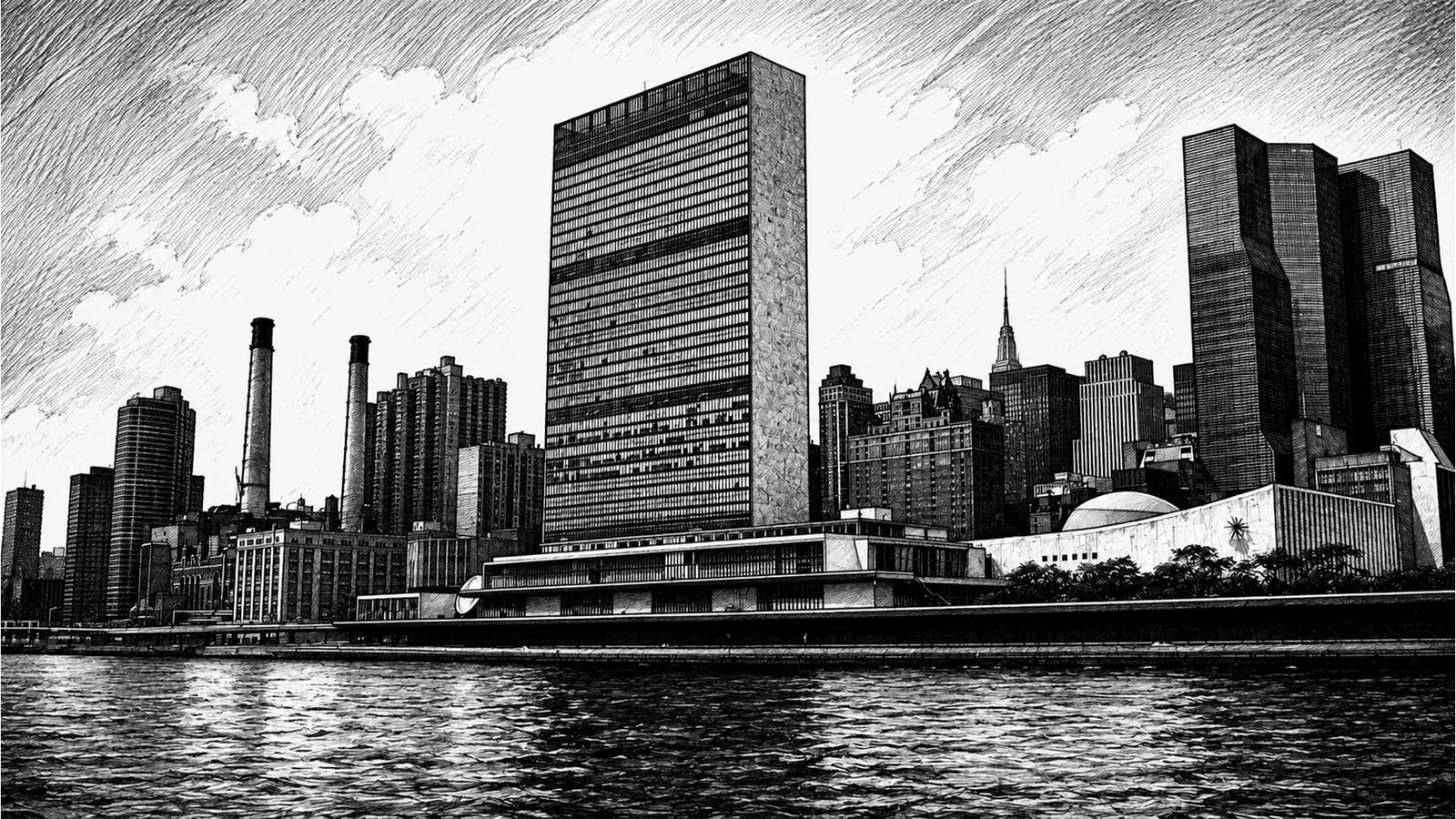
This need led to the adoption of the 1968 Vienna Convention on Road Traffic, a culmination of decades-long efforts by the United Nations. The convention aimed to unify the fundamental rules of the road across countries, facilitate cross-border vehicle movement, reduce traffic accidents, and ensure a shared understanding of traffic signals and driving regulations.

The international conference that produced this convention was held in Vienna, Austria, from October 7 to November 8, 1968, at the invitation of the UN Secretary-General and based on resolutions by the Economic and Social Council. These resolutions emphasized the necessity of revising and updating the earlier 1949 Geneva Convention to meet the complexities of the new reality in land transportation.

Over seventy countries participated in the conference, along with several regional and international organizations, such as the World Health Organization (WHO), the International Labour Organization (ILO), the International Road Transport Union (IRU), and other bodies concerned with standardization and road safety.

The convention focused on precisely defining a range of traffic-related terms and concepts, including vehicles, trailers, bicycles, motorcycles, roads, lanes, intersections, and even parking, stopping, and railway crossings.

It also addressed the regulation of traffic flow within cities and built-up areas as well as outside them, establishing clear rules for conduct at intersections and determining right-of-way. It defined the characteristics of highways and the conditions for their use.

One of the most important elements of the convention was the standardization of traffic signals. It approved unified shapes and colors for traffic lights, warning signs, and regulatory signs, ensuring that they could be understood by drivers regardless of their nationality or country of origin.

Additionally, the convention covered mutual recognition of driver’s licenses, vehicle documents, and registration plates, facilitating international travel and easing bureaucratic procedures that once hindered the movement of people and goods.

Despite its legal nature, the convention allowed countries a degree of flexibility in implementing certain details, provided they adhered to its general principles.

This balance between standardization and flexibility gave the convention broad applicability and helped in its widespread adoption by many countries—including those in the Gulf region, which have used its standards to develop their modern traffic systems.

The First Attempts

Traffic lights were not born with the invention of cars—they actually preceded them by decades. As Liz notes in her article published on ArtPublika Magazine titled Let There Be Light: The Ever-Evolving Design of Traffic Signals and What It Means for the Future the first attempt to regulate traffic dates back to 1722, when police officers managed the flow of horse-drawn carriages on London Bridge.

It was an initial effort, but not a practical one. As congestion increased, the need arose for more efficient methods.

Liz adds that the first true traffic signal appeared in 1868, designed by British engineer John Peake Knight, who created a gas-powered device installed outside the British Parliament. It combined semaphores (mechanical arms) and red and green lights.

However, a gas explosion in the lamp injured a police officer, and the project was halted.

In the United States, the modern era of traffic lights began with engineer Ernest Sirrine, who obtained a patent in 1910 for a signaling system that used illuminated arms bearing the words “Stop” and “Proceed.”

In 1912, police officer Lester Wire designed the first electric traffic signal in Salt Lake City. It was eventually installed in Cleveland in 1914, according to the article.

But the defining innovation came in 1917, when officer William Potts introduced the yellow light between red and green to warn drivers of the signal change.

By 1920, Potts had designed the first four-way traffic light in Detroit, laying the foundation for the layout we see today in most of the world’s cities.

One notable figure in the field is Garrett Morgan, known as the “Black Edison.” In 1923, he invented a manual traffic signal that included a brief stop between light changes to reduce accidents and allow pedestrians to cross safely.

He later sold his invention to General Electric for $40,000, according to Liz.

In 1928, engineer Charles Adler Jr. developed the first sound-activated traffic signal, which changed when drivers honked their horns. He was also the first to design a push-button system for pedestrian crossings.

In the 1930s, the first international agreement on traffic signal standardization was reached with the 1931 Geneva Convention, which adopted the three-color system: red, yellow, and green.

By the 1950s, pedestrian signals began appearing. In the 1970s, the now-familiar red and green walking man icons were introduced to overcome language barriers, and were formally adopted under the Vienna Convention.

Liz concludes her article by noting the shift toward smart traffic lights powered by artificial intelligence and sensors, capable of communicating with smart vehicles, adjusting timing based on traffic and pedestrian flow—and possibly becoming obsolete altogether with the rise of fully autonomous vehicles.

Colors Are Not Arbitrary

In a familiar scene unmistakable to the eye, traffic signals in their three iconic colors—red, yellow, and green—stand at intersections in every city and town around the world. They form an intuitive visual system understood by children before adults: stop, be cautious, go.

But what made these specific colors rule the world of traffic control? Why wasn’t blue used for go, or brown for stop?

An article published on Medium titled Why Are Traffic Lights Red, Yellow, and Green? explores these questions and takes us on an engaging historical and scientific journey revealing the reasoning behind the choices.

Originally, railway companies used red for stop, white for go, and green for caution. However, the color white caused many issues—it was easily confused with starlight at night, leading to unfortunate accidents.

As a result, the color system was revised: red for stop, yellow for caution, and green for go—a sequence that was later adopted for road traffic lights.

But the explanation doesn’t stop at history; it delves into the realm of physics. According to Medium, light is made up of different color wavelengths, ranging from violet (shortest) to red (longest).

The colors used in traffic signals—red, yellow, and green—belong to a part of the spectrum that is most effective at traveling long distances through air, especially under adverse weather conditions like fog or rain.

Red, having the longest wavelength, is best suited to catch drivers’ attention from afar, making it visually dominant in low-visibility environments.

Yellow, which comes next in wavelength, serves as a warning or preparation for change.

Green, with a relatively shorter wavelength, is used for movement since the driver is typically already close to the signal.

The author explains that this arrangement of colors wasn’t random. It stems from a complex interplay of scientific factors including human response time, the eye’s ability to distinguish colors under various lighting conditions, and how far light remains visible.

Thus, red became the universal symbol of danger and stopping—not just because it evokes caution, but because it is the most penetrating and memorable color.

This illustrates the genius of simplicity in design—combining natural science with human perception in a global visual system that needs no translation. Indeed, there’s science behind everything—even the traffic lights we see every day.

Deterrent Penalties

Qatar places great importance on respecting traffic signals. Running a red light can result in a fine of up to 6,000 Qatari riyals, along with penalty points on the driver’s license, and in some cases, even vehicle impoundment.

In a 2018 press conference, Colonel Mohammed Radi Al-Hajri, Director of Awareness at the General Directorate of Traffic, emphasized the grave consequences of running red lights, describing it as one of the most dangerous violations in terms of human and material losses due to the fatalities and serious injuries it can cause.

He stressed that the goal of the 6,000 QAR fine and the penalty points was not financial, but rather a disciplinary measure aimed at deterring reckless drivers. Al-Hajri affirmed that respecting traffic signals is both a legal and moral obligation—not something to be done merely out of fear of cameras or fines.

Al-Hajri explained that Qatar’s traffic law clearly defines the meaning of each traffic light color and grants manual signals from traffic officers priority over automated signals.

The Traffic Law also addresses pedestrian responsibility, imposing a 500 QAR fine on those who ignore pedestrian-specific signals, reflecting a comprehensive legal approach to public safety.

Captain Engineer Mohammed Misfer Al-Hajri, Head of Traffic Planning, stated that running red lights and speeding are among the most common and dangerous traffic violations. He noted that violating a red light is a deliberate endangerment of others, as it disregards a direct command to stop and places oncoming traffic at great risk.

He also pointed out that traffic signals in Qatar are equipped with smart sensor-based systems, regularly reprogrammed to accommodate traffic volume and reduce congestion. He emphasized that speeding—especially in residential areas and near schools—greatly increases the risk of accidents and endangers innocent lives.

According to a report published in Al-Raya newspaper by journalist Ibrahim Salah, several major factors contribute to the rise in red light violations.

Salah cited the views of experts and citizens, identifying reckless driving and excessive speed as primary causes, followed by the distraction of mobile phone use while driving, which leads to delayed reaction and poor timing in assessing light changes.

Many drivers run red lights out of recklessness or misjudgment, particularly when the light turns yellow. The growing trend of drivers being distracted by mobile or in-car screens has become a serious concern, making violations more frequent. In this context, mobile phone usage while driving becomes a relevant violation that could help reduce red light offenses.

Salah notes that many young people fail to grasp the seriousness of running red lights, treating the violation lightly—even though the fine can reach up to 10,000 or even 50,000 QAR, with possible imprisonment if the violation results in a fatal or serious accident.

Psychological experts argue that part of the problem lies in the absence of a safe driving culture and a lack of parental guidance in educating youth about the dangers of ignoring traffic laws.

Salah advocates for comprehensive awareness campaigns in high schools, particularly targeting age groups more prone to reckless behavior. He recommends including survivors of such accidents in these initiatives to make the message more impactful.

Ultimately, running a red light is no longer just a traffic violation; it reflects a deeper crisis in traffic culture that must be addressed on multiple levels—from the family to the law.

Despite Qatar’s advancements in infrastructure, such as the construction of bridges and tunnels to ease traffic flow, traffic signals remain an indispensable element of traffic regulation.

With their flexibility, ease of modification, and low cost, traffic lights remain a practical and effective solution.

In the end, a traffic signal is not just a blinking device—it is the result of decades of research and development, a living testament to humanity’s journey toward order and civility. It is a light that not only regulates traffic but also illuminates the road to the future.

Huda Mohamed
Huda Mohamed
حوارية لا تُقهر، تسأل وكأنها تطارد الحقيقة بإصرار، ضيفها لا يستطيع المراوغة فهي تملك الأسلحة السرية لإخراج اعقد الإجابات بابتسامتها الذكية، دون أن تفقد الكاريزما.
RELATED ARTICLES

LEAVE A REPLY

Please enter your comment!
Please enter your name here

Most Popular