

Ideological and Religious Perspectives on Gender Mixing
In liberal societies, gender mixing is considered both acceptable and desirable, as it represents equality and freedom. There is no justification for separation as long as the interaction is consensual. However, this openness sparks debate with more conservative currents and faces challenges such as sexual harassment, exploitation, lenient policies, and superficial appearances that fuel conflicts between individual freedoms and cultural particularities.
Despite liberal societies’ adoption of gender equality, the wage gap still persists. In the United States, it stood at 16% in 2023 according to the U.S. Bureau of Labor Statistics. In Germany, it was 16–17% in 2024 as reported by the Federal Statistical Office of Germany. In Japan, the gap reached 20%, according to Japan Wire published by Kyodo News Agency. Even Sweden, considered a liberal frontrunner, recorded a gap of 11.2%, according to the United Nations.
In Buddhist societies, marriage is viewed as a consensual social relationship rather than a religious one. Relationships outside marriage, polygyny, and even polyandry are not forbidden—as sometimes occurs in Tibet, where several brothers may marry a single woman for economic reasons. This was explained by social anthropologist and Tibet researcher Melvyn Goldstein in his study at Spokane Community College titled When Brothers Share a Wife.
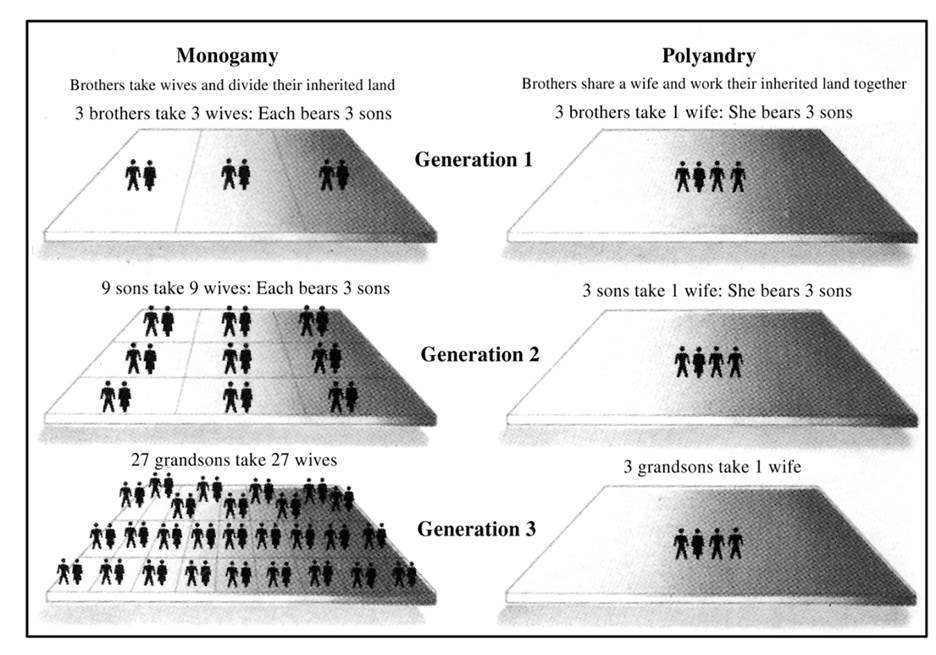
Therefore, gender mixing in Buddhism does not pose any problem—except for monks and nuns, who are bound by strict celibacy under the Patimokkha rules. Anyone who violates these rules is expelled, as happened with the monk Sudinna, who broke his monastic vow and succumbed to the temptation of his wife, engaging with her after becoming a monk. Monastic life is one of asceticism and austerity, and monks do not touch women except by placing a piece of cloth over their hands.
In the communist context, gender mixing is not seen as a separate issue but rather as part of the broader project of equality and the elimination of gender discrimination. Marx and Engels linked the oppression of women to private property and the patriarchal family, arguing that women’s liberation is inseparable from society’s liberation from class divisions.
Therefore, communist regimes encouraged women to participate equally in labor, education, and the military alongside men. This openness even extended to the acceptance of communal nudity in some environments, as a way of expressing bodily equality and stripping the body of religious and social taboos—unlike capitalism, which commodified it as an advertising product or tool of seduction.
Islam, however, views gender mixing from the perspective of chastity and the protection of the family. It did not categorically forbid it but rather set guidelines to safeguard society from deviation. The Prophet ﷺ encouraged marriage and warned against monasticism, emphasizing the fulfillment of natural desires through lawful means, with dignity and humanity.
Thus, Islam sees no harm in women participating in wars alongside men, nor does it forbid their presence in markets, or performing rituals and worship in shared spaces such as prayer, Hajj, and Umrah. However, Islam imposed regulations: lowering the gaze, prescribing modest dress codes for both genders, prohibiting women from speaking in a manner that invites temptation or from wearing perfume, and forbidding seclusion with non-mahrams.
Through this balance, Islam acknowledged human instincts while regulating them within an ethical framework that ensures purity and tranquility, while warning against temptation and protecting society from the dangers of unregulated mixing.
Legal Perspectives on Gender Mixing
The United Nations does not address gender mixing as a religious or moral issue but rather from the perspective of gender equality and human rights. Its reference framework is based on the Universal Declaration of Human Rights (1948) and the Convention on the Elimination of All Forms of Discrimination against Women (1975), in addition to Goal 5 of the Sustainable Development Goals.
From the UN’s standpoint, the presence of men and women together in educational, economic, and political spaces is essential for achieving social justice. Its reports emphasize the importance of guaranteeing equal opportunities for education and employment without barriers arising from gender segregation.
The UN also views gender integration as a means to building more inclusive and just societies. It therefore encourages member states to remove restrictions preventing women from participating in male-dominated fields and to enable women’s access to decision-making positions.
It is noteworthy that the Saudi law, which was heavily influenced by Wahhabi thought that forbids and prohibits gender mixing, has begun to readjust itself. The previous provision that directly banned mixing was repealed and replaced with a general clause stating that all male and female employees must adhere to “the requirements of Islamic Sharia rulings,” as indicated on the Mohamoon Al-Mamlaka website.
These ideas, as Dr. Muhammad Al-Mas’ari explains in one of his YouTube episodes, trace their roots back to the Israelites’ strictness. He cites the hadith narrated by Aisha (may Allah be pleased with her), recorded in Sahih al-Bukhari and Sahih Muslim:
“If the Messenger of Allah ﷺ had seen what women have introduced (of changes), he would have forbidden them from the mosque, just as the women of the Children of Israel were forbidden.”
The researcher William Barclay, in his study The Letters to Timothy, Titus, and Philemon, presented the view of the Israelites toward women, showing that it was predominantly characterized by a possessive, patriarchal, and inferior outlook.
As Barclay notes, woman was not regarded as an independent person but rather treated as the property of her father or husband. A man would even recite in his daily prayer his thanks to God for not being created ignorant, a slave, or a woman. Women were forbidden from studying the Torah, confined in synagogues to special sections where they could not be seen, and classified on the same level as slaves and children. Their role was limited to caring for the home and serving the husband, so that he could devote himself to study and worship.
In Islam, khalwa (seclusion) carries implications and consequences in Islamic jurisprudence, as it is connected to the objectives of marriage and the safeguarding of rights between spouses. It is not merely two people withdrawing from others, but rather an expression of the intimacy of the relationship and the sincerity of the covenant binding man and woman.
For example, Qatar’s Family Law No. (22) of 2006, which draws heavily from the Hanbali school of thought, clearly states that valid khalwa (seclusion), as recognized by the courts, directly affects entitlement to the dowry (mahr). If it occurs after the marriage contract—where the husband is alone with his wife in a secure place where no one can see them—even if no intercourse takes place, the wife becomes entitled to the full dowry.
However, if such seclusion does not take place, the wife is only entitled to half the dowry upon contract. Thus, the effect of khalwa becomes the decisive line between entitlement to the full or half dowry.
Visual Sexual Stimuli
Dennis Prager, in a video titled Men and the Visual Power of the Image on the right-wing American YouTube channel PragerU, affirms that men instinctively respond to visual stimuli far more than women. This is why men spend billions viewing images of scantily clad women in advertisements, magazines, and pornographic websites, while women rarely do the same toward men.
Sight alone, Prager argues, can arouse a man many times a day, unlike women who generally require additional factors and are not usually attracted to mere male nudity. He gives examples of male strip shows that draw little female interest, compared to the abundance of female strip shows for men. He believes advertising exploits this male instinct by displaying the female body—to the point that an ordinary man once admitted feeling aroused by a lifeless mannequin.
On the magnitude of the impact of visual sexual stimuli of women on men compared to that of men on women, reference was made to an academic study titled Gender Differences in Response to Visual Sexual Stimuli. The study was conducted by Dr. Heather Rupp, former research associate at the Kinsey Institute for Research in Sex, Gender, and Reproduction at Indiana University, and Dr. Kim Wallen, professor at the Center for Behavioral Neuroscience and Neuroendocrinology at Emory University.
It noted that “neuroimaging studies show that both men and women exhibit increased activity in many similar brain regions in response to sexual stimuli.”
However, the study also highlighted that research by Hamann, Herman, Nolan, and Wallen in 2004, “using functional magnetic resonance imaging and still images,” found that men showed “greater overall activity in the amygdala in response to sexual stimuli compared to women.”
This explains why “during orgasm, activity in the amygdala is suppressed, particularly in men, leading to a period of reduced interest in sexual stimuli.”
The study concluded that “differences in response to visual sexual stimuli may simply be one example supporting the idea that men’s and women’s brains functionally differ in evaluating the environment, resulting in distinct behavioral patterns according to sex.”

This compulsory path dictated by sexual desire was given boundaries in Islam through the legal guidelines on gender interaction, so that the seed is placed in its rightful place, and the newborn—helpless and vulnerable—comes into being between parents he knows without doubt. Thus, he grows with confidence under the care and protection of a family until he matures, enabling him to engage in life free from psychological complexes or material deficiencies.
Imagine the bitterness of betrayal a child feels toward a father he wished would acknowledge him, while his only “fault” in life was being conceived by a sperm irresponsibly abandoned in a fleeting moment of pleasure with his mother.
Stephanie Kramer, in an article about a study titled The U.S. has the world’s highest rate of children living in single-parent households conducted by the Pew Research Center in Washington, D.C., states that the United States records the highest global rate of children in single-parent families, with 23% of American children living with only one parent—three times higher than the global average of 7%.
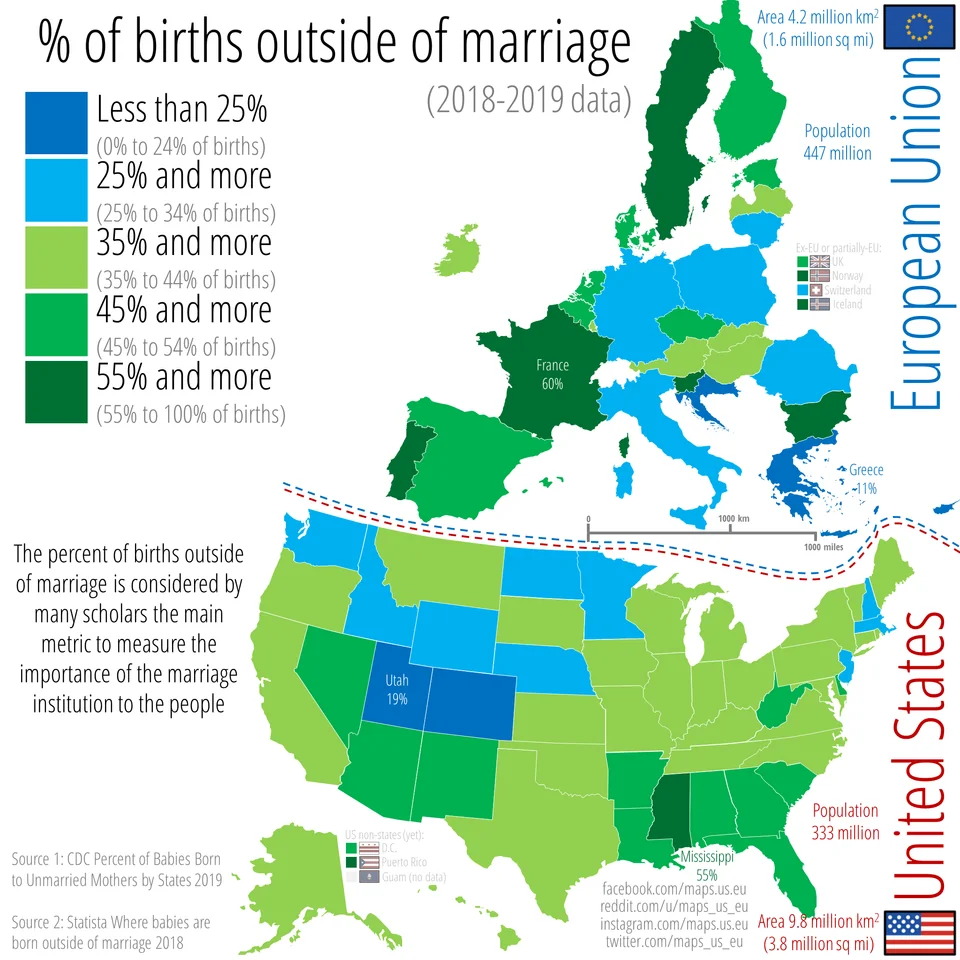
Frank Jacobs, in his article In These Eleven European Countries, Births Out of Wedlock Form the Majority on Big Think, explains that “after World War II, and especially since the social changes of the 1960s and 1970s”—referring to the sexual revolution of those decades”
“Rates of births outside marriage have risen across Europe. As the map shows, children born outside marriage now constitute the majority in many European countries, particularly, though not exclusively, in the North and West of the continent.”
Today, Europe is witnessing a significant rise in births outside of marriage: Iceland records 69.4%, followed by France at 62.2% and Bulgaria at 59.6%, while the rate exceeds half in Northern and Western European countries. Globally, the figure reached 15% in 2017—around 21 million children—reflecting the secular trends in some societies.
Problems of Gender Mixing Without Boundaries
Gender mixing is a complex issue where ethics, religion, and law intersect. Without boundaries, it sometimes turns into painful emotional crises—such as one-sided love or impossible relationships—leaving deep psychological scars that may lead to depression or deviance, and remain as regrets haunting a person for life.
In an academic study titled Emotional Loss Under Psychological Examination by Henrik Walter, it is noted that “studies in German-speaking countries show that most adolescents have already experienced the pain of loss, with rates ranging between 33–53%, and even up to 91%. The average age of participants was 22, having endured about three episodes of loss, lasting between one month and a year and a half.”
The study showed that the most common reasons were separation 47%, followed by unrequited love 27%. Participants experienced multiple symptoms, which, based on factor analysis, could be divided into four groups: depression, physical symptoms, anger (especially after separation), and loss of self-confidence.
One of the problems of unrestricted mixing is that it can destroy stable marriages, leading to divorce, infidelity, and the displacement of children. For this reason, lowering the gaze—as God commanded—serves as a strong safeguard, protecting hearts from temptation.
Sexual harassment is not the result of gender mixing in itself, but rather the outcome of weak moral awareness, abuse of power, and the absence of deterrent laws. Building a safe environment requires a culture of respect and equality, the enforcement of strict legislation, and comprehensive reforms in media, education, and law to confront this phenomenon, which has worsened even in open societies.
According to the Japanese website Nippon, Shikigaku, a company specializing in management and organizational consulting, conducted a survey of 2,204 participants from across Japan, aged between 20 and 49 years.
The survey found that 34.8% of participants had experienced some form of harassment in the workplace, with little difference between women and men: 35.6% among women and 34.2% among men.
The most common form was power harassment (71.0%), followed by psychological harassment (43.0%), and then sexual harassment (21.0%).
In an article on the website of the European Institute for Gender Equality, an EU body, titled Sexual Harassment at Work is More Common Than We Think, it states that “the largest EU-wide survey on violence against women—conducted by Eurostat, the European Union Agency for Fundamental Rights, and the European Institute for Gender Equality—covered 115,000 women. The survey found that 31% of employed women had experienced sexual harassment in the workplace, with the figure rising alarmingly to 42% among young women aged 18–29.”
From here, Islam introduced its guidelines as a shield to protect honor, prescribing strict punishments for slander and harassment in order to safeguard women and society. It prohibited so-called “honor crimes,” for in Islam blood is inviolable. Yet today we witness dangerous social experiments tampering with human identity, even in its most basic foundations.
Thus, it becomes clear that the issue of gender mixing is not merely a passing social detail, but a mirror reflecting the depth of divergence between religious, philosophical, and legal perspectives, and between actual practices in societies.
From Laila, sitting uneasy between her professional ambitions and her upbringing, to studies revealing the wage gap, harassment, and births outside marriage, it becomes clear that humanity still wavers between instinct and restraint, between freedom and limitation.
In conclusion, societies that neglect moral and legal boundaries pay the price with fractured generations, while the true balance lies in regulating human nature through divine law—ensuring tranquility, preserving dignity, and protecting the family from the chaos of fleeting experiments.
In conclusion, societies that neglect moral and legal boundaries pay the price with fractured generations, while the true balance lies in regulating human nature through divine law—ensuring tranquility, preserving dignity, and protecting the family from the chaos of fleeting experiments.