
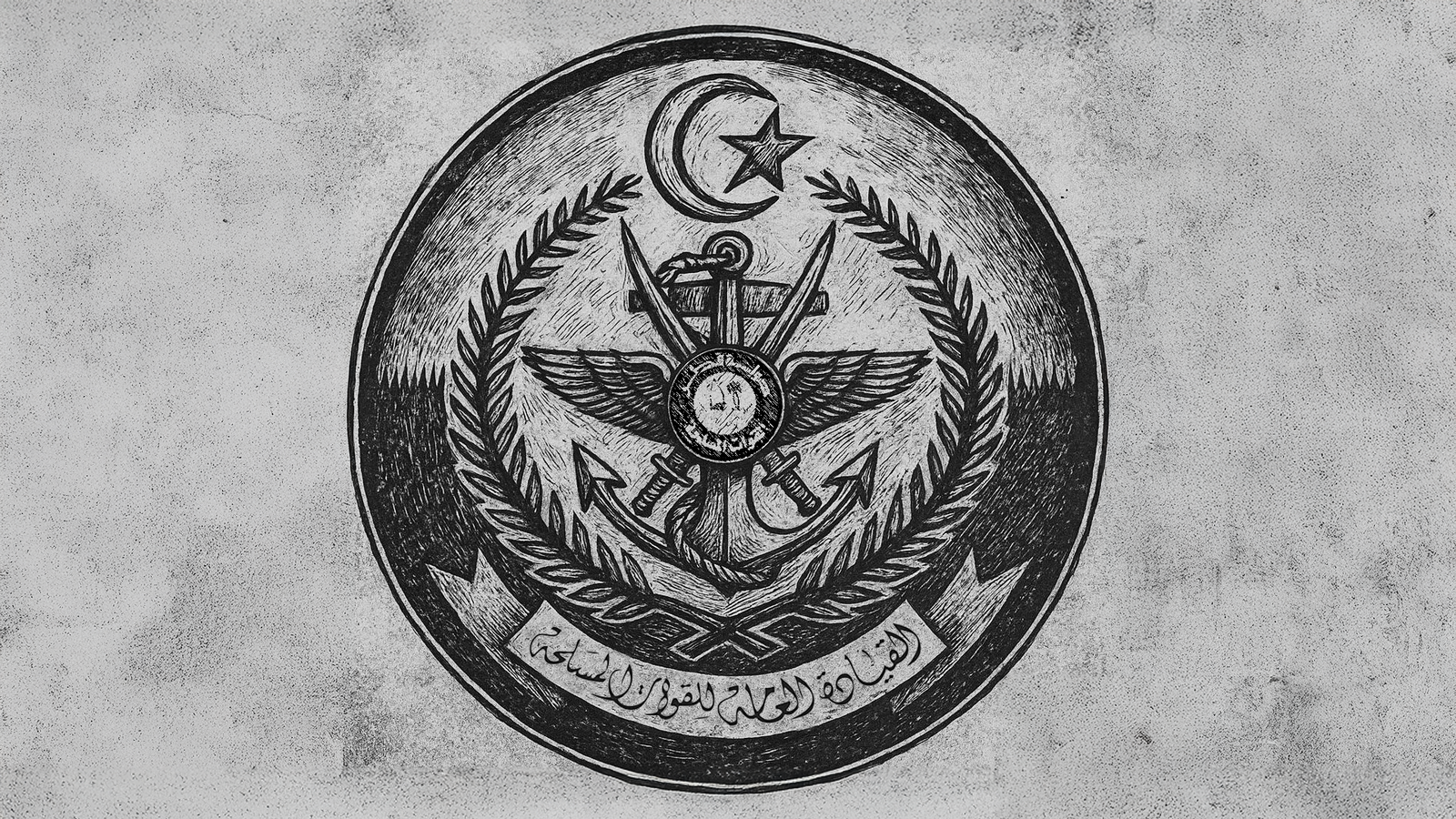
Qatari Armed Forces
Article 65 of the Qatari Constitution states that “The Emir is the Commander-in-Chief of the Armed Forces, and shall have supervision over them. He is assisted in this task by a Defense Council that reports directly to him, the composition and jurisdiction of which shall be defined by an Amiri decision.”
Amiri Decision No. (61) of 2021 established the Department of Defense Affairs in the State of Qatar, creating the Supreme Defense Council as a high authority directly under the Emir. The Council is chaired by His Highness, assisted by the Deputy Emir and a number of senior military leaders, with the possibility of including additional members by Amiri decision.
The Council’s mission is to safeguard the independence and sovereignty of the state, preserve the unity of its territory, ensure its security and stability, and defend it against any aggression.
The decision granted the Council broad powers, including setting the state’s overarching defense policies, approving the national defense strategy, formulating the plans of the armed forces, and overseeing their implementation.
It is also tasked with studying military risks and challenges, approving defense and military agreements, and considering the participation of the armed forces in external operations, humanitarian missions, peacekeeping, and counterterrorism.
Among its decisive powers are determining the size and structure of the armed forces, approving defense budgets, studying the declaration or extension of martial law, and conducting periodic reviews of military readiness and preparedness.
The Council convenes upon invitation from its Chairman, in complete confidentiality, and is deemed to be in permanent session during times of war or emergency, with the option of involving ministers or military and civilian experts.
This decision reflects the Qatari leadership’s vision of establishing an integrated defense system grounded in strategic planning and comprehensive approaches to challenges, balancing between national imperatives and international defense policy. It ensures that the Supreme Defense Council remains the central pillar for safeguarding the state and guaranteeing its security and stability.
Article 71 of the Qatari Constitution further makes clear that “A defensive war shall be declared by an Amiri order, while an offensive war is prohibited.”
This article encapsulates Qatar’s philosophy on peace and war: war is not an ordinary matter decided overnight but a supreme sovereign issue entrusted solely to the Emir, as Commander-in-Chief of the Armed Forces and symbol of political legitimacy.
If the country faces external aggression that threatens its independence or undermines its sovereignty and territorial integrity, the Emir alone holds the authority to declare a defensive war as a duty to protect the homeland and safeguard its security and stability.
Offensive war, however, is prohibited in principle, as it constitutes aggression inconsistent with the Constitution, international law, and the United Nations Charter, and contradicts Islamic teachings that only permit fighting to repel injustice or defend against aggression.
Thus, Qatar clearly affirms that its military power is not a tool of invasion or expansion, but rather a shield protecting the state and its resources, embodying its ethical values in respecting global peace.
This framework brings together law, politics, and ethics, underscoring that military decisions in Qatar are bound by legitimacy and necessity, and that the philosophy of defense is founded on the principle: no war except defensive, no weapon except for the protection of national sovereignty.

The Qatari Citizen

The Constitution has not overlooked the role of the Qatari citizen. Article 53 clearly states that “the defense of the homeland is the duty of every citizen”—a powerful expression of the deep bond that unites a person with their land, history, and identity.
The homeland is not merely a place where we live; it is the entity that grants us security, dignity, and belonging. When it is said that defending it is a duty, it means that every individual—regardless of their position or capacity—bears a share of the responsibility for its protection and care.
Defending the homeland does not stop at bearing arms in times of danger, but extends into the daily life of peace: through diligent work, building institutions, safeguarding values, protecting public resources, and spreading awareness to counter attempts at destabilization.
The teacher in his classroom, the doctor in his clinic, and the journalist with his words—all are engaged in the same mission of protecting the homeland from weakness or fragmentation, just as the soldier does on the battlefield.
This duty reminds us that the homeland is not solely the responsibility of the state, but a trust upon the shoulders of every citizen—young or old, man or woman.
Perhaps the most beautiful meaning of this phrase is that it links rights with responsibilities: the citizen has the right to enjoy security and stability, but at the same time is required to contribute to creating and preserving them. Thus, defending the homeland becomes a human value and a moral obligation before it is a constitutional or legal provision.
Yet Article 53 also gives a special military dimension to this duty, translating belonging into concrete action in times of hardship. When the state is threatened or the homeland faces external danger, every citizen becomes a potential soldier—carrying in their heart the readiness to sacrifice, even if they do not hold a military rank or wear a uniform.
In 2014, the National Service Program was established by an Amiri decree issued by His Highness Sheikh Tamim bin Hamad Al Thani, Emir of the State of Qatar. The law was amended in 2018 to extend the national service period to a full year, mandated for every Qatari male upon reaching the age of 18, or upon obtaining a secondary school certificate (or its equivalent), whichever comes first.
The law stipulates that national service is compulsory for all Qatari males between the ages of 18 and 35, while also allowing females to join voluntarily.
National service consists of two parts: active service, which is the mandatory foundation beginning with military and academic training, and reserve service, which ensures that conscripts remain ready until the age of forty.
The duration of active service ranges from four months to one year, depending on the conscript’s educational qualification and personal circumstances, with exemptions or deferments allowed for health, humanitarian, or academic reasons, as well as for students and those accompanying relatives for study or medical treatment.
The law also obligates both government and non-government entities to retain the positions of conscripts during their service, ensuring the continuation of salaries, financial rights, and promotions—thus safeguarding the professional and economic stability of the draftee.
To reinforce its seriousness, the law imposes strict penalties—including imprisonment and fines—on those who evade service, provide false information, or attempt to shirk their duty, affirming that national service is a non-negotiable responsibility.
The law further established the National Service Academy as a center for training, supervision, and implementation—transforming the experience from a mere legal obligation into a national institution that instills values of loyalty, discipline, and solidarity.
At its core, this law embodies Qatar’s vision that the citizen is the first line of defense, and that serving the homeland is not the army’s task alone, but a shared responsibility—expressed on the battlefield through military commitment, and in everyday life through sincere work and dedication to the nation.
Defense secrets
The Penal Code No. (11) of 2004 punishes crimes directed against the external security of the state, which are considered the gravest threats to the nation’s existence and sovereignty. For this reason, the Qatari legislator has emphasized confronting them with the utmost firmness and severity.
Acts such as taking up arms against the state, colluding with the enemy, or compromising the country’s independence and territorial integrity are met only with the harshest penalties, reaching up to execution or life imprisonment—especially during wartime, when risks are greater and national duty is most sacred.
The law does not stop at direct forms of treason; it also encompasses any act that may weaken the state’s strength or expose it to danger, whether by disclosing defense secrets, aiding the enemy with information, or attempting to undermine the morale of the army and the people.
Article 110 of the law stipulates: “Whoever delivers to a foreign state or to anyone working for its benefit, or discloses to any of them in any manner and by any means, a secret of the state’s defense, or gains access in any way to such a secret with the intent of delivering or disclosing it to a foreign state or to anyone working for its benefit, as well as whoever destroys anything considered a defense secret of the state or renders it unusable, shall be punished by imprisonment not exceeding fifteen years. The penalty shall be execution if the crime occurs during wartime.”
Even economic and commercial activities are not left without regulation. Dealings with enemy states during wartime are prohibited, and any breach of supply or contracting agreements related to the needs of the armed forces is deemed a major crime—potentially punishable by execution if committed with the intent to harm the state’s defense capability.
The law also recognizes the danger of rumors and false propaganda, which can weaken the nation’s resolve. It considers their deliberate dissemination during wartime an act threatening national security and one that warrants severe penalties.
Despite this strictness, the legislator left an open door for repentance: immunity from punishment is granted to anyone who reports the crime before it occurs or before an investigation begins, and the court may reduce the penalty if the offender assists authorities in capturing accomplices.
Thus, Qatari legislation views the external security of the state as a red line that cannot be crossed, and treason has no place among its citizens. At the same time, it balances deterrence and strictness with the opportunity to return to the national fold for those who choose cooperation before it is too late.
The secrets protected by Qatari law are not mere papers or passing information, but rather the lifeblood of national security, upon which the state’s strength and safety depend. By “defense secrets,” the legislator refers to everything that touches sovereignty and independence—any piece of information or document that could, in enemy hands, become a weapon more destructive than cannons and missiles.
These secrets include, first and foremost, military, political, and economic information known only to those entrusted with responsibility by virtue of their positions—plans, agreements, movements, and strategies that must remain locked away in state vaults, accessible only to those sworn to safeguard them.
They also encompass documents, maps, designs, and photographs that reveal sensitive sites or defense arrangements—anything whose disclosure could undermine the country’s security. Equally critical are matters relating to the armed forces: their formations, movements, equipment, and supplies.
This information is not mere statistics; it is a complete picture of the state’s military strength. If it were to fall into hostile hands, it would expose the homeland to danger. Even security procedures and investigations carried out to pursue and apprehend criminals are considered secrets by law, not to be published or broadcast if authorities prohibit their release.
A leaked word may topple a fortress, a circulated image may expose a front, and a sold piece of information may open a breach through which the enemy can strike. For this reason, safeguarding national secrets is not the duty of the military alone, but a responsibility shared by every citizen who understands that the security of their country begins with their silence, loyalty, and integrity.

Qatar’s defense system is not merely military walls guarding its borders, but a comprehensive network of laws, institutions, and duties shared between leadership and society, making the protection of the homeland a matter of existence that brooks no negligence.
The Amir, as Commander-in-Chief, sets the strategy; the Supreme Council of Defense acts as an organized mind that plans and oversees; and the citizen serves as an authentic shield, bearing the responsibility of protection and care. For this reason, the secrets safeguarded by the state from the eyes of its adversaries are regarded by law as a great trust, protected by strict penalties because they serve as the safety valve for the nation’s sovereignty.
Thus, Qatar’s defense philosophy is embodied in a firm equation: the strength of law, the wisdom of leadership, and the awareness of citizens—pillars that safeguard the state and keep it fortified against every challenge and act of aggression.
Thus, Qatar’s defense philosophy is embodied in a firm equation: the strength of law, the wisdom of leadership, and the awareness of citizens—pillars that safeguard the state and keep it fortified against every challenge and act of aggression.