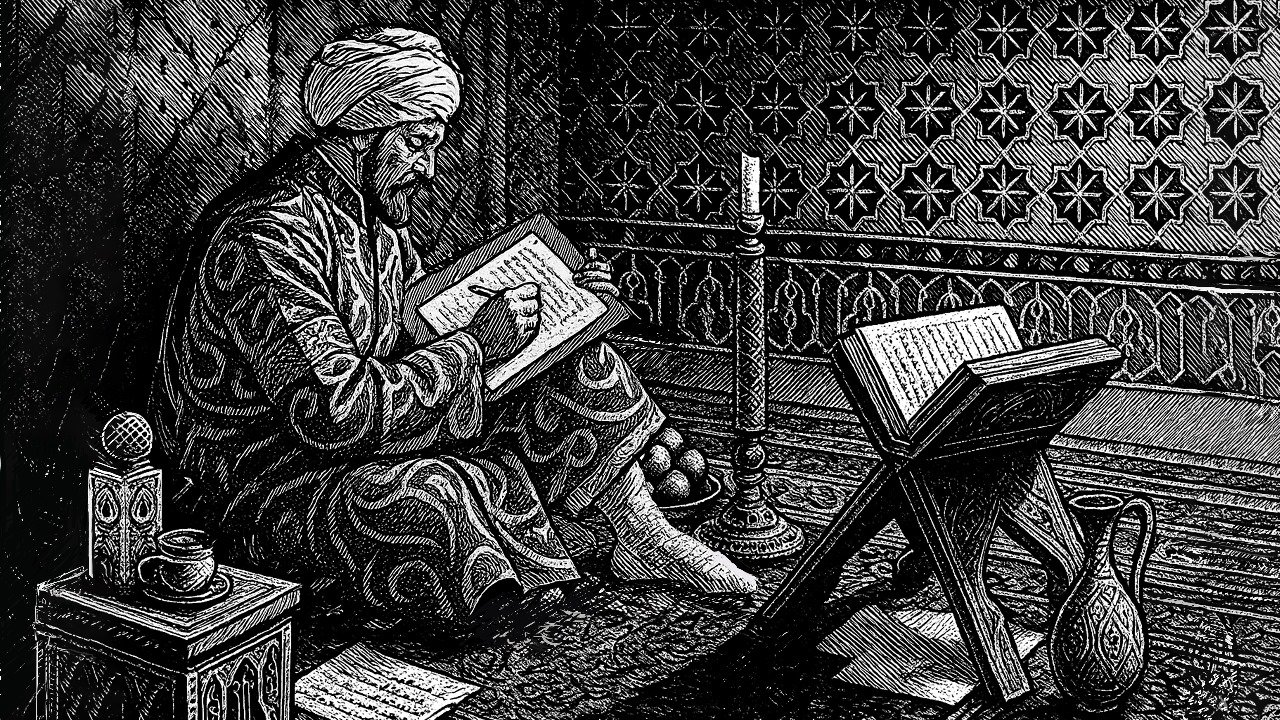
As Allah Almighty says in Surah Az-Zukhruf: “And they will cry out, ‘O Malik, let your Lord put an end to us!’ He will say, ‘Indeed, you will remain.’”
Also available in:العربية

In October 1998, Chile’s coup leader President Augusto Pinochet had reached the age of 83. By then, he had already left power for eight years, after ruling his country with an iron fist for seventeen years. Although he stepped down from the presidency in 1990, he continued to enjoy strong immunity as Commander-in-Chief of the army until 1998, then became a senator for life under the 1980 Constitution he had crafted to protect himself, believing that his bloody past would never catch up with him.
What the general did not expect was that his trip to London for medical treatment would turn into a legal nightmare. In September 1998, Pinochet traveled to Britain to receive spinal treatment at a private hospital. His visit was fairly public, as he met with some British Conservative politicians who regarded him as a former ally against communism.
He had no idea that this trip would open the door to one of the most significant legal cases of the 20th century, and that his stay in London would turn into a de facto house arrest that would last more than 500 days.
In Spain, a young judge, Baltasar Garzón, was known for his boldness in pursuing war crimes and terrorism, particularly after relatives of Spanish victims who had disappeared in Chile filed cases in Madrid courts. They relied on the principle of universal jurisdiction, which allows for the prosecution of crimes against humanity wherever they are committed.
Indeed, Garzón’s audacity enabled him to pursue Pinochet. He issued an international arrest warrant against him, and in 1998 Pinochet was arrested, accused of involvement in killings, torture, and enforced disappearances. Based on this, British police detained him in his room at London’s Clínica Hospital.
According to Human Rights Watch, Pinochet tried twice to appeal the British House of Lords’ ruling on his arrest, but to no avail. He argued immunity from arrest and extradition as a former head of state, but the House of Lords rejected his claim.
In the first ruling, the Lords decided that while a former head of state does enjoy immunity for acts carried out in the course of official duties, crimes of torture and crimes against humanity could by no means be considered part of a head of state’s functions.
In the second and more restrictive ruling, the Lords found that Britain and Chile’s ratification of the UN Convention Against Torture deprived Pinochet of immunity in cases of torture.
Thus, a decision was issued to extradite Pinochet to Spain to face charges of torture and conspiracy to commit torture. However, medical examinations in March 2000 claimed that he had lost his mental competence to stand trial, and he was released and returned to Chile.
A paper published by Amnesty International in 2003 refers to what took place on board the Chilean ship Esmeralda, which became a dark stage for the most horrific forms of torture inflicted on political detainees during General Pinochet’s era. The authorities there crafted a tale of terror told through the groans of victims and their screams, drowned out by the roar of the ship’s engines and the crashing of the sea.
The first form of torture was electric shocks: wires were planted into the bodies of detainees, sending electric currents surging through their chests, backs, and sensitive organs—even the testicles did not escape this savage torture. Bodies convulsed, minds teetered between consciousness and loss, while the torturers coldly observed the scene.
The cruelty did not end with electrocution. Prisoners were hung upside down by their feet and then submerged into buckets of water or excrement. The aim was not simply to cause physical pain, but to break the spirit and shatter human dignity. Beatings were a daily routine aboard Esmeralda—with rifle butts, fists, and clubs raining down on frail bodies, leaving behind blue and black marks as evidence of a brutality utterly devoid of mercy.
Another chapter of humiliation came in the form of forced nudity, as prisoners were stripped bare and placed under the torrents of freezing seawater from powerful hoses while their hands were bound. The blasts combined physical pain with deep psychological degradation. Moreover, sleep was forbidden: detainees were deprived of rest, woken every few minutes, beaten again, and kept trapped in a cycle of exhaustion and slow madness.
Even sexual assault was not spared; both men and women suffered from degrading touches, pressure on intimate areas, and forced nudity that pushed their suffering to another level of comprehensive humiliation. Even the ears were not exempt from torment, as detainees endured what was called the “telephone torture,” where both ears were struck simultaneously, producing an internal explosion that shattered nerves and caused hearing loss.
To deepen the psychological wounds, the torturers resorted to mock executions. Prisoners were lined up against a wall, guns pointed at their heads, orders to fire rang out—yet no bullets were released. The moments dragged like eternity, hearts froze, and each person experienced death a thousand times before being dragged back to their daily torment.
These harrowing episodes of torture reveal not only the cruelty of the perpetrators but also the terrifying face of regimes that reduced human beings to mere numbers on a list, breakable bodies, and silenced voices. Yet these testimonies remain living records, carrying within them an eternal cry against forgetting, and a reminder that human dignity can never be erased, no matter how fiercely the machinery of repression tries to write history in blood.
Torture practices were not confined to Chile; horrifying testimonies extended to other countries. Amnesty International reported another torture case in the Nigerian city of Port Harcourt, where Justin Ijeomah, known as “Mr. Human Rights” for his activism defending prisoners, suffered a fate similar to those he sought to protect. Ijeomah described the torture chambers in police stations where detainees were hung from the ceiling, their nails pulled out, beaten with machetes and rifle butts, and forced to drink their own blood mixed with dirt.
He himself endured this in 2010, after defending a detained child. Police arrested him and took him to a cell where a soldier repeatedly slammed his head against a concrete wall. He lost consciousness and was taken to hospital with serious head injuries, and to this day suffers from chronic headaches.
The site also recounted the story of activist Loretta Rosales in the Philippines, who knew that defending human rights during Ferdinand Marcos’s regime was a gamble that could end in death. Two men in civilian clothes kidnapped her, blindfolded her, and took her to a mysterious building, where she was greeted by the screams of other detainees. Then her torturers began their “party of pain”: pouring hot wax on her arms, strangling her with a belt, subjecting her to mock drowning, and finally electrocuting her. Rosales recalled: “My body was shaking uncontrollably, and I no longer had command over it.”
After several days, she was released thanks to her family’s connections within the army. But she was not broken. She continued her struggle until she became chairperson of the Human Rights Commission in her country. Yet, nearly four decades after the article was published, none of her torturers have been tried. In fact, some of them climbed into senior positions.
In a world overshadowed by fear, where political violence drowns out the voice of conscience, philosophy and ethics confront one of the most painful questions: can terrorism ever be justified? And how should a state respond to a threat endangering the lives of hundreds of innocents? Here the story begins between two contrasting voices.
Michael Walzer, who insists on condemning terrorism absolutely, and Alan Dershowitz, who opens the door wide to the debate on whether the state may practice torture in exceptional situations under what is known as the “ticking bomb scenario.”
Walzer is uncompromising in his definition of terrorism. It is not just uncontrolled anger or a blind reaction, but a deliberate act targeting innocents and humanity itself. For him, terrorism is akin to murder and rape, aimed at destabilizing society’s sense of safety and turning individuals into prisoners of fear and despair. From this strict definition, Walzer proceeds to dismantle the justifications that some have long clung to.
He rejects the principle that calls for terrorism, deeming all such arguments invalid and unjustifiable.
To those who claim terrorism is a legitimate option against political tyranny, he responds that history is filled with other means of struggle: from civil disobedience to mass protests, from nonviolent resistance to general strikes. Terrorism has never been an inescapable necessity. It has often been an ideological choice, deliberately rejecting more difficult, but potentially more effective, paths. Terrorism, he warns, may backfire, giving tyrants a pretext to tighten their grip and depriving victims of international sympathy.
Walzer equally rejects politicians resorting to terrorism, viewing it as a nihilistic approach and nothing more than an attempt to evade moral responsibility. Politicians and groups always have choices, but many, unfortunately, opt for unethical methods. For him, there is no excuse for injustice and targeting the innocent.

On the other side, Dershowitz takes us to a different perspective. A state facing an imminent catastrophe, as in the ticking bomb scenario, may have in custody a terrorist who knows the location of a bomb set to explode within hours, threatening the lives of hundreds or even thousands.
In Dershowitz’s view, there is no time for the luxury of traditional interrogation, and no other sources of information are available—except torturing this detainee to save lives. This raises a profound moral dilemma: the clash between protecting innocent lives, upholding the absolute prohibition of torture, and ensuring transparency and accountability in the state’s actions.
Some may think that Dershowitz is calling for an open license to torture without limits, but in reality he advocates for a legal framework that permits torture only through explicit judicial authorization. Such an order would precisely define the method and duration, while guaranteeing oversight and accountability. In his opinion, this approach would prevent a descent into a darker abyss where torture occurs secretly, without rules or supervision. For him, declared and regulated evil, as appalling as it is, is still better than hidden evil that corrodes the state from within.
Thus, both Walzer and Dershowitz present us with the ethical crisis in confronting violence. The former calls for holding firm to strict boundaries even in the darkest circumstances, while the latter raises the question of choosing the lesser evil to prevent the greater one. Both leave us in a world with no easy answers, where every decision is laden with moral cost and the fragility of values.
In a study titled Torture and Islamic Law by Sadiq Reza, history, jurisprudence, and political practice reveal a complex picture that is not without contradictions. Over fourteen centuries of juristic interpretation, three main approaches emerged, forming a duality between jurisprudence and political practice: the legal texts consistently rejected torture, while political practice often left the door open for it.
One approach was the absolute prohibition of torture, upheld by major scholars such as Ibn Hazm and Al-Ghazali—a position closely aligned with modern human rights principles.
Another was conditional permissibility, allowing the beating of suspects if they were of bad reputation or had prior offenses. This view was expressed by Ibn Taymiyyah and his student Ibn al-Qayyim, resembling the medieval European concept of “half-proof,” where pressure could be applied based on partial evidence.
A third was put forward by Al-Mawardi, who distinguished between judges and rulers. He considered it impermissible for judges to use torture, but allowed rulers and governors to employ it as a political tool to achieve justice and maintain order.
Reza argues that this duality left the door open for states to manipulate texts in service of their interests. In the later Islamic periods, particularly under the Ottomans, torture became an institutional part of criminal justice systems, even being explicitly codified in 16th-century Ottoman law.
Thus, theoretical prohibition was transformed into practical permissibility, mirroring what occurred in most global systems of the time—the Islamic world was not unique in this regard.
With the modern era and the rise of human rights frameworks, most Muslim-majority countries enacted laws that explicitly ban torture, with many signing the 1984 UN Convention Against Torture.
Yet Reza notes in his study that the practice of torture has not ceased in many states. Reports from countries like Iran and Saudi Arabia confirm its continued use despite constitutional and legal texts prohibiting it. He highlights a paradox: Qatar, for instance, expressed reservations when signing the convention, citing potential conflicts with Islamic law, even though in practice it ranks among the least involved in torture according to international indicators.
Today, theoretical and juristic trends lean strongly toward the categorical prohibition of torture, as reflected in the 1981 Islamic Universal Declaration of Human Rights and the 1990 Cairo Declaration, both rejecting torture on the basis of Islamic principles. Yet the absence of strong democratic institutions, independent judiciaries, and free press renders texts alone insufficient to halt the practice of torture.
The dilemma lies not only in jurisprudence or international conventions, but also in the mechanisms of internal accountability. Reza argues that the future depends more on building responsible systems of governance that compel rulers to respect the law than on purely juristic debates over texts.
Thus, the discussion of torture in Islamic law reveals a long journey between prohibition and permissibility, from ideals to politics, from jurists to rulers, and from texts to practices.
Although modern trends affirm that Islam rejects torture, the persistence of violations reflects that the issue is deeper than mere texts. It is, at its core, a political, ethical, and human problem.
A person may reach the threshold of fear when confronted with imminent danger, but manages to overcome it through practiced composure, a surge of adrenaline-fueled courage, or deep trust in God’s decree. The scene, however, is entirely different when one reaches the threshold of acute physical or psychological torture.
Here, the human being longs to cross the threshold of pain at any cost, even if that means passing through the threshold of death itself. Yet those who practice torture are careful never to allow their victims to reach it. Death is not their desired outcome; rather, perpetual suffering is both their method and their goal.
And this is the just recompense such criminals among mankind deserve on the Day of Judgment: they will long for death from the intensity of torment, yet it will never be granted to them.
As Allah Almighty says in Surah Az-Zukhruf: “And they will cry out, ‘O Malik, let your Lord put an end to us!’ He will say, ‘Indeed, you will remain.’”
As Allah Almighty says in Surah Az-Zukhruf: “And they will cry out, ‘O Malik, let your Lord put an end to us!’ He will say, ‘Indeed, you will remain.’”