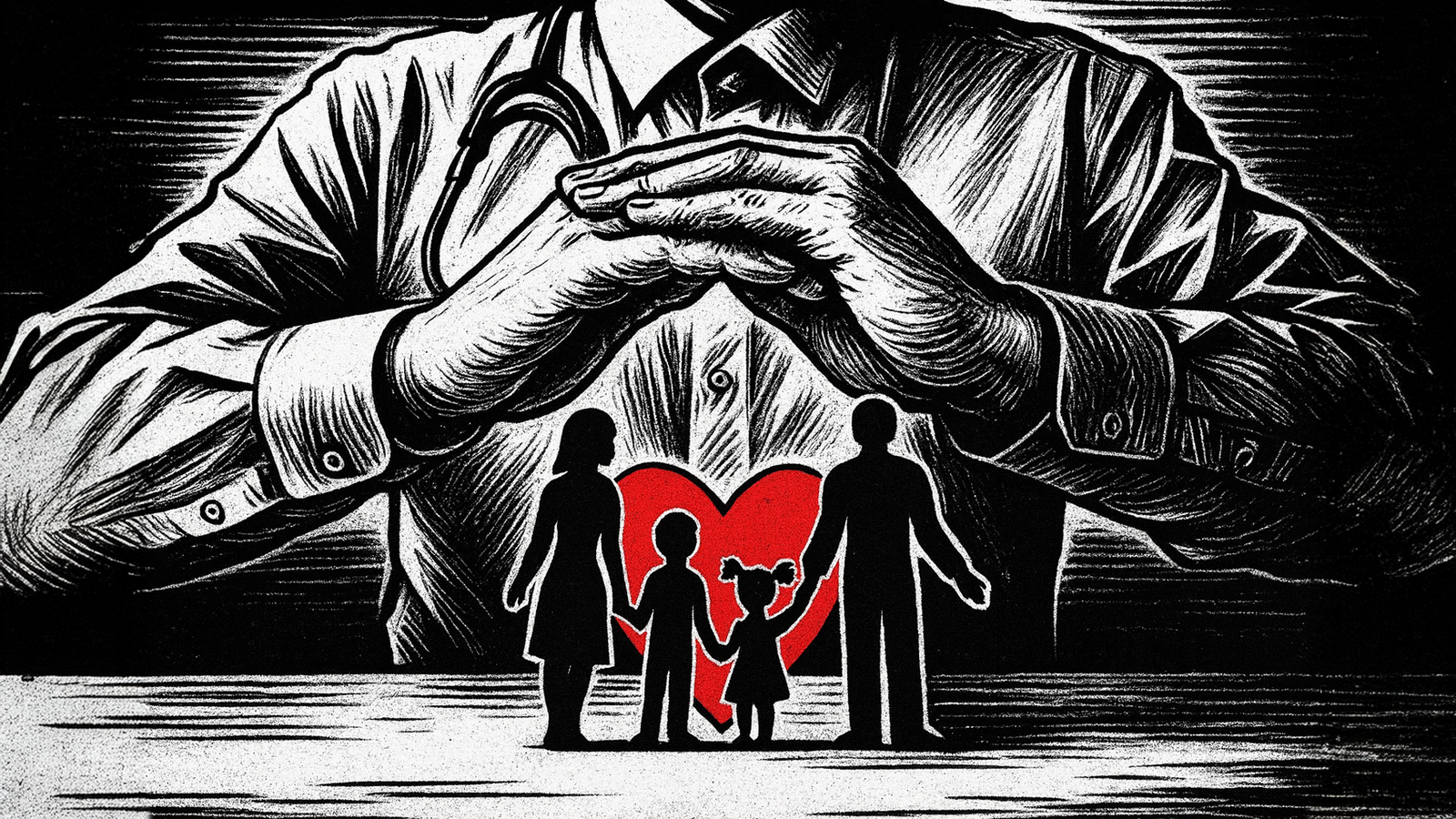
One of the most fundamental human rights is the right to treatment free of charge, for human life cannot ethically be subject to bargaining. Yet the dilemma that has troubled both East and West is this: how can the right of patients to receive free healthcare be reconciled with the right of medical staff and […]
One of the most fundamental human rights is the right to treatment free of charge, for human life cannot ethically be subject to bargaining. Yet the dilemma that has troubled both East and West is this: how can the right of patients to receive free healthcare be reconciled with the right of medical staff and health institutions to cover their expenses and needs?
Countries with socialist orientations chose the path of obligating the state treasury and cooperative compulsory insurance institutions to bear the costs of healthcare. The result, however, was the exhaustion of state budgets and the piling up of long waiting lines where patients had to stand before their cases were diagnosed and treated. In some instances, their conditions worsened or they even died before receiving any medical attention.
Canada, despite its global scientific advancement, stands as a striking example of long patient waiting times for healthcare, even though its population is relatively small at just under 42 million people.
The Fraser Institute in Canada published a report based on a survey of more than 1,900 responses from physicians across 12 specialties in 10 provinces, released on December 12, 2024. The report found that patient waiting periods varied according to specialty and province, with averages exceeding a year in some cases. The longest waits were in orthopedic surgery, with an average of 57.5 weeks, followed by neurosurgery at 46.2 weeks. The shortest was in radiation oncology at 4.5 weeks, while Ontario recorded the shortest overall average waiting time at 23.6 weeks.
As for capitalist-oriented countries, they flung the doors wide open to private health insurance companies, allowing them to profit off the suffering and pain of patients through their dealings with hospitals, doctors, and nurses. Those who have money get treated, while those who do not face mounting debt—if they even receive healthcare at all—or are left to their fate at hospital doors without treatment.
Adding to this are documented cases of financial corruption within private health insurance companies in several Western nations. For instance, a report in the German magazine Der Spiegel revealed that the private health insurer Debeka paid a fine of €1.3 million in what became known as the “data scandal.” The data protection commissioner in Rhineland-Palatinate found violations of data protection regulations in the company’s marketing and client recruitment practices.
The report explained that Debeka employees had paid public sector workers for access to personal data and addresses of potential candidates for government service, aiming to target them with lucrative private insurance contracts. Although the fine was paid, the report emphasized that the case had not been closed criminally, as prosecutors in Koblenz continued investigations into allegations of bribery, incitement to violate official confidentiality, and data protection violations involving company employees and public sector staff.
In contrast to socialist and capitalist systems, the Islamic waqf (endowment) model managed over ten centuries ago to solve the dilemma of providing free healthcare without relying on exploitative health insurance systems, and at the same time without overburdening state budgets—through what was seen as “trade with God.”
The idea is both simple and profound: any Muslim could dedicate any of their assets as a charitable endowment (waqf) for the sake of God, seeking His forgiveness and pleasure in the hereafter. These assets—such as land, markets, shops, public baths, or orchards—would generate recurring income that was spent on free or nearly free hospitals. This covered the salaries of medical and administrative staff, patients’ medicine expenses, and maintenance costs of facilities—without a trace of worldly greed or class conflict.
Hospital endowments in Islamic civilization thus represented an early and effective model for financing comprehensive and sustainable healthcare. They combined institutional efficiency with social justice and left a lasting imprint on the development and organization of medicine even into modern times. The network of bimaristans or Ottoman Dar al-Shifa became one of the earliest examples of social financing for healthcare in history.
One of the earliest was the Al-‘Adudi Bimaristan in Baghdad in the 10th century, funded by endowments, followed by the Al-Nuri Bimaristan in Damascus in the 12th century. In Mamluk Egypt, the model reached its peak with the Qalawun Medical Complex in Cairo in the 13th century, supported by large endowments that ensured free treatment and a wide variety of departments. In Anatolia and the Balkans, Ottoman darüşşifas flourished, such as those in Sivas and Divriği in the 13th century, and the Bayezid II Dar al-Shifa in Edirne in the 15th century. In Morocco and al-Andalus, maristan endowments existed, combining treatment, shelter, and education to varying degrees.
But starting from the late modern era, many Islamic endowments (awqaf) suffered during the period of Western colonialism in much of the Islamic world. They faced financial exhaustion, mismanagement, confiscation, or administrative absorption, which by the early 20th century led to the dismantling of Islamic endowments and the introduction of Western health systems funded by public budgets and social insurance.
After this Western-style decline, however, increasing calls have recently emerged across the Islamic world to reactivate the waqf system, particularly in the fields of health and education. This topic was discussed in some detail by Ahmad Okbelbab in an article for Qawl Fassel magazine titled Islamic Waqf Between Past and Present.
Going back to the mid-18th century, the Industrial Revolution changed the scale of risks and their predictability, especially with the spread of crowded cities, wage labor, and new forms of poverty that charitable activities could no longer consistently address.
In 1883, Otto von Bismarck in Germany introduced the Sickness Insurance Law, marking the turning point from that era. Instead of occasional charity, Bismarck established mandatory work-related insurance funds. This innovation reframed illness not just as a personal misfortune but as a social risk threatening the community as a whole.
This was followed by Britain’s National Insurance Act of 1911, and after World War II, the establishment of the National Health Service (NHS) in 1948 brought forward another comprehensive, tax-funded, and free healthcare model.
In the United States, however, no broad public consensus emerged on how to structure healthcare insurance. Private insurance companies appeared to cover the vast market of the U.S., and later the public programs Medicare and Medicaid were introduced in the 1960s. Yet despite these developments, healthcare costs remained a major burden troubling millions of Americans.
The 21st century brought both ambition and pressure, reaffirming that healthcare is a human right, and low- and middle-income countries began making strides toward universal coverage.
Yet the numbers tell a discouraging story: the World Health Organization estimates that about 4.5 billion people were not fully covered with essential health services as of 2021, and progress on the service coverage index has stalled since 2019. Meanwhile, catastrophic healthcare expenses continue to push families into poverty and hardship.
Globalization has added another layer of complexity. Social rights, including healthcare, are almost always regional, and entitlements in one country rarely follow you across borders. This gap created a market for private international health insurance and forced national systems to take positions on foreign residents. Some countries simply require newcomers to join their mandatory health systems, others impose private insurance as a condition for residence, and many apply both sequentially—private first, then public later.
The OECD notes variations in healthcare spending by insurance type: about three-quarters of health expenditure in member states is funded by government systems or mandatory insurance, whether public or private.
While the remaining quarter comes from voluntary arrangements such as optional private insurance or direct out-of-pocket payments. Population age structure also strongly affects healthcare demand: the risk of illness rises with age, leading to higher mortality rates and more prevalent diseases, and thus greater demand and spending on health.
Now imagine retiring in a country where you can swap your unpredictable climate for year-round spring-like weather, replace your boring daily routine with the joy of new discoveries, and stretch your limited pension into a lifestyle of comfort and leisure—with new friends and a slower pace of life.
When retirement abroad works smoothly, a fall down the stairs becomes an appointment with a skilled orthopedic surgeon rather than a financial crisis, and you avoid the slow-moving paperwork lines that delay access to your health insurance card.
This makes it crucial to understand the details of the healthcare system in your new country—what employees expect from it, what percentage of your monthly income premiums will consume, and how public insurance policies interact with private contracts.
Simply buying a health insurance policy or joining the national system of your host country is a shallow approach. In some places, foreign retirees must carry private insurance for long-term residence permits. In others, residency gives them access to the national healthcare system. And in many countries, the most flexible hybrid model applies: public enrollment as the foundation, with a modest, optional private plan added for extra coverage.
For the cross-border retiree, there are three broad pathways to healthcare. The first is international private insurance, a portable option wherever you go. Its importance becomes clear when national health systems exclude non-citizens or when you need access to private hospitals outside public entitlements. However, the term “international” can sometimes mask very real local challenges on the ground.
The second option is integration into a national public health system, which is often preferred. For example, Germany requires many foreign students and workers to join its mandatory insurance system, while Japan and South Korea also obligate foreign residents to enroll in their national schemes. According to the European Commission, Portugal allows legal residents to register with its National Health Service.
The third path is a hybrid approach, combining private health insurance with the national system. In this model, private insurance fills the gaps faced by expatriates, though this option is not available everywhere.
Additionally, European coordination through the European Health Insurance Card (EHIC), as noted by the European Commission, provides an important but often misunderstood safety net. It entitles an insured person in one EU member state to receive medically necessary care during a temporary stay in another member state, under the same conditions and costs as local residents. However, it is neither a residence permit nor a substitute for comprehensive coverage when relocating long-term. It is better understood as a travel umbrella, not a roof for permanent living.
Overall, health insurance for retired expatriates is fragile in many countries. It requires careful study and consultation of consular advisories, with the expectation that laws may change at any moment. Retirees must also avoid confusing travel insurance with the insurance required for long-term residence.
Moreover, purchasing only the minimum health insurance policy is often insufficient. There may be exclusions, waiting periods for certain care, or requirements for upfront payment of medical expenses with reimbursement afterward—serious obstacles for those without immediate access to sufficient funds.
Moreover, purchasing only the minimum health insurance policy is often insufficient. There may be exclusions, waiting periods for certain care, or requirements for upfront payment of medical expenses with reimbursement afterward—serious obstacles for those without immediate access to sufficient funds.