

Gutenberg’s Press and Its Predecessor in Fayoum
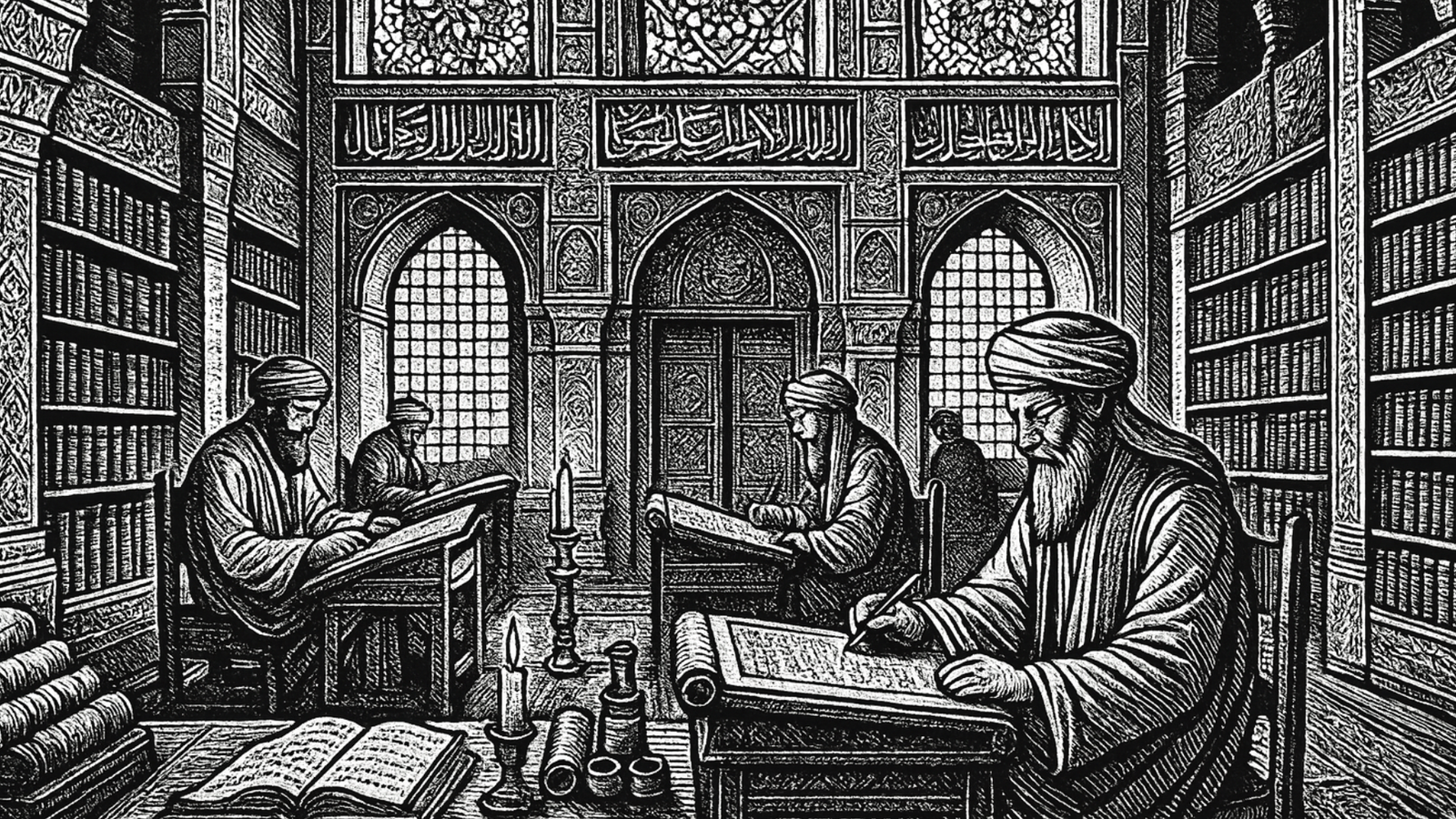
What struck me most in Al-Muhanna’s interview was his reference to the 11th-century book Al-Hullah al-Siyarā by Ibn al-Anbari, which mentioned that Muslims during the Abbasid era, several centuries before Gutenberg’s birth, had already developed a method for printing the caliph’s decrees using wooden blocks engraved in reverse—like a mirror image—to be posted on city walls.
This was later noted by the Austrian orientalist Joseph von Karabacek in his 1887 book Arabic Paper, where he wrote that, while examining a collection of papyrus and paper documents discovered in Egypt’s Fayoum Oasis, he made a stunning discovery: fragments of Arabic texts printed with wooden blocks.
These printed fragments date back to the 10th century AD, with some printed in two colors, and all showing diversity in scripts—from Kufic to elegant Naskh. Among the examples was one text printed on a linen envelope, and another containing the first six verses of Surah Saba.
The importance of these fragments lies in the fact that they were printed, which challenges the common belief that the Islamic world hindered the transfer of printing technology from the Far East to Europe. On the contrary, the Fayoum fragments suggest that Muslims may have been the intermediaries who introduced the early techniques of printing to Europe. After all, if Muslims had accepted the use of seals and coin minting, why would they reject woodblock printing?
Although other similar evidence later appeared in European and American libraries — which could have revolutionized existing theories about the history of printing — this discovery was never widely published and has remained confined to a narrow circle of specialists.
Descartes and Al-Ghazali
In his interview, Muhanna Al-Muhanna affirms that the French philosopher René Descartes was influenced by Abu Hamid Al-Ghazali’s method of doubt, which he used as a means to attain truth.
This is supported by Dr. Nazim Ghulam, Associate Professor in the Department of Jurisprudence at the University of South Africa, who explains in his paper The Influence of Al-Ghazali and Ibn Sina on Descartes that the philosophical heritage of Muslim thinkers made clear contributions to the development of human thought — particularly through prominent figures such as Al-Ghazali and Ibn Sina (Avicenna). The influence of these two scholars reached Europe during the Middle Ages through Latin translations, resonating with René Descartes, the founder of modern Western philosophy, who was born over five centuries after Al-Ghazali and Ibn Sina and lived until the mid-17th century.
Descartes adopted doubt as a philosophical tool, beginning in his Meditations on First Philosophy (1641) by questioning the reliability of the senses, the external world, and even mathematics — until he arrived at an undeniable certainty, summarized in his famous phrase: “I think, therefore I am.”
Yet Al-Ghazali had preceded him centuries earlier in his book Deliverance from Error and the Attainment of Divine Light (1109), where he also rejected the reliability of both the senses and reason until he reached a certainty attainable only through divine illumination. The difference lies in their conclusions: Al-Ghazali ended his journey with religious faith, while Descartes arrived at rational certainty. However, the striking similarity between their intellectual experiences suggests the possibility of Al-Ghazali’s influence on Descartes.
Dr. Ghulam further elaborates on Ibn Sina, noting that he played a crucial role in shaping the concept of the distinction between the soul and the body, through what he called the “Flying Man Experiment.” In it, he imagined a human being with full consciousness but entirely cut off from the senses and the external world — yet still aware of his own existence. This experiment, formulated centuries before Descartes, anticipates his theory of mind-body dualism, founded on the idea that self-awareness is independent of the physical body. This notion mirrors Descartes’ concept of the cogito, which asserts that consciousness of the thinking self is distinct from the external world and the body.
Ghulam adds that Al-Ghazali, Ibn Sina, and Descartes share a common intellectual anxiety — the pursuit of certainty. Al-Ghazali believed that certainty comes only through revelation, Ibn Sina emphasized the power of reason to perceive metaphysical truths through contemplation, while Descartes sought a balance between rationalism and faith, believing that some truths are grasped by reason and others by revelation. This shared preoccupation with the limits of sense and intellect shows that all three philosophers sought to transcend doubt in order to reach a solid foundation for knowledge.
After being translated into Latin during the 12th and 13th centuries, the works of Ibn Sina, such as The Book of Healing (1027), and Al-Ghazali’s The Incoherence of the Philosophers (1095), circulated widely in Europe. In the latter, Al-Ghazali launched a strong critique of Muslim philosophers influenced by Greek thought — such as Al-Farabi and Ibn Sina — accusing them of exceeding the limits of reason sanctioned by Islamic law in certain matters and adopting views incompatible with Islamic creed.
These translations formed a bridge that transferred Islamic philosophical thought to Europe, especially through the city of Toledo (Ṭulayṭula) in Spain. From there, they reached European Renaissance philosophers and ultimately Descartes, confirming that philosophy is not an isolated effort, but rather a cross-cultural dialogue. The method of doubt in Al-Ghazali inspired Descartes’ skeptical approach, and Ibn Sina’s Flying Man anticipated Cartesian dualism — proving that much of the foundation of modern philosophy was not built in a purely European vacuum, but emerged from a long intellectual interaction with Muslim thought.
The Influence of Andalusian Muwashshah Poetry on Shakespeare
In his interview, Muhanna Al-Muhanna draws a comparison between the Andalusian muwashshah and Shakespeare’s sonnets, suggesting that the former served as a primary inspiration for much of Shakespeare’s work.
Supporting this perspective, an article on The Pen Magazine titled Andalusian Literature and the West explains that the muwashshah was a new form of eloquent lyrical poetry that emerged in the 9th century, purely Andalusian in origin, and attributed to Muqaddam, a blind poet from the village of Cabra near Córdoba, during the reign of Prince Abdullah ibn Muhammad ibn Abd al-Rahman al-Awsat, the fourth Umayyad ruler of Al-Andalus.
Another poetic form, the zajal, also an Andalusian invention, was a colloquial lyrical form written in the Cordoban dialect and popularized by Ibn Quzman. Both forms flourished in the courts of Al-Andalus and remained unknown in the Arab East for centuries.
The Andalusian muwashshah is distinguished by its variety of rhythms and rhymes, arranged in a musical structure suitable for singing. It was designed to be performed accompanied by musical instruments, and its final verse, or kharja, could appear in a different language, creating musical and semantic variation — in contrast to the classical Arabic qasida, which was recited orally without musical accompaniment.
A significant development in the form of love poetry occurred in Sicily with the poet Giacomo da Lentini, who invented the sonnet — a lyrical poetic form consisting of fourteen lines following a strict rhyme scheme, drawing some of its stylistic inspiration from the Andalusian muwashshah.
This poetic innovation nourished the lyricism of the troubadours, the poetic-musical movement that emerged in southern France in the late 11th century and continued until the 14th century. It was later adopted by Dante Alighieri, the Italian poet and philosopher and author of The Divine Comedy, and by Francesco Petrarch, the author of Il Canzoniere (The Book of Songs).
Eventually came William Shakespeare, who composed around 155 sonnets that clearly bear the influence of Andalusian love poetry — despite the vast differences in time and place.
Cinderella and the Tale of Wariqat Al-Henna
Muhanna Al-Muhanna’s literary examples do not end with Shakespeare’s inspiration from Andalusian muwashshahat; he also claims that the famous Cinderella story was derived from Yemeni folk heritage.
This claim is supported in detail by Ali Muhammad Abdu in his book Yemeni Tales and Legends (1985), where he explains that the story of Cinderella originates from a Yemeni folktale titled “Wariqat Al-Henna”, which was later carried by Yemenis to Al-Andalus.
The original Yemeni story revolves around a beautiful girl named Wariqat Al-Henna, whose mother had died. Her father remarried a widow who had a daughter from her previous marriage named Karam, of the same age as Wariqat. The stepmother hated Wariqat, treated her cruelly, and constantly complained about her to her father, claiming that she did not help with housework.
The two girls alternated in herding the cattle. When Wariqat Al-Henna went out, she would return full and satisfied, but on Karam’s days, she came back hungry and thirsty. The reason lay in an old witch who sat by the roadside. Wariqat would treat her kindly, offer her half her bread, and help clean her hair of lice. In return, the witch would reward her by saying:
“Sit down and say to your cows, ‘Graze and come near.’”
The cows would eat until full and then gather around her.
However, Karam would scorn the witch, who in turn cursed her by saying:
“Starve and stay away.”
So Karam’s cows returned weak and hungry.
The story takes a turning point when the Sultan’s son comes to the village to choose a bride during a royal dance celebration. The stepmother prepares her daughter Karam in the finest clothes and jewels, leaving Wariqat Al-Henna burdened with housework. But the witch reappears and gifts her a fine dress, golden shoes, and sparkling jewels.
Wariqat Al-Henna attends the celebration, enchanting everyone with her beauty. The prince is captivated by her presence and dancing. When she spots her stepmother and stepsister, she flees before they can recognize her — but as she runs, her golden shoe slips off.
After the celebration, the prince finds the golden shoe and searches every village until he reaches her home. The stepmother tries to stop him, but he insists on inspecting every room until he finds Wariqat Al-Henna on the rooftop. The shoe fits only her feet, and he chooses her as his bride.
Yet on the wedding day, the stepmother plots to replace Wariqat Al-Henna with her own daughter. The witch intervenes, tricking Karam into dipping her head into a large pot of food, staining her clothes so she has no time to clean or change. Meanwhile, the witch prepares Wariqat Al-Henna for her wedding, and she marries the prince, living happily with him.
But the tale doesn’t end there. The prince’s first wife grows jealous and conspires against Wariqat Al-Henna, sticking enchanted thorns and needles into her head, turning her into a dove. The prince searches for her endlessly, unaware that she perches on a tree branch near the fields, where a young man named Batool works.
Every day, she calls out:
“Oh Batool, oh Batool, how fares the groom?”
And weeps until her tears bring rain.
Batool recounts the strange story of the dove and the rain to the prince, who wonders why it rains in the fields but not at his palace. After several days, the scene repeats, and the prince decides to witness it himself. When he catches the dove, he examines her head and removes the thorns and needles one by one — and Wariqat Al-Henna returns to her human form.
The story ends with her reunion with the prince, who rejoices, divorces his deceitful first wife, and celebrates the triumph of love and patience over injustice.
The Influence of Judaism on Greek Philosophy
Throughout the ages, philosophers’ ideas were never entirely of their own invention. It is believed that divine revelation was always the seed of such reflections, as there can be no path to understanding metaphysical or unseen realities without revelation.
This view is supported by an article titled
Aristobulus of Paneas
on The Jewish Encyclopedia website, in which authors Richard Gottheil and Paul Wendland explain that Aristobulus of Alexandria, a philosopher of the Peripatetic school who lived in the 3rd or 2nd century BCE, deduced in the second passage of the Twelfth Book of the Preparation for the Gospel—based on now-lost earlier discussions—that both Plato and Pythagoras had drawn from a Greek translation of the Old Testament that existed even before the time of Demetrius of Phalerum (the Peripatetic philosopher, eloquent orator, and governor of Athens between 317–307 BCE).
Demetrius, who later served as advisor to Ptolemy, proposed translating the Torah into Greek, a translation known as the Septuagint, because over seventy Jewish scholars labored on it in 3rd-century BCE Egypt, with the aim of making Jewish sacred texts accessible to Greek-speaking Jews.
In a paper presented at the University of Missouri–St. Louis, titled Sages and Philosophers: A Reassessment of the Interaction between Ancient Israel and Greece, Mike Tolliver writes that wisdom in Israel was deeply intertwined with religion, seen as a divine gift associated with the fear of God and the pursuit of a righteous life. The Hebrew sage was not merely a thinker but a moral teacher, concerned with justice, commandments, and virtuous living.
In Greece, by contrast, the philosopher sought the first principles of the universe, relying on reason, logic, and contemplation to understand the nature of existence apart from direct religious authority. Despite these differing foundations, both traditions shared the belief that wisdom and virtue are the ultimate aims of human life.
Tolliver notes the historical likelihood of mutual influence: after the Babylonian Exile and the resulting cultural contact among Mediterranean peoples, it is plausible that some Hebrew ideas reached Greece—or vice versa. Supporting this, certain ancient sources, such as the writings of the traveler and philosopher Abu al-Hasan Ali ibn al-Husayn al-Mas‘udi (who lived in 9th-century Baghdad) and other Muslim historians, indicate that the sages of the Israelites had an intellectual impact on Greek philosophers.
The Influence of Andalusian Medicine on Europe
In his interview, Muhanna Al-Muhanna did not overlook the numerous examples of how the sciences of Muslim scholars in Al-Andalus influenced Europe.
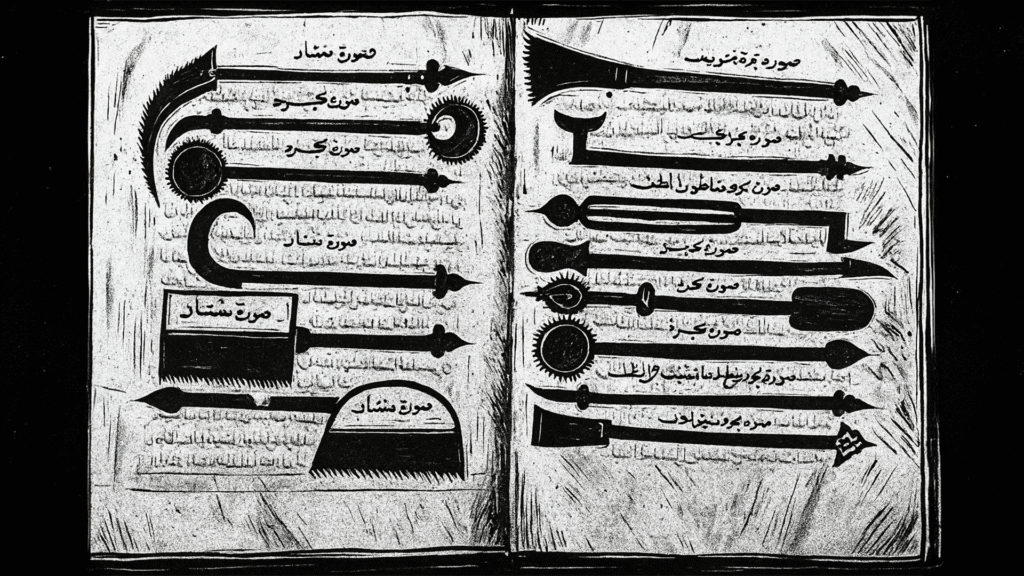
Among them is a paper by Hind Al-Otaibi titled A Historical Review of Andalusian Physicians and the Treatment of Mental Health, which states that Andalusian medicine marked a turning point in the history of global medicine. It was distinguished by a holistic approach that linked the body, mind, and spirit, with Andalusian physicians drawing heavily on previous civilizations—particularly the Greek heritage represented by Hippocrates.
Hippocrates symbolized the beginning of scientific thought in European medicine, establishing his school on the principles of clinical observation and the search for natural causes of disease, away from supernatural explanations. His influence reached Al-Andalus through the Arabic translations of Greek medical texts, where the Hippocratic Corpus was translated into Arabic during the Abbasid era and later into Latin in Toledo and Sicily.
This formed a central foundation for medical curricula in Al-Andalus, from which it later spread to Europe. Andalusian physicians such as Ibn Sina (Avicenna), Al-Zahrawi (Abulcasis), and Ibn Rushd (Averroes) adopted the Hippocratic method of diagnosis—linking symptoms to environment and lifestyle—and expanded it with innovations in surgery, pharmacology, and psychology.
Al-Otaibi adds that Andalusian medicine was one of the most significant contributions to mental health care, embodying Hippocrates’ principle that mental illness is not a curse, but a disorder that requires treatment. This stood in stark contrast to the medieval Church’s view in Europe, which associated mental illness with sorcery or demonic possession. The Andalusians followed a rational approach, influenced by Hippocratic methodology, combining medical treatment with psychological and spiritual support.
The first mental health hospitals (maristans) were established in Al-Andalus, such as the Granada Maristan in 1365, representing a revolutionary model compared to later European asylums. These institutions were based on compassionate care and respect for patients, unlike Europe’s practice of confining and isolating the mentally ill.
This Andalusian model, rooted in Hippocratic ethics of mercy and human dignity, later inspired Europe and contributed to the foundations of Western psychiatry.
Moreover, Andalusian medicine pioneered the concept of preventive medicine through dietary regulation and behavioral guidance, directly extending Hippocrates’ belief that “food is medicine.” This principle became a cornerstone of European medicine during the Renaissance and beyond.
In the 12th century, the School of Translators in Toledo played a decisive role in transferring Andalusian medical knowledge—blended with Hippocratic thought—to Latin Europe. Notable works translated at the time included Avicenna’s Canon of Medicine (1020), in five volumes, which remained a standard reference in Europe until the mid-17th century, and Al-Zahrawi’s Al-Tasrif (1000), a thirty-volume encyclopedia that served as a surgical manual in Europe for over five centuries.
Through these translations, Hippocrates once again became the backbone of European medical education, but now refined and reinterpreted through the lens of Andalusian physicians. This transformed the course of European medicine, as universities such as Montpellier, Padua, and Paris adopted clinical observation methods influenced by Hippocratic principles transmitted through Islamic medicine.
Diseases came to be viewed as having natural causes, and health as a balance between physical, mental, and environmental factors—a shift that paved the way for the medical rationalism that became the hallmark of modern Western medicine.
Indeed, Hippocrates may have been the starting point, but Europe did not inherit his legacy directly; rather, it came through Al-Andalus, which preserved his texts, reinterpreted them, and enriched them with practical experience and moral and spiritual dimensions — becoming the vital link between Hippocrates of ancient Greece and modern European medicine.
Intellectual Property Rights: A Double-Edged Sword
Personally, I know of no work that comes without compensation — whether material, moral, or spiritual. Yet since the latter two do not necessarily meet a person’s basic needs for food, shelter, and sustenance — and not everyone can attain them — material societies had to intervene to protect the ideas of thinkers, creators, and inventors, encouraging them to continue dedicating their time, effort, and often their wealth to enriching a society eager for every step toward progress.
Thus, numerous laws were enacted to protect intellectual property rights, though time-bound, to prevent perpetual monopolization by creators and their heirs while allowing them to benefit fairly within a reasonable period — leaving room for personal ambition and innovation to thrive.
For example, the U.S. Copyright Office states that:
“The term of copyright for a particular work depends on several factors, including whether it has been published, and if so, the date of first publication. As a general rule, for works created after January 1, 1978, copyright protection lasts for the life of the author plus an additional 70 years.”
As for U.S. patent law, it provides that:
“The term of a patent begins on the date the patent is granted and ends 20 years from the date the original application was filed with the U.S. Patent and Trademark Office. Since examination usually takes a little more than two years, the average effective term of a patent is around 17 to 18 years. The law also allows extensions based on delays in examination or regulatory approval, particularly for patented drugs and medical devices.”
In general, U.S. law lays out numerous conditions, exceptions, and categories governing copyrights, patents, trademarks, and trade secrets.
Yet despite these legal frameworks, the intense judicial battles among competing corporations over patents expose a ruthlessly materialistic mindset—one rarely motivated by genuine concern for human welfare. These corporations often prioritize profit over compassion, even when it means withholding life-saving medicines from patients who cannot afford them, blocked by nothing more than a patent certificate.
For example, an article on Reuters titled U.S. Jury Orders Apple to Pay $539 Million in Patent Retrial Against Samsung illustrates the ferocity of commercial rivalry between tech giants over intellectual property.
Even more troubling is a report by the London School of Economics and Political Science, Life-Saving Drug Patents Create a Global Health Crisis , which describes how pharmaceutical companies trade human lives for profit, turning human suffering into a commodity.
From the depths of my heart, I pray that God grants mercy to Alexander Fleming, the humble discoverer of penicillin, who refused to patent his drug, considering it an ethical obstacle to humanity. With one simple signature, he could have become immensely wealthy, yet he sacrificed that for the sake of mankind — saving, and continuing to save, millions of lives from tuberculosis and bacterial infections.
After exploring intellectual property issues, I find that Islam holds a uniquely elevated view of knowledge, research, and dissemination unmatched anywhere in the world. In Islam, it is forbidden to conceal or monopolize knowledge, as narrated in Sahih Ibn Hibban from Abdullah ibn Amr:
The Messenger of Allah ﷺ said: “Whoever conceals knowledge, Allah will bridle him with a bridle of fire on the Day of Resurrection.”
Thus, in Islamic culture, knowledge is sought for the sake of God, not worldly gain. Scholars and students dedicate their time and effort seeking divine reward, not fame or material benefit.
Unlike worldly laws that impose time limits on intellectual property, Islam places no time limit on the reward for sharing knowledge — a reward that continues until the end of time. As narrated in Sahih Muslim from Abu Huraira, the Prophet ﷺ said:
“When a human being dies, his deeds come to an end except for three: ongoing charity, beneficial knowledge, or a righteous child who prays for him.”
The Islamic endowments (waqf) — which I previously discussed in The Islamic Endowment: Past and Present — were strictly independent from governments and held sacred legitimacy. They served as the main sponsors of scholars, teachers, and students, supporting them without extravagance or deprivation, funded by generous individuals seeking divine reward — without arrogance or expectation of return.
This collective spiritual pursuit among Muslim scholars, students, teachers, and patrons aligns with the words of God in Surah Al Imran (3:190–191):
“Indeed, in the creation of the heavens and the earth and the alternation of the night and day are signs for those of understanding — those who remember Allah while standing, sitting, and lying on their sides, and reflect on the creation of the heavens and the earth, saying, ‘Our Lord, You did not create this in vain; glory be to You, so protect us from the punishment of the Fire.’”
This collective spiritual pursuit among Muslim scholars, students, teachers, and patrons aligns with the words of God in Surah Al Imran (3:190–191):
“Indeed, in the creation of the heavens and the earth and the alternation of the night and day are signs for those of understanding — those who remember Allah while standing, sitting, and lying on their sides, and reflect on the creation of the heavens and the earth, saying, ‘Our Lord, You did not create this in vain; glory be to You, so protect us from the punishment of the Fire.’”