The central bank in every country prints currency in accordance with a monetary policy overseen by the state to control and curb inflation. Money reaches individuals in society in the form of salaries or as consideration for financial transactions among them. For decades, people typically settled their financial obligations in cash. However, another financial instrument [...]
The central bank in every country prints currency in accordance with a monetary policy overseen by the state to control and curb inflation. Money reaches individuals in society in the form of salaries or as consideration for financial transactions among them.
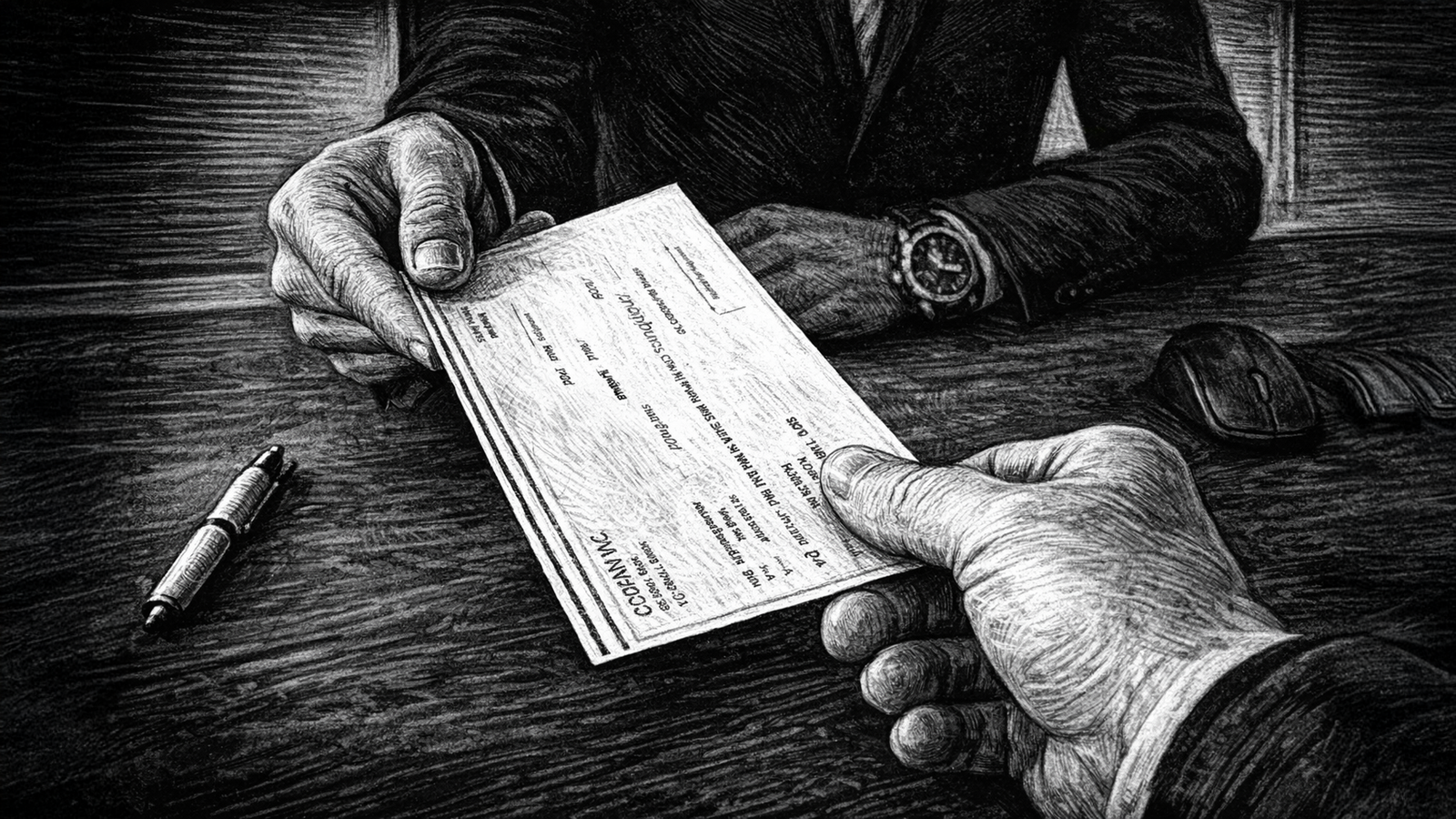
For decades, people typically settled their financial obligations in cash. However, another financial instrument was invented to replace cash—one that cannot be stolen because it is payable only to the person in whose name it is issued, as if an individual were printing their own money legally. This instrument is the banking instrument or order to pay a sum of money, commonly known as the cheque.
The earliest explicit historical reference to the cheque dates back to the ninth century CE, corresponding to the second century AH, during the reign of the Abbasid Caliph Harun al-Rashid. Mansour Al-Assaf notes in an article published in Al-Riyadh newspaper that during this period, a Muslim businessman could issue a cheque in Canton, China, drawn on his account in Baghdad, within a relatively advanced banking system that allowed remote transfers and settlement.
In Europe, Al-Assaf explains that the concept of the cheque and payment instruments entered through the development of banking practices at a later stage compared to the Islamic world. The use of bank cheques among merchants and wealthy individuals in Europe began in the late eighteenth century. Early banknotes themselves represented a form of bank cheque, as they were deposit receipts issued by money changers and circulated as instruments entitling the bearer to receive a specified amount of legal tender on demand.
He also mentions that the Bank of Venice in 1587 played a pioneering role in this form of payment, reflecting the transmission of the concept into Europe through Italian banking practices and subsequently into the broader European financial system.
In general, the purpose of the cheque is to avoid carrying cash—whether due to the risk of theft, the large size of the amount, or the inability of the debtor to access a bank to withdraw the required sum for payment to the entitled party.
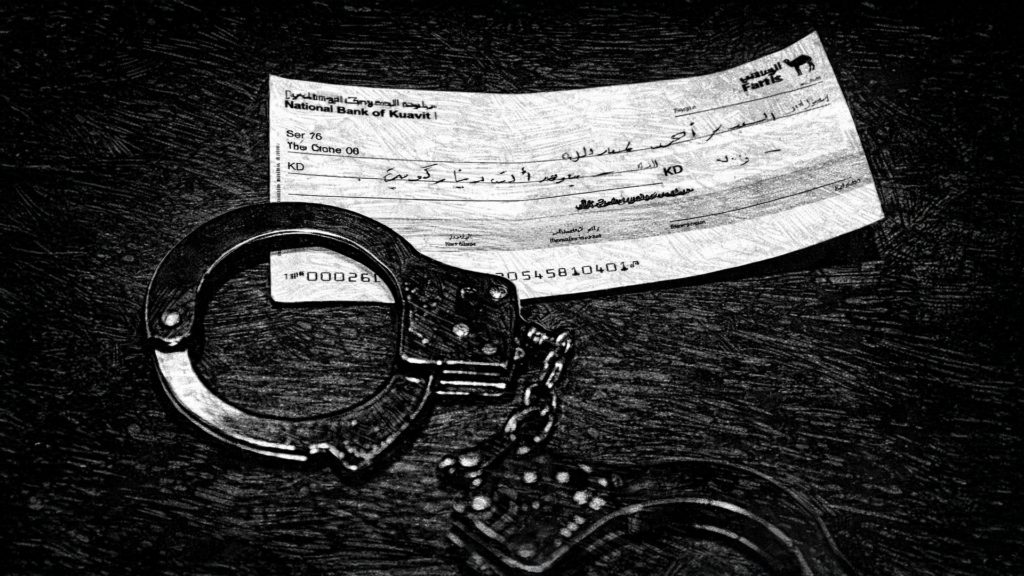
A financial disaster arises when the widespread issuance of cheques without sufficient funds undermines trust in cheques and forces a return to immediate cash transactions, hand to hand. For this reason, most Arab legislations have adopted imprisonment as a penalty for anyone who, in bad faith, issues a cheque without sufficient funds in their account.
A cheque is normally returned unpaid even if most of its amount is available in the drawer’s account. An exception exists in the State of Qatar, which introduced an amendment under Law No. (1) of 2024 to Article 585 of Law No. (27) of 2006 promulgating the Commercial Code. This amendment obliges banks to pay the available portion of the cheque amount if the balance is less than the amount written on the cheque, unless the cheque holder refuses this procedure. The partial payment must be recorded on the back of the cheque, and a certificate confirming it must be issued.
This amendment seeks to achieve several objectives simultaneously. It reduces the number of cheques returned without full payment, reinforces the function of the cheque as an instrument of payment even when the balance is insufficient, and enables the cheque holder to use the cheque and the accompanying certificate as evidence of the remaining amount, whether before the civil courts or in enforcement proceedings.
In this context, Qatari law remains, in principle, consistent with the classical conception of the cheque, while at the same time responding to the same challenges faced by regional legal systems, particularly the widespread use of post-dated cheques and cheques used as guarantees in leases and commercial transactions, as well as the noticeable increase in returned cheques. This situation necessitated amendments to the Commercial Code aimed at strengthening the cheque’s role as a payment instrument and reducing reliance on custodial penalties alone as a means of deterrence.
At the same time, the legislator did not amend Article 357 of Law No. (11) of 2004 promulgating the Penal Code, and criminalization therefore remains in cases of bad faith. This places the Qatari model between systems that have fully retained criminal liability and those that have moved toward abolishing most forms of criminalization in favor of civil enforcement.
Article 581 of Law No. (27) of 2006 promulgating the Commercial Code also sets precise time limits for presenting cheques. A cheque drawn and payable in Qatar must be presented within six months, while a cheque drawn abroad and payable in Qatar must be presented within eight months. The expiry of these periods results in the lapse of certain negotiable rights of the holder, although the underlying right remains intact.
Through this approach, the Qatari legislator affirms the cash-like nature of the cheque and links negotiable protection and additional sanctions to compliance with these time limits, in line with a legislative vision that considers the time framework an integral part of ensuring credibility.
Qatari commercial law does not formally distinguish between a cheque issued for payment and a cheque issued as a guarantee. Instead, it adopts a single objective and formal criterion: once an instrument fulfills the mandatory data of a cheque, is drawn on a bank, and is payable at sight, it is considered a cheque and the prescribed rules apply.
This means that labeling a cheque as a “guarantee” in a lease contract or otherwise does not alter its legal nature as long as it meets the requirements of a cheque, nor does it remove it from the scope of negotiable and criminal protection if the other elements are satisfied.
However, practical practice in Qatar, as reflected in press reports and data from the Qatar Credit Bureau, indicates a significant expansion in the use of post-dated cheques as instruments of payment in leases and commercial transactions, creating a layer of credit risk.
Qatari law expressly provides that imprisonment for issuing a cheque without sufficient funds is not mandatory unless the conduct involves bad faith. This leaves the judiciary with discretion to assess cases where failure to pay results from sudden economic circumstances rather than fraudulent intent, in line with juristic analysis that links bad faith to intent to harm or deceive, not merely to inability to pay.
In addition, criminal proceedings are generally initiated upon a complaint by the beneficiary within a specific time frame. Practical experience in Qatar shows that settlement and payment of the cheque amount can lead to suspension of execution or termination of the case, reflecting a practical tendency to prioritize recovery of rights over continued imprisonment.
In Qatar, a cheque dated for a later date remains subject to cheque rules regarding the obligation of payment at sight as of the written maturity date. The law does not expressly recognize a distinction between a post-dated cheque and a current cheque, except through the date of issuance or maturity from which presentation periods are calculated.
Nevertheless, transactional reality reveals widespread use of post-dated cheques in leases and installment payments, whereby a tenant or debtor signs a series of cheques covering several months or years, exposing themselves to potential criminal liability for each instrument if the balance becomes insufficient, is withdrawn, or payment is stopped in bad faith.
Mohammed Talba noted in an article published on the Al-Arab newspaper website that data from the Qatar Credit Bureau showed that the number of returned cheques in the third quarter of 2023 reached approximately 52,000 cheques, an increase of nearly 10% compared to the same period in 2022. Some of these cheques were later settled after payment, indicating the scale of the problem and its substantive similarity to phenomena observed in comparative studies in other countries.
Qatar benefits from an advanced banking infrastructure and a credit information system managed by competent authorities. The Qatar Credit Bureau monitors returned cheques and affects customers’ future ability to obtain facilities, loans, and new cheque books. This represents a non-criminal deterrent tool with significant practical impact.
Despite this, reliance on cheques in leases and commercial transactions remains widespread for cultural and practical reasons, including the ease of proving debt and the tangible nature of the instrument, which carries both enforceable and criminal force. This makes the preventive recommendations reached by regional studies more pressing in the Qatari context, such as avoiding the use of cheques to secure long-term obligations, verifying account balances before issuing cheques, refraining from signing blank cheques, adhering to legal deadlines for presenting cheques to banks, and reviewing contractual and banking alternatives available in each case.
Accordingly, the Qatari experience emerges as a middle-ground model that seeks to balance the protection of trust in the cheque as a strong payment instrument with avoiding excessive reliance on custodial penalties, while opening the way for gradual development toward greater dependence on civil, banking, and credit mechanisms to manage cheque-related risks in the future.
In modern Arab legislation, the cheque is considered one of the most important financial instruments. It is viewed as an instrument of payment that substitutes cash in commercial and civil transactions, and regional studies describe it as the most significant negotiable instrument, occupying a status equivalent to cash for immediate settlement upon presentation at a bank.
However, practical application in a number of Arab countries has revealed a gradual deviation in the use of cheques from an instrument of immediate payment to an instrument of deferred guarantee. This shift has led to an increase in cheque-related crimes and growing economic risks, prompting legislators to reconsider legal protection frameworks—oscillating between stricter criminalization on one hand and opening alternative civil and enforcement channels on the other.
Some researchers, such as Ahmed Razzaq Naif in his paper The Time Framework of the Cheque between Protecting Credit Trust and Ensuring Procedural Stability in Light of Iraqi Legislation, highlight that the temporal structure of the cheque is the primary guarantee of its credibility as a payment instrument and the main barrier preventing its transformation into a credit instrument that undermines financial trust in markets.
This theoretical framework reflects a legislative vision that regards the cheque as a cash instrument rather than a credit one, such that introducing a time element or linking it to future obligations constitutes a departure from its legal nature.
Cheques of payment thus represent the true expression of the cheque when used for immediate payment and settlement of stable, existing debts. By contrast, guarantee cheques are those used to secure the performance of future obligations, such as installment payments for goods, monthly rent, or deferred contract prices—contrary to the cheque’s primary function as a payment instrument. Studies in Oman, for example, have noted that arguing that the cheque subject of litigation is a guarantee cheque rather than a payment cheque has become one of the most frequently raised defenses before criminal courts.
Among the types of cheques is the crossed cheque, which bears two parallel lines on its face, usually at the top or across the cheque. The purpose of crossing is to prevent the cheque from being cashed directly by the beneficiary at the bank; instead, its value must first be deposited into a bank account before withdrawal. This method enhances security, reduces the risk of fraud or payment to an unauthorized person, and ensures a clear banking record of the collection process.
A crossed cheque may be either generally crossed, where only two parallel lines are drawn—requiring deposit in any bank without cashing—or specially crossed, where the name of a specific bank is written between the lines, in which case the cheque may only be presented to that bank for collection.
Research on crossed cheques and post-dated cheques shows that crossing or stipulating a specific maturity date effectively transforms the cheque into a credit and deferred instrument, redefining its relationship with time from immediate maturity to deferred obligation. This transformation brings complexities in proof, enforcement, and criminalization of non-payment.
Regarding cheque-related crimes, studies indicate that Arab legislation generally criminalizes similar acts, such as issuing a cheque without sufficient funds, issuing an unlawful order to the bank not to pay a cheque, or signing a cheque in bad faith in a manner inconsistent with the authorized signature.
Some legal systems add special procedural requirements. According to a study by Mustafa Abdel Baqi on the nature of the cheque under military orders in the West Bank/Palestine, the offence does not arise unless the beneficiary sends a notice to the drawer granting a specific period to provide funds. The study notes that this weakened deterrence and encouraged the issuance of post-dated cheques without coverage, as cheque issuers knew that criminal liability depended on a chain of procedures that could be manipulated.
As for the mental element, legislation indicates that bad faith goes beyond mere knowledge of insufficient funds to encompass the drawer’s intent to deceive the beneficiary and exploit the trust granted by the legal system to the cheque as a payment instrument equivalent to cash.
In Kuwait, Fadel Nasrallah Awad and others, in their study on criminal protection of cheques in Kuwait, note that the Souk Al-Manakh crisis demonstrated how excessive reliance on post-dated cheques in the securities market was a key factor in undermining trust, alongside capital flight. The state intervened by freezing criminal cases and forming committees to settle rights without imposing full losses on market participants. These examples confirm that post-dated cheques do not provide real protection to creditors; rather, they shift cheques into a high credit-risk domain that undermines the cash nature of the negotiable instrument and destabilizes confidence in the financial system.
The Souk Al-Manakh crisis in Kuwait reached its peak in 1982 and is considered one of the most serious financial crises in Gulf history. Souk Al-Manakh was a parallel market where shares of non-listed companies were traded outside the official stock exchange. With the boom of the Kuwaiti economy in the late 1970s, speculation spread widely in this market, especially with the allowance of buying and selling through post-dated cheques without real financial coverage. As prices soared, profits appeared enormous but were in fact paper gains liable to collapse at any moment.
Confidence gradually collapsed when some traders failed to honor due cheques, triggering successive financial defaults like falling dominoes. The value of unpaid cheques reached billions of dinars, the market effectively closed, and thousands suffered severe losses.
The state intervened to address the consequences, forming committees to settle debts over several years and subsequently tightening laws and oversight of financial markets. The crisis highlighted the dangers of unregulated speculation and reliance on uncovered financial obligations, given the real threat they pose to the economy.
Islam has prohibited selling what one does not own, such as selling goods before acquiring and assuming responsibility for them, whether for immediate or deferred payment, in order to prevent price speculation. Al-Nasa’i reported in his Sunan that Abdullah ibn Amr said: “The Messenger of Allah ﷺ forbade combining a loan and a sale, two conditions in one sale, selling what one does not possess, and profit from what one does not guarantee.”
In terms of preventing returned cheques, studies recommend that medium- and long-term credit transactions be left to their natural instruments, such as bills of exchange and promissory notes, as these are originally designed as credit and deferred instruments, and that the cheque’s role be confined as much as possible to immediate payment. They also recommend the use of bank guarantees and documentary credits in major commercial transactions, where the bank acts as guarantor and risks are redistributed more efficiently. The importance of electronic payment methods, bank transfers, and cards is also emphasized for providing greater security, transparency, and traceable digital records, reducing fraud opportunities and the need to deprive individuals of their liberty due to cheques.
A study by Saleh Hussein Ahmed Al-Bakri notes that “bills of exchange and promissory notes are more deserving of crossing than cheques, as they are credit and deferred instruments.” Regarding bank guarantees and documentary credits, a study by Samiha Mustafa Al-Qalyoubi discusses “the effect of arbitration agreements on the legal relationships between the parties to bank guarantees and documentary credits.” On the time framework of cheques, Ahmed Razzaq Naif’s study emphasizes “the importance of the cheque’s time framework as a fundamental pillar for ensuring transactional stability and achieving credit justice.”
A bill of exchange is a written commercial instrument containing an explicit order from one person, called the drawer, to another, called the drawee, to pay a specified sum of money to a third person, called the beneficiary, at a specified date or upon presentation. It thus usually involves three parties: the drawer who issues the bill, the drawee who is ordered to pay, and the beneficiary who receives the amount.
A promissory note, by contrast, is a direct written undertaking issued by a person who commits to paying a specified sum of money to another person at a specified date or upon presentation. It involves only two parties: the maker or debtor who undertakes payment, and the beneficiary or creditor entitled to the amount.
The fundamental difference between the two is that a bill of exchange is an order to pay addressed to a third party, while a promissory note is a direct promise to pay by the maker himself. A bill of exchange generally involves three parties, whereas a promissory note involves only two. Both are used in commercial transactions to document debts and regulate deferred payments and are considered negotiable instruments with special legal force in most legal systems.
At the level of reform trends, experiences in the UAE, Egypt, Oman, and others show a tendency to shift part of the burden of regulating cheques from criminal law to commercial transactions law and civil enforcement, focusing on criminalizing specific fraudulent acts while maintaining the cheque’s status as an enforceable instrument. In the UAE, for example, criminalization of issuing cheques without sufficient funds was reconsidered in favor of a system focusing on direct civil enforcement, with criminal liability limited to cases of fraud. In Egypt, the cheque offence was transferred from the Penal Code to the new Commercial Code, with a redefinition of its scope.
Comparative analysis of regional practices and Qatari legislation reveals that the cheque exists in a state of structural tension between its nature as a cash payment instrument and its appeal as a tool of guarantee and credit. This appeal has been fueled by the ease of resorting to criminal sanctions as a negotiating and deterrent tool. Experiences in Palestine, Kuwait, Oman, and elsewhere show that transforming the cheque into a deferred credit instrument multiplies risks for creditors and undermines confidence in the financial system.
At the same time, recent Qatari amendments seek to recalibrate the relationship between negotiable-instrument protection and criminal sanctions, and to manage banking risks through partial payment and credit tracking, without abandoning criminalization in cases of bad faith. Accordingly, the Qatari experience emerges as a middle-ground model that attempts to balance protecting trust in the cheque as a strong payment instrument with avoiding excessive reliance on imprisonment, while opening the door to a gradual shift toward greater use of civil, banking, and credit mechanisms to manage cheque-related risks in the future.
The relationship between money and time is a fundamental one that cannot be separated. Financial value does not remain constant; it is affected by factors such as inflation, market fluctuations, changes in purchasing power, and the risks of default and non-payment. Therefore, deferred financial transactions—whether debts, installments, or deferred sale contracts—must be managed with great caution and under clear rules that protect both parties and prevent exploitation and uncertainty.
Every financial obligation that extends over time inherently carries a degree of risk, and justice and economic stability can only be achieved when such transactions are governed by precise rules that ensure transparency, define responsibilities, and prevent the accumulation or circulation of debt in ways that harm individuals and society.
Every financial obligation that extends over time inherently carries a degree of risk, and justice and economic stability can only be achieved when such transactions are governed by precise rules that ensure transparency, define responsibilities, and prevent the accumulation or circulation of debt in ways that harm individuals and society.