In the context of the awareness efforts undertaken by the Ministry of Endowments (Awqaf) and Islamic Affairs in the State of Qatar to strengthen social cohesion and protect the moral fabric of society, the program Wa Aaminahum Min Khawf hosted, during the blessed month of Ramadan, a scholarly seminar titled The Muslim Family in an […]
In the context of the awareness efforts undertaken by the Ministry of Endowments (Awqaf) and Islamic Affairs in the State of Qatar to strengthen social cohesion and protect the moral fabric of society, the program Wa Aaminahum Min Khawf hosted, during the blessed month of Ramadan, a scholarly seminar titled The Muslim Family in an Era of Rapid Change: Challenges and Means of Fortification. The session was moderated by Mr. Muadh Al-Qasimi at the Imam Muhammad ibn Abdul Wahhab Mosque in Doha.
The seminar provided a profound intellectual space to revisit the discussion about the place of the Muslim family in a world being reshaped at an unprecedented pace by intellectual, social, cultural, and technological transformations.
At the outset, Dr. Mohammed Al-Mahmoud noted that the term “family” does not appear explicitly in the Islamic legal texts; however, Islamic law gives great attention to the structure and functions of the family. The descent of Adam and Eve to earth occurred in the form of a family, reflecting that the first human social unit was founded upon this institution.
The inclination between the sexes is a natural disposition, yet in the Islamic perspective it is not left to the turbulence of instinct. Rather, it is regulated within a legal framework through a contract with specific conditions that establishes rights and obligations. It forms a relationship built upon affection and mercy— a bond deeper than mere romantic attraction—producing moral protection, preservation of lineage, and a network of kinship and marital ties.
However, the contemporary family no longer performs the same functions it historically carried out. It has gradually been stripped of many of its educational and formative roles, as learning has shifted from the family sphere to daycare centers and schools. In many cases, the home has become merely a place of residence and emotional support, rather than a center for instilling values and ethical standards.
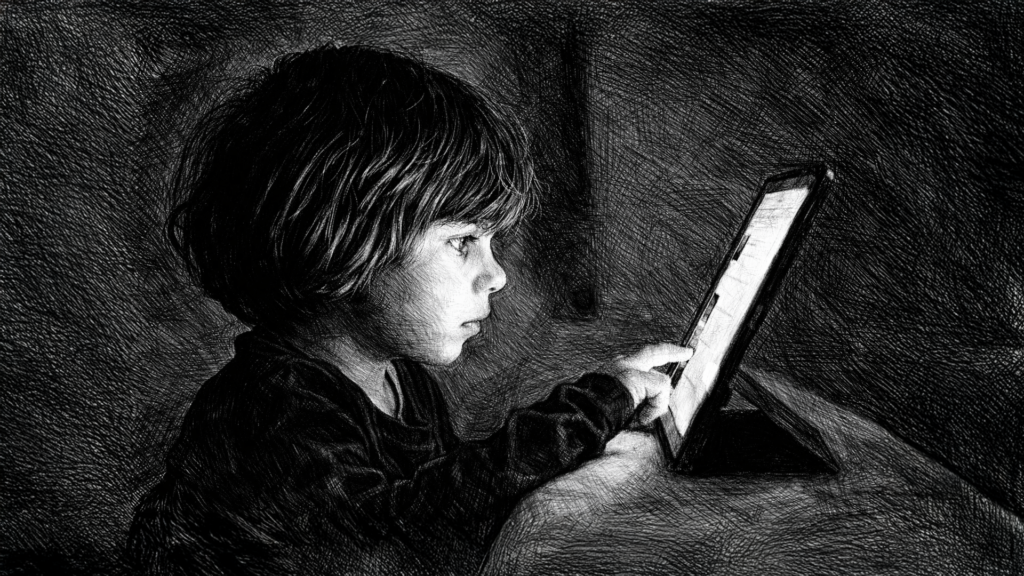
So much so that members of the same family may not even share a single meal together amid the fast pace of life. Moreover, the educational role of parents has become disrupted by digital media and modern communication platforms that compete for influence over children’s awareness and value systems. This imbalance is evident in the growing rates of marital separation for relatively minor financial reasons, as well as in the increasing prevalence of juvenile care institutions—both reflecting a decline in the family’s educational role.
He also alluded to the statement of Muhammad Qutb that the absence of either the father or the mother results in a “crippled” upbringing.
From a social and psychological perspective, Dr. Al-Bashir Issam Al-Marrakchi addressed a central question concerning the impact of modern individualism on the structure and functions of the family. Integration into Western civilization, as Ibn Khaldun alluded to in his discussion of the relationship between the dominant and the dominated, leads to a gradual shift from the extended family model to the nuclear family. This transition results in the severing of value networks inherited across generations.
Moreover, the exchange of economic and complementary roles between men and women—driven by the necessity of work—has weakened the concept of family complementarity, transforming it into an equal partnership that often leads to conflict rather than cooperation and integration, while educational responsibilities are increasingly delegated to external institutions.
Digital isolation has also contributed to children deriving their value systems from social media platforms, with all the imbalances and risks they entail. Here, the sociologist Zygmunt Bauman’s notion of the “liquidity” of human relationships becomes relevant, as family bonds have grown more fragile and levels of patience and continuity within them have declined.
In the context of psychological fortification, Dr. Ahmed Al-Farjabi affirmed that the family represents the primary cradle of psychological resilience. He cited the linkage between verses concerning the family and verses on piety within the context of fasting and prayer in Surah Al-Baqarah, indicating that family stability is not merely a social matter, but is connected to acts of worship.
He referred to Allah’s statement in Surah Al-Baqarah: “…They are garments for you, and you are garments for them…”
and also in the same surah: “Maintain the prayers, especially the middle prayer, and stand before Allah in devotion.”
He also mentioned what Al-Bukhari narrated from Abu Huraira, who said: “I heard the Messenger of Allah ﷺ say: ‘The women of Quraysh are the best women who ever rode camels; they are the most compassionate toward a child and the most careful with regard to their husbands’ wealth.’” Abu Huraira then added: “Maryam, the daughter of ‘Imran, never rode a camel.”
He emphasized the importance of integration between the home, the mosque, the school, and the club in the upbringing process, warning that the absence of either parent results in a “crippled” upbringing, in the words of Muhammad Qutb.
He cited what Ibn Hibban reported in his Sahih from Anas ibn Malik, who said: “I never saw anyone more compassionate toward his family than the Messenger of Allah ﷺ. His son Ibrahim was being nursed in the outskirts of Madinah, and he would go there with us, enter the house, take him, kiss him, and return.” ‘Amr said: “When Ibrahim died, the Messenger of Allah ﷺ said: ‘My son Ibrahim was still being nursed, and he has two wet nurses who will complete his nursing in Paradise.’”
In this context, the importance of direct care and physical and emotional communication with children becomes evident—through what is known as quality time, such as moments of greeting and farewell and bedtime stories—enhancing a child’s sense of security and belonging.
For his part, Dr. Abdul Hayy Yusuf, a member of the International Union of Muslim Scholars, emphasized the importance of the principle of integration between the family and various social institutions. He cited Allah’s statement in Surah Al-Ma’idah: “And cooperate in righteousness and piety, but do not cooperate in sin and aggression. And fear Allah; indeed, Allah is severe in punishment,” as a regulating framework for social relations and the functions of upbringing.
He pointed out that we are living in an era of a modified religion intended to replace the revealed religion, which makes it surprising when demands emerge from Muslims raised in Islamic environments that contradict the fundamentals of the faith and the definitive teachings of revelation.
In this context, life is no longer governed by the logic of integration and cooperation; rather, it is dominated by competition and antagonism. Signs of conflict between the sexes have emerged within the family, as well as at the level of social institutions, which now operate as isolated islands.
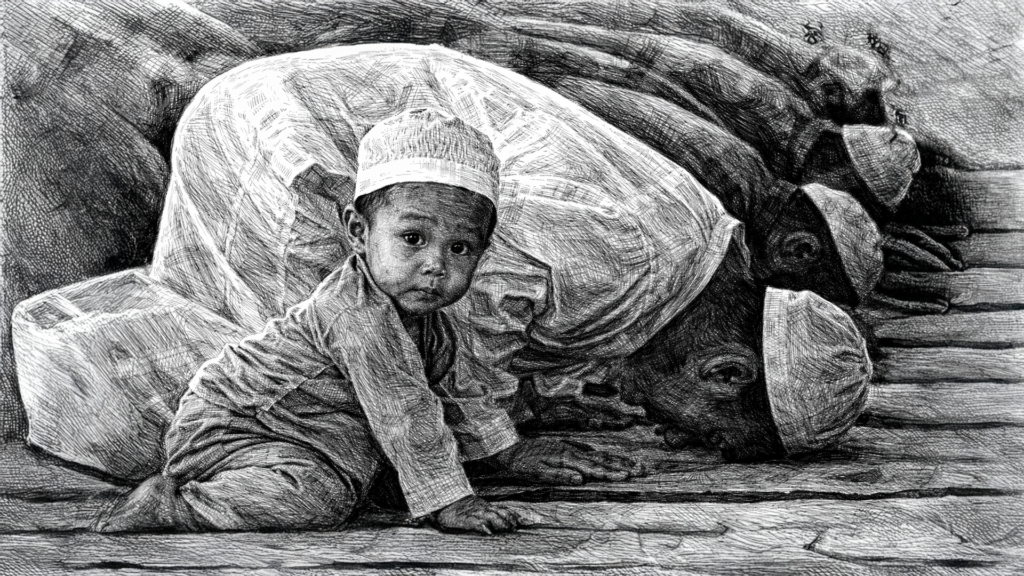
He recalled the story of a man who entered the mosque with his child and was rebuked by someone because of the child’s loud voice and playfulness, whereas the Prophetic Sunnah indicates that the Prophet ﷺ prolonged his prostration out of consideration for a child who had climbed onto his back.
Al-Nasa’i narrated in his Sunan from Shaddad ibn al-Had al-Laythi that he said: “The Messenger of Allah ﷺ came out to us for one of the ‘Isha prayers while carrying Hasan or Husayn. He came forward, placed him down, then began the prayer. During the prayer, he prostrated and prolonged his prostration. My father said: I raised my head and saw the child on the back of the Messenger of Allah ﷺ while he was prostrating, so I returned to my prostration. When the Messenger of Allah ﷺ finished the prayer, the people said: O Messenger of Allah, you prolonged a prostration during the prayer until we thought something had happened or that revelation was coming to you. He said: None of that occurred, but my son climbed onto me, and I disliked to hurry him until he fulfilled his need.”
He explained that marriage, in the Islamic conception, carries six intentions: responding to Allah’s command as an act of worship; responding to the Prophet’s call for those who are able; the intention of maintaining chastity; the intention of safeguarding the chastity of the other spouse; seeking righteous offspring to cultivate the earth, as mentioned in the chapter on seeking children for jihad in Sahih al-Bukhari; and the intention of establishing a Muslim household founded upon the piety and pleasure of Allah.
He called for reactivating the role of the mosque as an inclusive space for men, women, elders, and children, while drawing attention to the importance of educational curricula, media institutions, and talk shows that may “hide poison in honey.” Since educational institutions occupy half of a child’s day, this raises the question of how to establish a genuine partnership that supports the family’s role in upbringing.
He also stressed the necessity of preparing the mission-driven teacher who internalizes the sense that he is carrying out a great educational mission, following the Prophet’s saying narrated by Muslim from Jabir ibn Abdullah: “Indeed, Allah did not send me to be harsh or difficult, but He sent me as a teacher who makes things easy.” He emphasized the need to regulate curricula, focus on the Qur’an as the foundation of knowledge, and grant the teacher a disciplinary authority that may include non-harmful physical discipline.
He further cited what Shu‘ayb al-Arna’ut reported from Mu‘adh ibn Jabal, who said: “The Messenger of Allah ﷺ advised me with ten words: Do not associate anything with Allah, even if you are killed and burned; do not disobey your parents, even if they command you to leave your family and wealth; do not deliberately abandon an obligatory prayer, for whoever deliberately abandons an obligatory prayer is free from Allah’s protection; do not drink alcohol, for it is the root of every immorality; beware of sin, for through sin Allah’s anger descends; do not flee from battle even if people perish; if a plague strikes the people while you are among them, remain steadfast; spend on your family according to your means; do not lift your stick from them as discipline; and instill in them fear of Allah.”
He concluded by emphasizing the necessity of restoring the teacher’s educational status and dignity, making him a fundamental partner in the upbringing process, in a manner comparable to the role of a parent within the family.
Dr. Ahmed Al-Foudai focused on the extended nature of human childhood, most of which is spent within the family despite the multiplicity of educational partners today. Accordingly, the family is called upon to reclaim its role as the most compassionate and nurturing institution for the child by instilling the pillars of faith through instruction and practice, introducing the child to the Beautiful Names of Allah, and training them in prayer, charity, and fasting as practical exercises in self-discipline and overcoming selfishness.
He referred to Allah’s statement in Surah Aal ‘Imran: “O you who believe, fear Allah as He should be feared and do not die except as Muslims. And hold firmly to the rope of Allah all together and do not become divided. And remember the favor of Allah upon you when you were enemies and He brought your hearts together and you became, by His favor, brothers; and you were on the edge of a pit of Fire, and He saved you from it…” These verses include three major directives: fearing Allah, holding firmly to His rope, and remembering His blessings. Fakhr al-Din al-Razi noted in his exegesis that beginning with warning aligns with human nature, which first seeks to avert harm, for blessings, if not properly invested, may turn into their opposite.
He also highlighted that the human child remains in childhood longer than any other living creature, which makes the family the most influential framework in shaping personality, despite the multiple educational actors in modern times. Therefore, the family must reclaim its central role in upbringing as the most compassionate and capable institution of care.
Accordingly, proper religiosity constitutes the foundation for forming a sound individual. Religion serves as a protective fortress against intellectual and behavioral deviations. This fortress is not built on theoretical knowledge alone, but on a system of beliefs, emotions, and behaviors practiced in daily life. Thus, the pillars of faith should be taught to the child and explained through application, and the child should be introduced to the Beautiful Names of Allah to strengthen awareness of divine oversight and knowledge.
Belief in the Hereafter also contributes to reducing criminal behavior, while loss of meaning leads to societal disintegration and rising psychological distress. Belief in divine decree and destiny grants individuals the ability to accept failure and prevents despair and hopelessness.
The family remains the broadest arena for activating upbringing based on instruction and habituation—encouraging prayer and connection to the mosque from the age of seven, which reduces anxiety and fosters tranquility, alongside training the child in generosity through charity and restraining desires through fasting.
Religion, at its core, is the only authority capable of addressing the conscience and establishing personal responsibility, unlike man-made laws that regulate only outward behavior. This is reflected in Allah’s statement in Surah Al-An‘am: “And leave what is apparent of sin and what is concealed,” and His saying: “And no soul earns except against itself, and no bearer of burdens will bear the burden of another…”
Al-Qasimi concluded the seminar by emphasizing that in light of the rapid transformations of the contemporary world, the family faces profound structural challenges that require a comprehensive response grounded in reactivating integration between the home and religious, educational, and media institutions. Restoring the family’s educational role is not merely a cultural option but a civilizational necessity to protect individuals from moral disintegration and to build a cohesive society capable of confronting the trials of the age through the constants of revelation and the divine methodology.
Al-Qasimi concluded the seminar by emphasizing that in light of the rapid transformations of the contemporary world, the family faces profound structural challenges that require a comprehensive response grounded in reactivating integration between the home and religious, educational, and media institutions. Restoring the family’s educational role is not merely a cultural option but a civilizational necessity to protect individuals from moral disintegration and to build a cohesive society capable of confronting the trials of the age through the constants of revelation and the divine methodology.