

Kennedy Assassination Conspiracy Theory
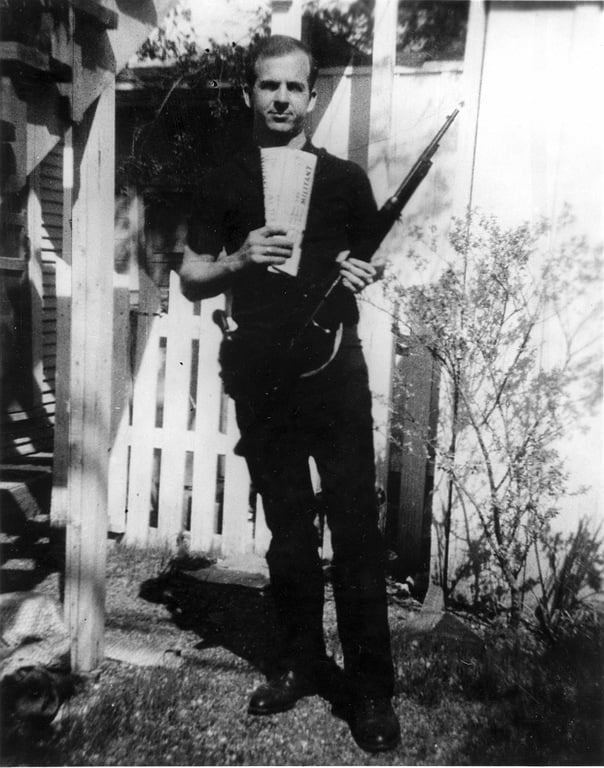
There are doubts surrounding the accusation that Oswald killed Kennedy. Among these doubts is a suspicious photograph of him, published on the FBI’s website, in which he is holding the murder weapon before the President’s assassination. When examining the lighting in the photo, it becomes clear that the shadow of his body falls behind him, meaning the light source was in front of him, while the shadow of his chin extends onto his neck—which should have been shadow-free since his face was toward the light source—suggesting the photo is doctored.
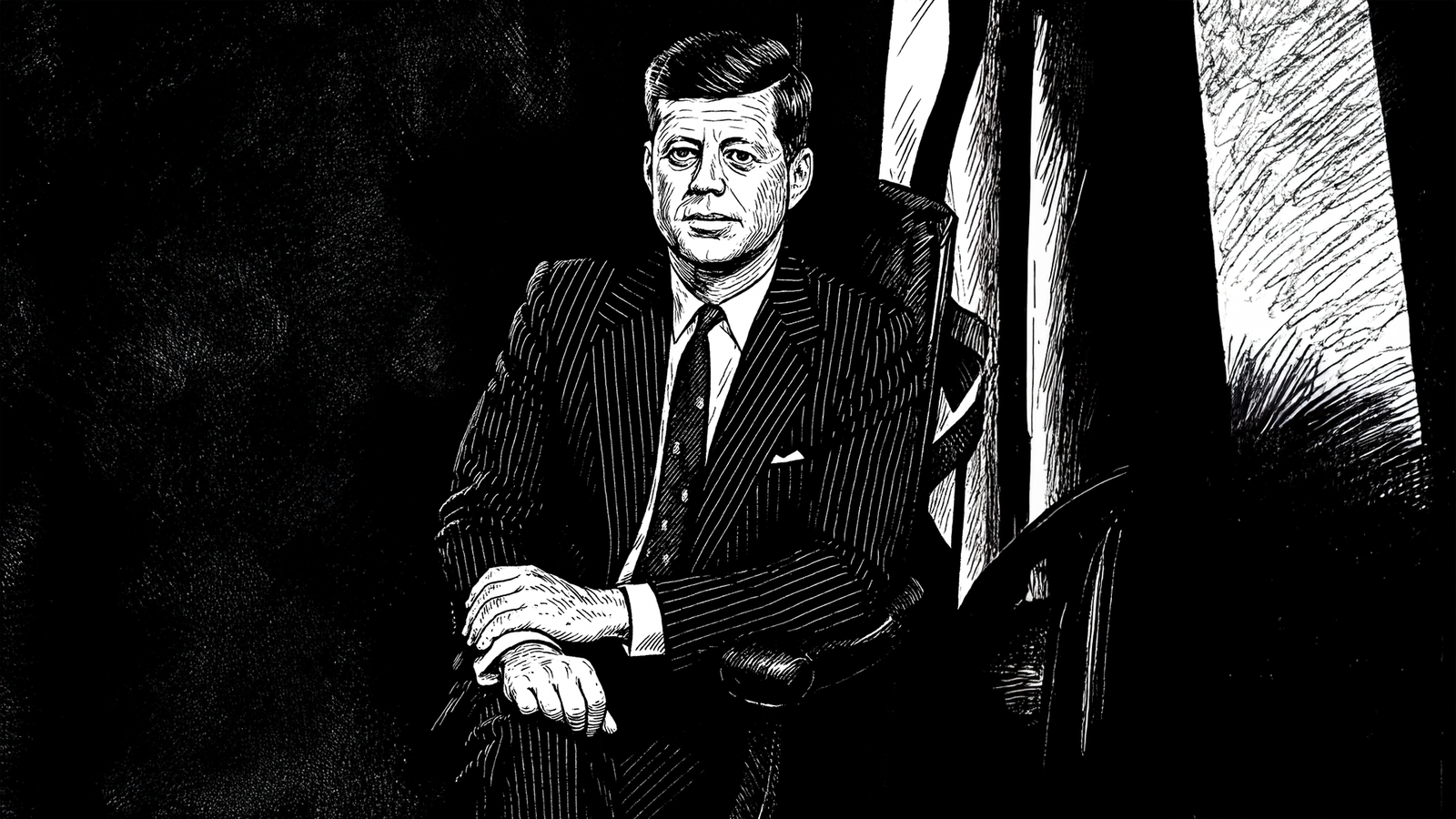
In a research paper by George Michael at the Weiss School, University of Virginia, about Michael Collins Piper—one of the most prominent promoters of the Kennedy assassination conspiracy theory—titled Totalitarian Movements and Political Religions: Michael Collins Piper: An American Emissary from the Far Right to the Islamic World, he writes: “Michael Collins Piper is best known for his book Final Judgment: The Missing Link in the JFK Assassination (1993), which runs over 700 pages and accuses Israel’s Mossad of being the main perpetrator in the assassination of President John F. Kennedy.”
Michael adds that this controversial claim made the book a bestseller in unofficial circles, giving Piper wide notoriety inside the United States and abroad, especially in the Middle East. Piper maintains that then-Israeli Prime Minister David Ben-Gurion was determined to develop a military nuclear program, and that Kennedy’s firm opposition to this project was the direct reason for his assassination.
Piper also claims that other parties played secondary roles in the Kennedy assassination conspiracy, including Jewish mob boss Meyer Lansky, CIA counterintelligence chief James Angleton, and the French Secret Army Organization. He points out that the CIA also had its own motives, such as the dismissal of its first director, Allen Dulles, the failure of the Bay of Pigs invasion, and Angleton’s deep loyalty to Israel.
In his book, Piper notes a sharp shift in U.S. policy toward Israel after Lyndon Johnson assumed the presidency, when Washington stopped opposing Israel’s nuclear ambitions, despite the then-widespread belief that Israel was developing a nuclear program at the Dimona reactor. According to Piper, this argument is supported by the testimony of Mordechai Vanunu, the Israeli whistleblower who revealed details of Israel’s nuclear program, and who said Kennedy’s opposition to Ben-Gurion was the reason for his assassination, noting that he had been influenced by Piper’s book.
Piper died in 2015 at the age of 55, which raised Gordon Duff’s suspicions about the cause of his death in an article titled Did Israel Assassinate Michael Collins Piper? He wrote, “Two days ago, Michael Collins Piper, aged 55, died in a hotel room. Piper had been waging a war against the American Israel Public Affairs Committee (AIPAC), one of many pro-Israel lobbying organizations in the United States, as well as against the Anti-Defamation League (ADL).”
He then added, “I believe Piper may have been killed, and I also believe his heart problems were induced. I believe this for reasons similar to what happened with Michael Hastings,” the journalist who criticized the U.S. war in Afghanistan.
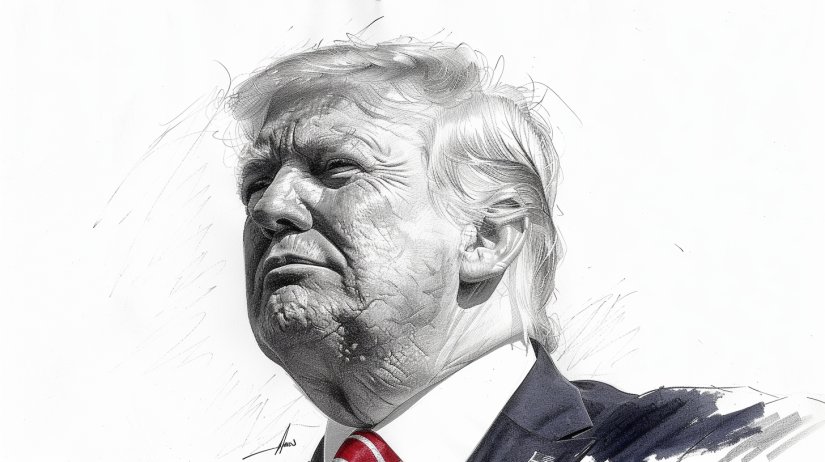
But the chapters of the Kennedy assassination story did not end there. More than 60 years after his death, in January 2025, U.S. President Donald Trump issued Executive Order 14176, mandating the full release of all remaining documents related to the assassinations of John F. Kennedy, his brother Robert Kennedy, and Martin Luther King Jr., giving a deadline of fifteen days for implementation.
Indeed, on the evening of Tuesday, March 18 of the same year, tens of thousands of unredacted pages were released and made available to the public through the U.S. National Archives website. These included more than 20,000 files that had previously been published with redacted sections now revealed, as well as others never before released—amounting to more than 63,000 pages in total.
At the same time, members of Congress introduced a new bill titled Justice for Kennedy – 2025, calling for the immediate and complete disclosure of all remaining records, including those under judicial holds, and requiring the Department of Justice to petition the courts to lift their classified status.
An article by Kaitlin McCormack on the New York Post website, titled Trump Speaks on Kennedy Assassination Theories in Extended Interview After Declassification of a Massive Batch of Assassination Files, noted that U.S. President Donald Trump said he had always believed Oswald was Kennedy’s killer, but added that he wondered whether Oswald had acted alone.
The documents include material referencing claims by a CIA informant, John Garrett Underhill Jr., who alleged the existence of a small clique within the CIA responsible for the assassination. They also discuss Oswald’s visit to the Soviet Union, where he appeared to be a very poor marksman.
Trump’s move carries a mix of political calculation, exploitation of historical legacy, and a bid to stir media and public attention. The released documents did not provide conclusive proof of any conspiracy, but, according to McCormack, the way Trump framed his statements—and the accounts of certain informants in the files—left ample room for interpretation and public intrigue. Politically, it allowed Trump to present himself as someone revealing the truth, even if the documents themselves did not significantly alter the official narrative.
It is worth noting that in the late 1970s, the U.S. House of Representatives formed a special committee to investigate assassinations, known as the House Select Committee on Assassinations. In 1979, the committee announced that Kennedy was likely killed as the result of a conspiracy, based on an acoustic analysis of gunfire. However, this evidence was later discredited by the National Academy of Sciences, leaving the legal conclusion unresolved.
Debate over the crime continued until the early 1990s, when the U.S. Congress passed the President John F. Kennedy Assassination Records Collection Act of 1992. This law required all federal agencies to disclose records related to the case unless there was a legitimate security or privacy reason for postponement.
The law created the Assassination Records Review Board, which operated until 1998 and released millions of pages of documents, although a small portion remained withheld.
Over the next two decades, the gradual release of documents continued, but in 2017 and 2018, President Donald Trump’s administration decided to delay the release of some files for security reasons, sparking widespread criticism and calls for greater transparency.
In December 2022, more than 13,000 additional documents were released, bringing the total number of disclosed records to about 99% of the entire archive, although some remained withheld or redacted.
In addition to legislative measures, new congressional hearings were held, summoning key figures such as filmmaker Oliver Stone—who called for a full reinvestigation—and investigative journalist Jefferson Morley, who presented documents showing that some CIA officials had misled the Warren Commission about Oswald’s activities. Also called to testify was Abraham Bolden, the first Black Secret Service agent, who spoke about attempts to prevent him from giving testimony regarding prior threats to the President.
In addition to legislative measures, new congressional hearings were held, summoning key figures such as filmmaker Oliver Stone—who called for a full reinvestigation—and investigative journalist Jefferson Morley, who presented documents showing that some CIA officials had misled the Warren Commission about Oswald’s activities. Also called to testify was Abraham Bolden, the first Black Secret Service agent, who spoke about attempts to prevent him from giving testimony regarding prior threats to the President.