The Strait of Hormuz and the Imperatives of Austerity
If institutionalization was the internal enabling framework, the global economic crisis caused by geopolitical tensions in the region was the greatest existential catalyst for issuing these laws.
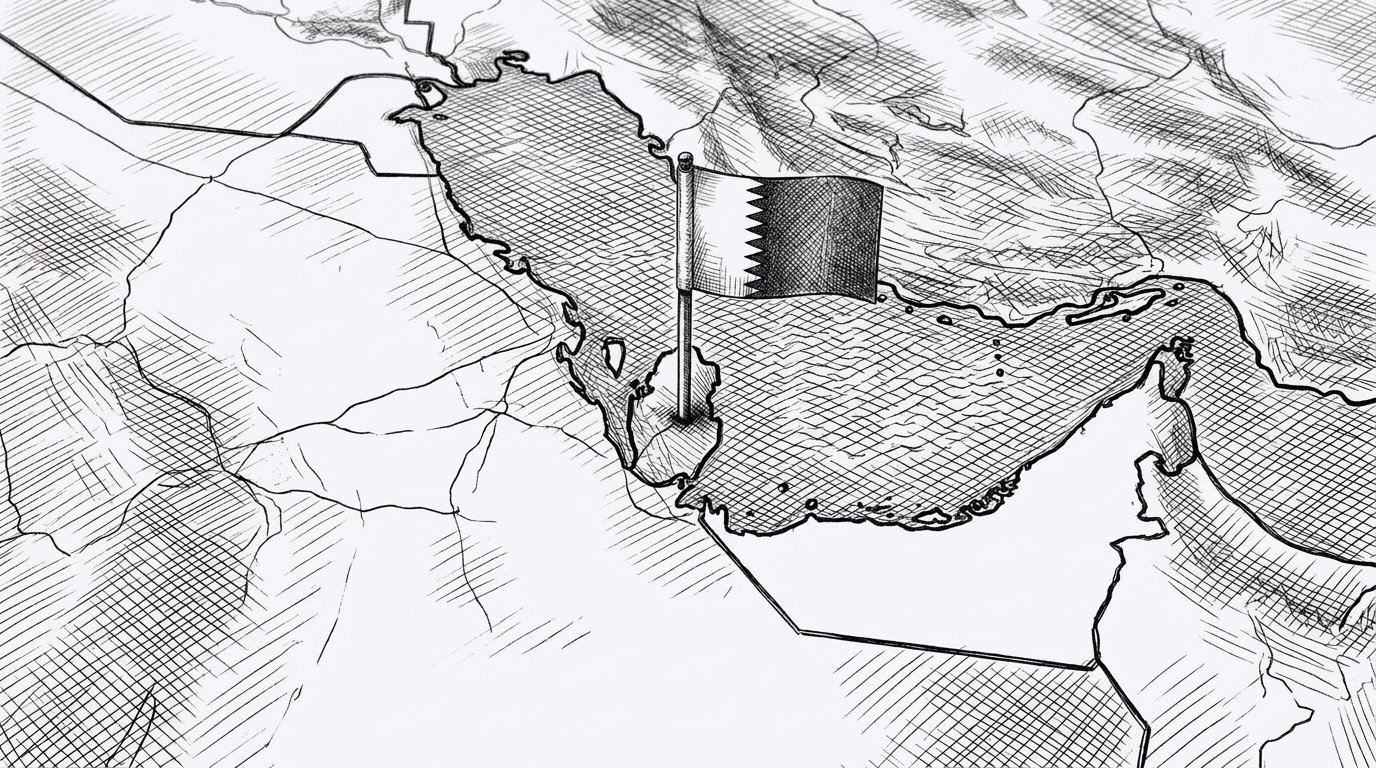
Since war broke out around the Strait of Hormuz, Qatar has faced the most severe financial challenge in its modern history. Unlike neighbors such as Saudi Arabia or the UAE, it has no alternative pipelines that would let it export liquefied natural gas outside Gulf waters.
The blockage of the strait led to a sharp drop in Qatari exports, producing a record fiscal deficit and putting economic pressure on the state’s general budget.
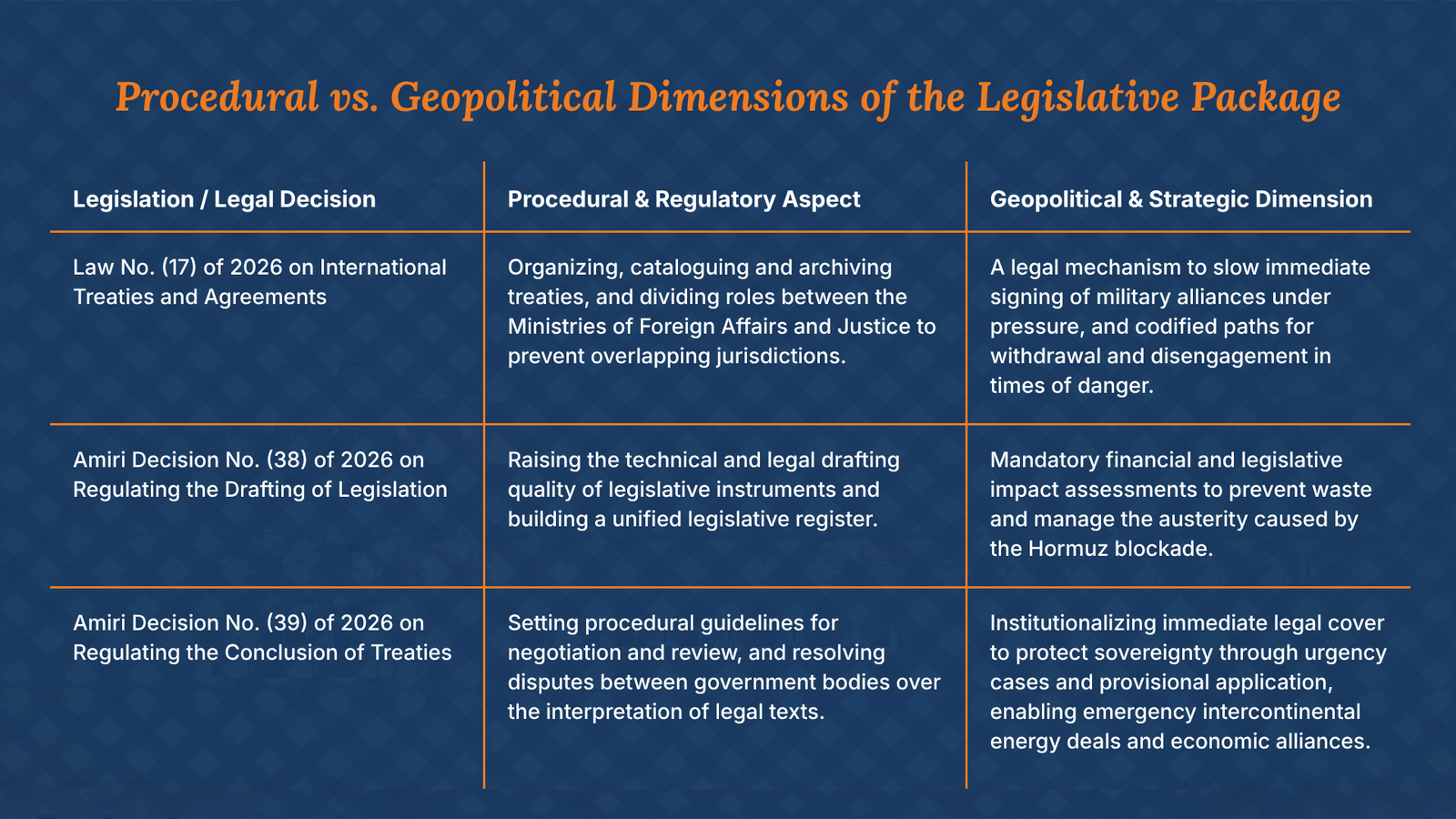
Here the new legislation looks like a defensive tool for managing shrinking resources. Decision No. (38) requires all ministries to submit in-depth feasibility studies before proposing any legislation or initiative, which legally prevents state funds from being drained on non-essential projects.
Amiri Decision No. (39), meanwhile, regulates cases of urgency and the provisional application of treaties. This gives QatarEnergy and the Qatari government maximum flexibility to conclude intercontinental agreements and to buy or redirect gas cargoes from countries such as the United States straight to global markets beyond the Gulf, bypassing traditional bureaucratic delays to safeguard the state’s financial solvency.
Section Title
The Iranian File and Regional Conflict
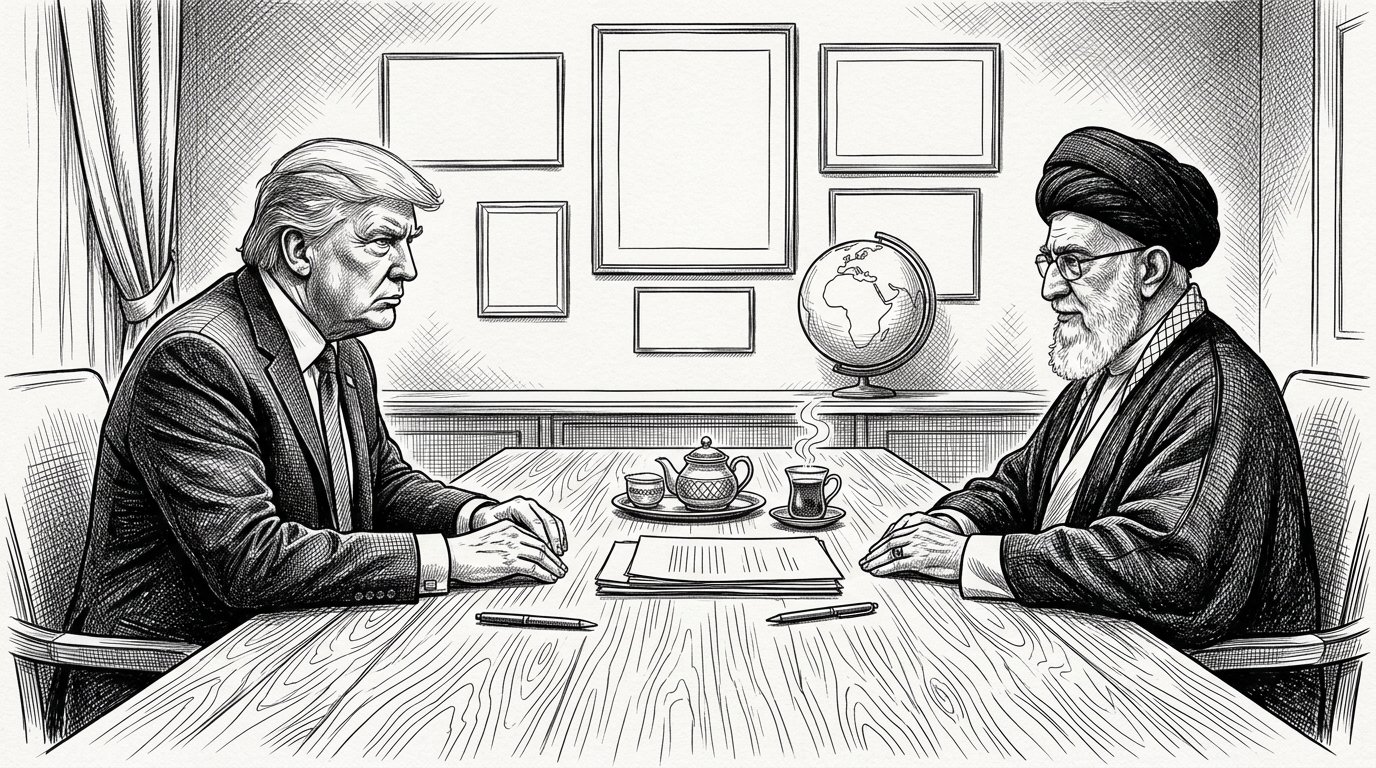
The economic dimensions are bound up with direct security concerns. With the United States and the Zionist entity openly threatening to resume or escalate military operations against Iran, Qatar finds itself in an unenviable and highly sensitive geographic and strategic position.
On one hand, Qatar is a close ally of the United States in many vital areas, especially security and defense. On the other, it shares the North Field/South Pars with Iran, the largest gas field in the world and the lifeline that sustains Qatar’s economic prosperity.
Accordingly, Qatar refuses to enter any military confrontation or provide offensive facilities against Iran, so as to avoid turning its installations into targets for Iranian retaliation.
This is where Law No. (17) of 2026 on treaties offers a smart solution to the dilemma. The law explicitly states that agreements and treaties affecting sovereign rights, state territory, or defense security cannot take effect through an Amiri decree or an ordinary executive decision alone. Instead, they require a separate, dedicated law that goes through review by the Council of Ministers and the Shura Council and is ratified by the Amir.
This requirement acts as a political and legal brake. If Doha comes under heavy external pressure to join a military adventure against Iran, Qatari decision-makers can point to legal and constitutional grounds, declaring that the constitution and the law prevent them from making an immediate or secret decision, and that the matter requires a long, complex legislative cycle and popular approval through the Shura Council.
In this way, the law becomes a mechanism for producing legitimate arguments that protect the state’s positive neutrality.
Yemen and Gulf Coordination
The other regional file casting a shadow over Qatar’s direction is the conflict in Yemen and Saudi Arabia’s military moves. The region is seeing a rush of joint defense agreements between Saudi Arabia and regional and international powers such as Pakistan and Turkey, aimed at protecting Gulf security and defending the Kingdom’s strategic depth.
This new military posture places moral and political pressure on Qatar as a GCC member and signatory to the Joint Defense Agreement, which obliges it to defend its Gulf neighbors if any of them suffers a direct attack on its territory.
This raises legitimate fears that these dynamics could drag Doha back into the quagmire of the war in Yemen, which it previously managed to leave.
In that case, Law No. (17) appears to give Doha legislative cover to withdraw from, or decline to take part in, any military operations outside the Gulf system, such as those in Yemen. It does this by subjecting such participation to strict security and logistical impact assessments that may show it to be unviable or dangerous to national security, given the current scarcity of economic resources.
This legal justification allows Qatar to maintain normal relations with Saudi Arabia without being forced into wars of attrition that do not serve its interests.
Mediation as an Alternative Security Shield
Qatar’s political approach has long been different and distinct from that of its Gulf neighbors. Doha has never sought its security by building a massive military machine or joining offensive military alliances, but through a strategy of soft power and preventive diplomacy.
For years, Qatar has invested in building reliable channels of communication with completely opposing parties, as in the US-Afghan file, the Palestinian-Israeli file, and most recently the Iranian-US file. Qatar’s leadership understands that this diplomatic role is what gives it international immunity and strategic importance in the eyes of the major powers.
Being drawn into any military confrontation or sharp polarization would cost Qatar this advantage and turn it from an accepted mediator into a party to the conflict.
Here, the modernization of the system for treaties and international agreements presents Qatar to the world as a first-rate institutional state governed by the rule of law, one that respects its international commitments and subjects them to modern governance standards and to conformity with national laws in force.
This legislative harmony protects the domestic legal system from conflicts, gives Qatari diplomacy a solid platform for negotiation, and confirms that any step the state takes to amend, terminate, or suspend an agreement follows an objective, well-considered legal process rather than temporary political impulses.
Engineering Sovereign Decision-Making in Times of Crisis
Small states are always looking for unconventional ways to protect themselves in an international environment dominated by the tutelage of major powers and the struggles of rival blocs.
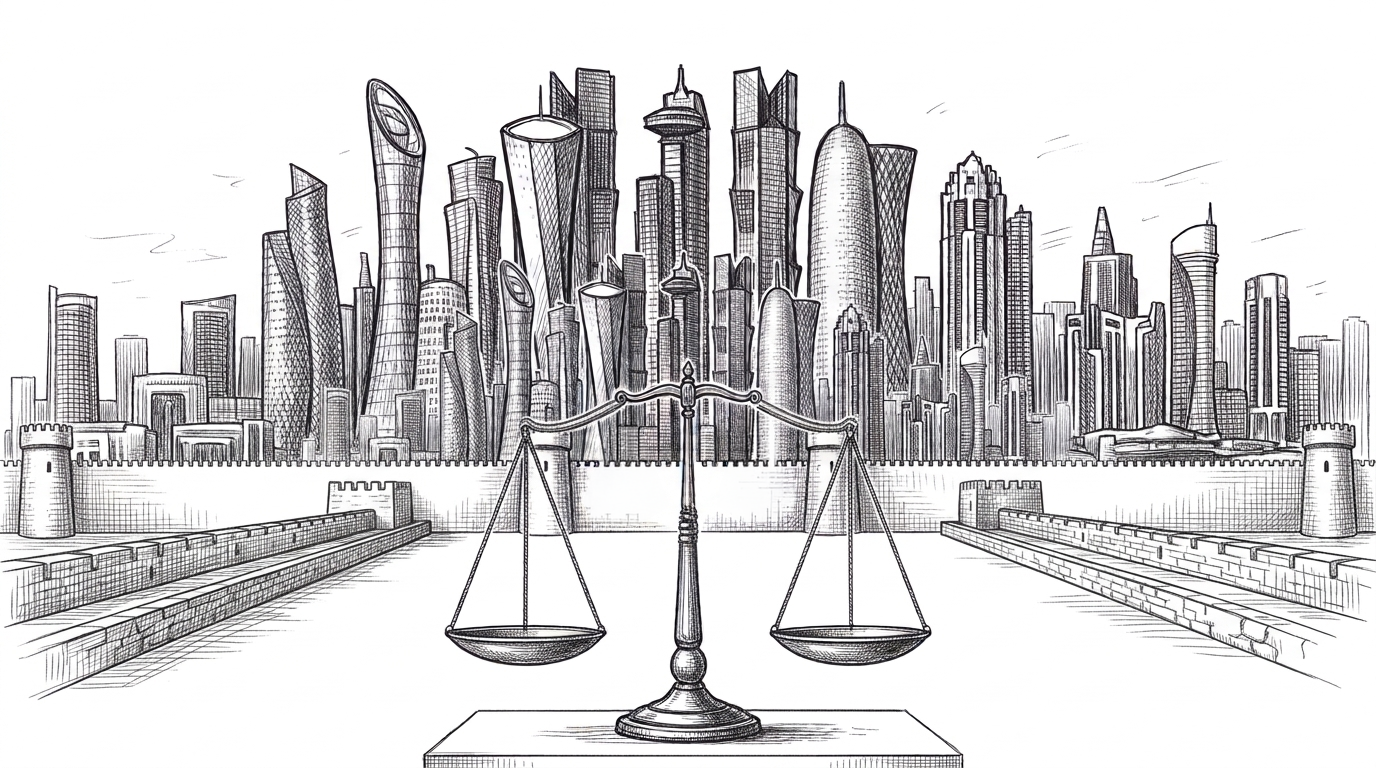
While alliances of major powers rely on arsenals of advanced weaponry, Qatar is trying, through its legislative package, to turn law and written legislation into a tool that shields it from shocks, a proactive step amid geopolitical crises, and a set of buffers that give it legal grounds, in the eyes of its international and regional partners, to hold on to neutrality and keep its distance.
Through this package, Doha has put clear brakes in place to prevent it from being dragged into a US-Israeli military confrontation with Iran, or back into the quagmire of the Yemen war under the weight of regional defense agreements. It rests this on a firm internal institutionalization plan that manages the scarcity of resources caused by the blockade of the Strait of Hormuz and preserves Qatar’s independent and distinctive diplomatic line.
It is a legislative safeguard against any potential military recklessness, and a hoped-for protection for a state that does not want to become fuel for wars in which it has no stake.