
Judiciary During the Era of the Rightly Guided Caliphs
Professor Dr. Muhammad Raafat Uthman, in his book The Judicial System in Islamic Jurisprudence (1994), states that the Prophet ﷺ personally undertook judicial duties. When Allah granted the Muslims victory over new territories, the Prophet appointed governors who also served as judges and teachers.
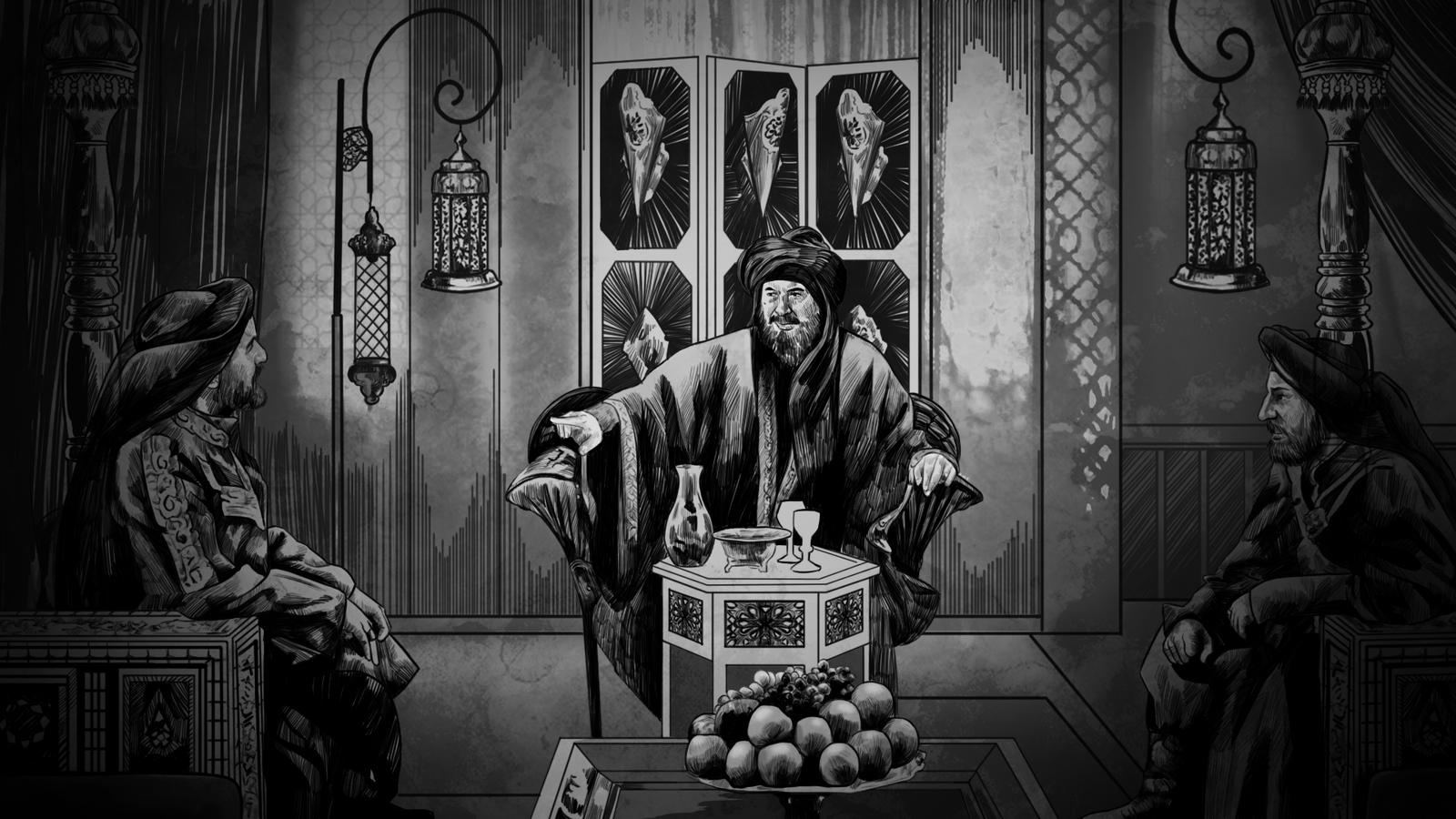
During the caliphate of Abu Bakr Al-Siddiq (may Allah be pleased with him), the judiciary remained part of the general governance. However, as the Islamic state expanded during the caliphate of Umar ibn Al-Khattab (may Allah be pleased with him), the judiciary became independent of the governors’ duties. Judges began dedicating themselves solely to resolving cases due to the increasing number of disputes in major cities such as Kufa, Basra, and Egypt.
Dr. Raafat explains that during the era of the Rightly Guided Caliphs, “judges were only responsible for ruling in civil disputes. As for qisas (retribution) and hudud (fixed punishments, such as for adultery, theft, or drinking alcohol), these were not within their jurisdiction but were handled by the caliphs or provincial governors.” This separation was necessary because resolving such cases required extreme caution, precision, and deliberation.
The same applied to disciplinary punishments, such as imprisonment. According to Dr. Raafat, “judges did not issue such orders; these were issued by the caliph or his deputy.”
At the time, the Quran was the primary source of reference, followed by the Sunnah of the Prophet ﷺ. If neither provided an answer, judges relied on analogy (qiyas) and other evidences, as well as consulting others in alignment with general principles of Islamic jurisprudence.
This methodology is evident from the hadith of Mu’adh ibn Jabal (may Allah be pleased with him) when the Prophet ﷺ sent him to Yemen. The Prophet asked, “How will you judge if a matter comes before you?” Mu’adh replied, “I will judge by the Book of Allah.” The Prophet then asked, “What if you do not find it in the Book of Allah?” Mu’adh said, “By the Sunnah of the Messenger of Allah.” The Prophet asked, “What if you do not find it in the Sunnah of the Messenger of Allah?” Mu’adh replied, “I will exercise my own judgment and strive to be correct.” The Prophet ﷺ then struck Mu’adh’s chest and said, “Praise be to Allah who has guided the messenger of the Messenger of Allah to what pleases the Messenger of Allah.”
The Rightly Guided Caliphs consulted senior Muslims in cases where no explicit text was available, as seen in the judgments of Abu Bakr and Umar, who primarily relied on the Quran and Sunnah, followed by analogy (qiyas) and consensus (ijma’). Additionally, at the time, judiciary responsibilities often coincided with the role of issuing religious verdicts (fatwas), with judges adhering to Islamic law and its general principles in deriving rulings.
Umar ibn Al-Khattab (may Allah be pleased with him) appointed independent judges, such as Shuraih ibn Al-Harith in Kufa and Abu Maryam in Basra. He also established the Bayt Al-Mal (Treasury of the Muslims) and allocated salaries for judges, ensuring they received a regular stipend.
Shuraih and Umar’s Horse
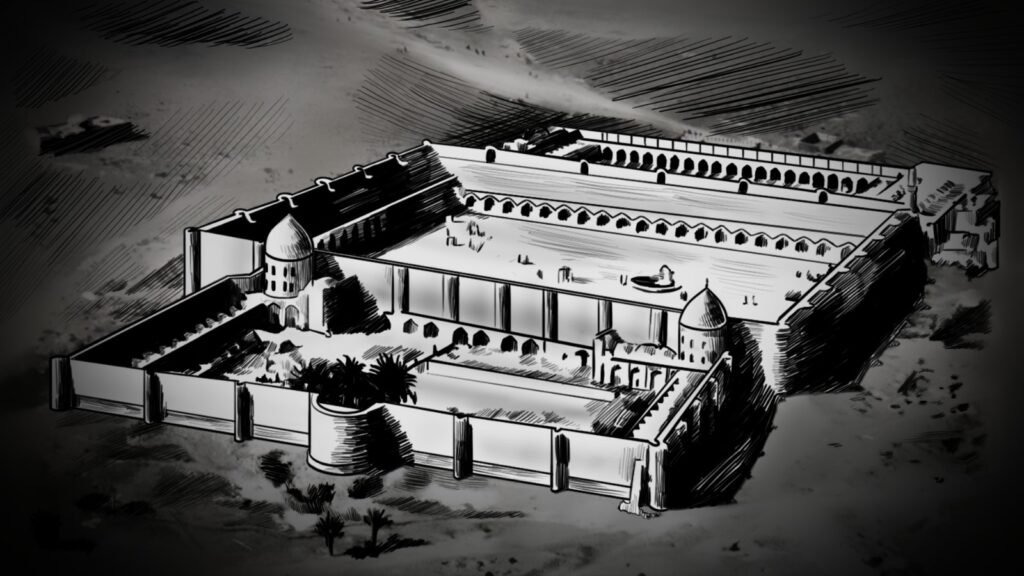
Shuraih ibn Al-Harith ibn Qays ibn Al-Jahm Al-Kindi, the judge of Kufa, was renowned for his fairness and wisdom in Yemen. He embraced Islam during the lifetime of the Prophet ﷺ but later moved from Yemen to Madinah during the caliphate of Abu Bakr (may Allah be pleased with him). Shuraih was known for his balanced demeanor and justice, serving as a model of integrity and wisdom. He left behind a legacy of decisions and rulings that reflected a profound understanding of Sharia and the ethics of judiciary practice.
What distinguished Shuraih was his indifference to social and political differences in his judgments, a quality that earned him the position of judge in Kufa. Amer ibn Shurahil Al-Sha’bi narrated an incident in which Umar ibn Al-Khattab (may Allah be pleased with him) bargained for a horse and rode it to test its capabilities, showcasing its strength and qualities. However, the horse became lame. Umar returned it to the seller, saying, “Take back your horse.” The man refused, so Umar said, “Let’s appoint a judge between us.” The man chose Shuraih to arbitrate the matter.
Shuraih said, “O Commander of the Faithful, take what you purchased or return it as you received it.” Umar was impressed by Shuraih’s ruling and exclaimed, “Isn’t this what judgment is all about?! Go to Kufa.” Umar then appointed him as a judge there, even though he had not known him before this incident.
How amazingly it is when laws are applied equally to all, and justice is administered impartially, without discrimination based on religion, race, or gender. Such fairness fosters trust between citizens and their state, which becomes capable of restoring stolen rights. This builds a sense of security, strengthens the bond between people and their country, and encourages citizens to support their nation and adhere to its laws.
Hazem Al-Qawasmi, Vice Chairman of the Board of Directors at ACT for Conflict Resolution, emphasized that favoring one citizen over another due to influence or connections creates a sense of injustice and fosters corruption. In the absence of judicial independence and the selective application of the law, nepotism and favoritism prevail, widening the gap between the powerful and the weak, eroding justice.
Therefore, nations, rulers, and judges must reflect on the words of the philosopher Charles Montesquieu in the mid-18th century in his book The Spirit of Laws: “The law should be like death, which spares no one.” They should avoid allowing the law to become, as Jonathan Swift described, “like a spider’s web that catches small flies but lets wasps break through.”
Shuraih and Ali’s Shield
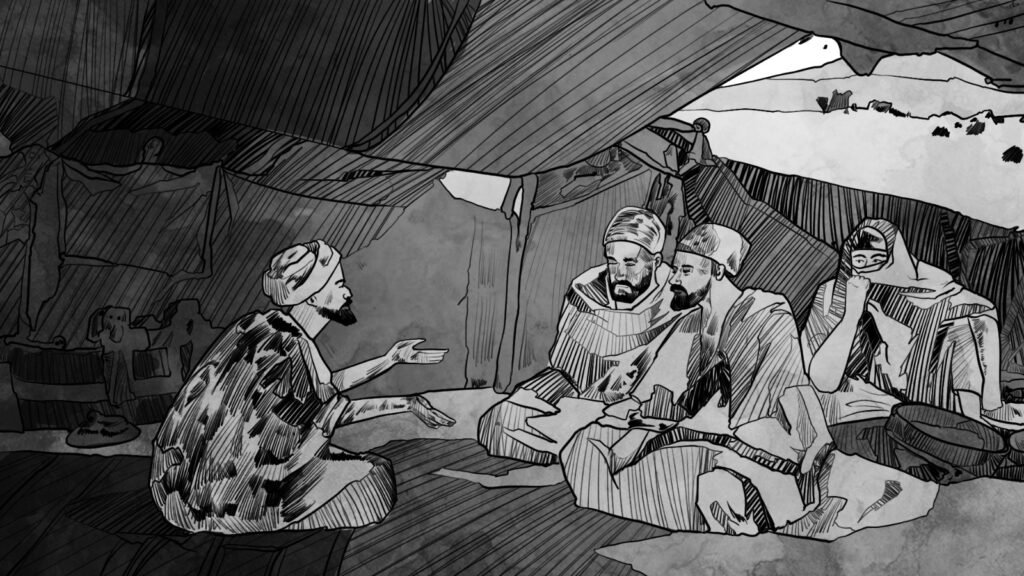
Al-Sha’bi narrates that Ali ibn Abi Talib (may Allah be pleased with him) went to the market and saw his shield with a Jewish man. Ali said, “This is my shield; it fell from me on such-and-such day.” The Jewish man replied, “I don’t know what you’re talking about. The shield is in my possession, and let the judge of the Muslims decide between us.” The judge at the time was Shuraih, and so they went to him for a ruling.
Shuraih asked, “What do you say, O Commander of the Faithful?” Ali replied, “This is my shield, and I found it with this Jewish man.” Shuraih then asked the Jewish man, who said, “The shield is in my hand.” Shuraih stated, “By Allah, O Commander of the Faithful, it is indeed your shield as you say, but I need two witnesses.”
Ali called upon Qanbar, who testified for him, and then called upon his son, Hasan ibn Ali, who also testified. Shuraih said, “As for the testimony of your servant, I accept it, but as for your son’s testimony, I cannot accept it.” Ali reminded Shuraih of the saying of the Prophet ﷺ: “Hasan and Husayn are the leaders of the youth of Paradise.” Shuraih acknowledged this but explained that the testimony of the youth of Paradise was not admissible in this specific case.
Jurists agree that a witness must be trustworthy and free from suspicion. Thus, testimony from children for their parents or vice versa is often rejected due to the potential for bias or favoritism resulting from their close relationship.
Scholars have differed on the permissibility of testimony among relatives. The majority of them allow relatives to testify for one another, but most do not accept testimony from a father for his son or a son for his father unless the witness is deemed unquestionably impartial.
Imam Al-Shafi’i stated that testimony from one person against another, even if just, is not permissible if there is enmity between them. He referred to a weakly transmitted hadith reported by Abdulrahman ibn Hurmuz Al-A’raj that the Prophet ﷺ said: “The testimony of someone with a grudge or someone in a dispute is not accepted.” This aligns with the interpretation that testimony from someone harboring enmity toward another is inadmissible.
Al-Zuhri noted that the early Muslims were not suspected of partiality in their testimonies between relatives. However, over time, certain practices emerged that led rulers to reject such testimonies. Given the increasing corruption in modern times, this stance appears more prudent.
Sixty Years in the Judiciary
Jamal Al-Din Al-Mizzi, in his book The Refinement of Perfection in the Names of Men, narrates from Maysarah ibn Shuraih, who quoted his father saying: “I served as a judge during the caliphates of Umar, Uthman, Ali, Muawiyah, Yazid ibn Muawiyah, and Abdul Malik until the era of Al-Hajjaj, from whom I sought to be relieved of my duties.” He added, “He was 120 years old and lived for a year after being relieved by Al-Hajjaj, and then he passed away.”
Judge Shuraih held this position for sixty years, during which he upheld justice, fairness, and integrity throughout his tenure.
The role of a judge is not limited to courtrooms; a person may also serve as a judge among their employees, relatives, children, or spouses.
Allah commands believers to always strive for fairness. He says in Surah Al-Ma’idah:
“O you who have believed, be persistently standing firm for Allah, witnesses in justice, and do not let the hatred of a people prevent you from being just. Be just; that is nearer to righteousness. And fear Allah; indeed, Allah is Acquainted with what you do” (5:8).
This command applies even when the other party is a Magian, a disbeliever, a hypocrite, a polytheist, a sinner, or a transgressor. One must adhere to the truth and remain steadfast, regardless of criticism or opposition.
Truth is clear and luminous, while falsehood is shaky and obscure.
Truth is clear and luminous, while falsehood is shaky and obscure.