
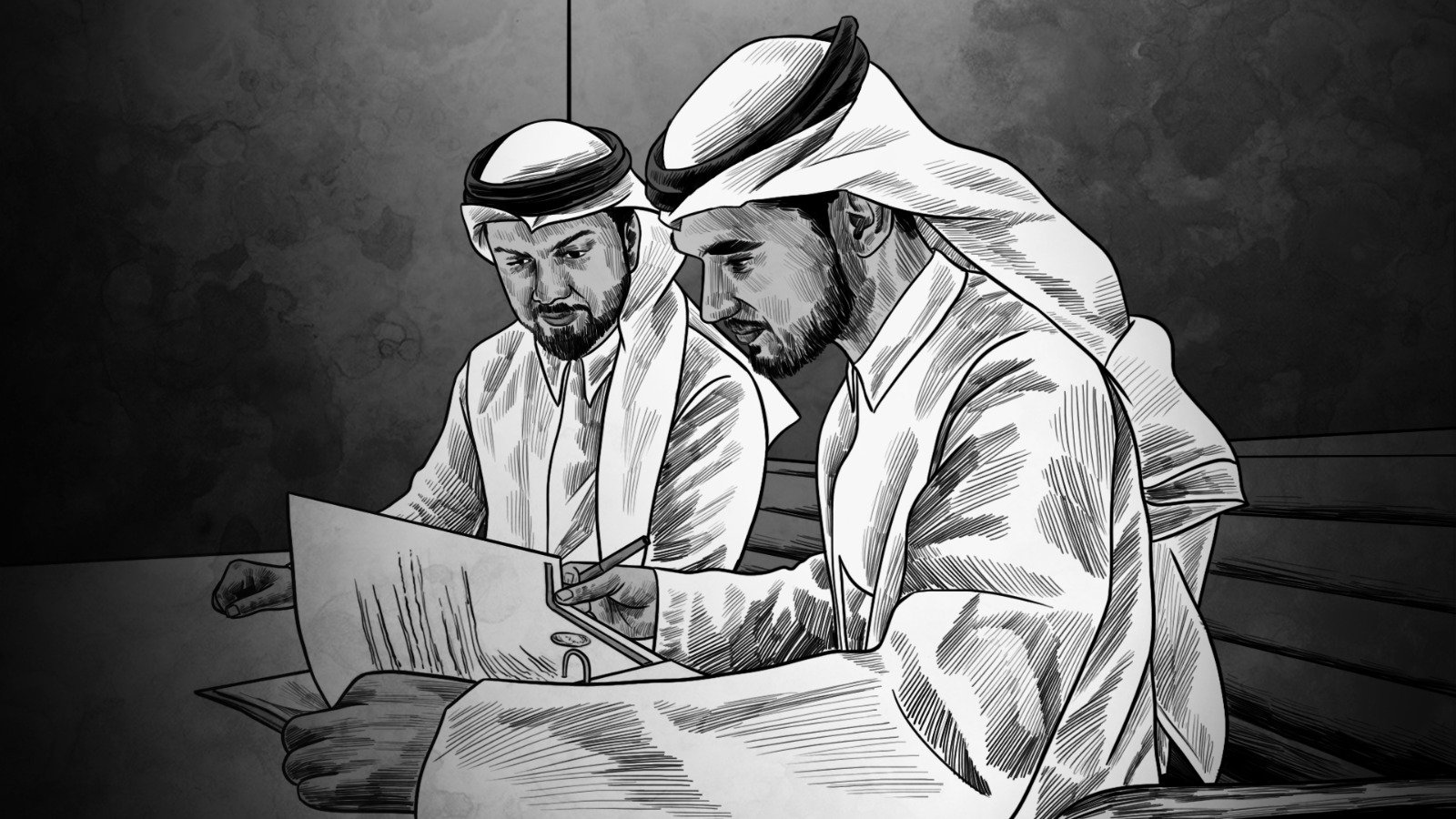
Containment of Irregular Residence
As reported by the Khaleej Times, the inaugural UAE visa amnesty program was launched, and hundreds of thousands of expats living illegally were helped.
The report stated, “Immigration centres across the UAE turned into hubs of hope for hundreds of illegal residents and visitors as the country’s amnesty programme kicked off”.
It also added that “Day one of the two-month scheme saw jobs being offered on the spot to skilled expats, fines worth thousands of Dirhams waived and families getting identities after living without documents for years. September 1, 2024, marked a new beginning for expats who stayed in the country illegally after their residency or visit visas expired”.
Pete Pattisson reported in The Guardian, “…interviewed men with so-called “free visas”, under which they must find their jobs, who say they have been out of work for months.”
Pattisson mentioned a counterpoint to the above statement: According to a spokesperson for Qatar’s international media office, “The legacy of the 2022 World Cup on Qatar’s labour market is clear for all to see. Hundreds of thousands of workers have benefited from the reforms, such as removing exit permits and the freedom to change jobs, introducing the region’s first non-discriminatory minimum wage, improved health and safety standards, and better access to justice.”
While everyone is aware of the kafala or kafeel system and the reforms instilled over time, the current issues aren’t just about them. The world has grown, and so have the people who migrated some three decades ago for a better lifestyle.
The paradigm shift has now given them the power to control the narrative, thereby interpreting the rules and often taking the highway.
The systems, as regulated by the governments, ask companies to seek work visas for their firms and then legally bring employees who fit the role.
But an old saying goes by, “jahan hindustani wahan jugad”, that can be roughly translated to, “Indians are synonyms of the easy way out.”
Thus, as the work visa is expensive compared to the travel visa, rich Asians are now calling unaware skilled workers/labourers from the subcontinent on their travel visas with a promise of issuing a work visa in two months.
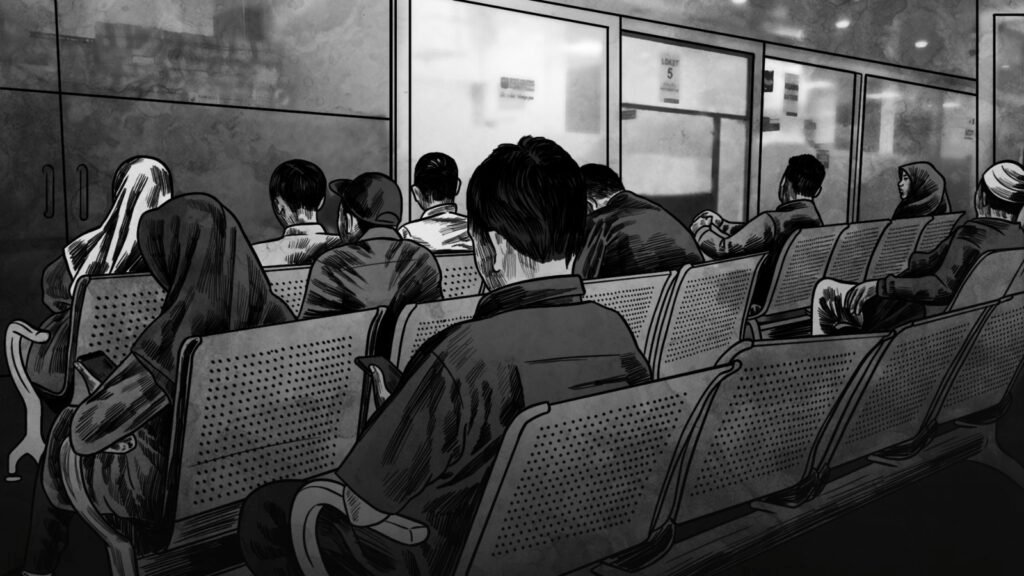
Irregular Residence Trap
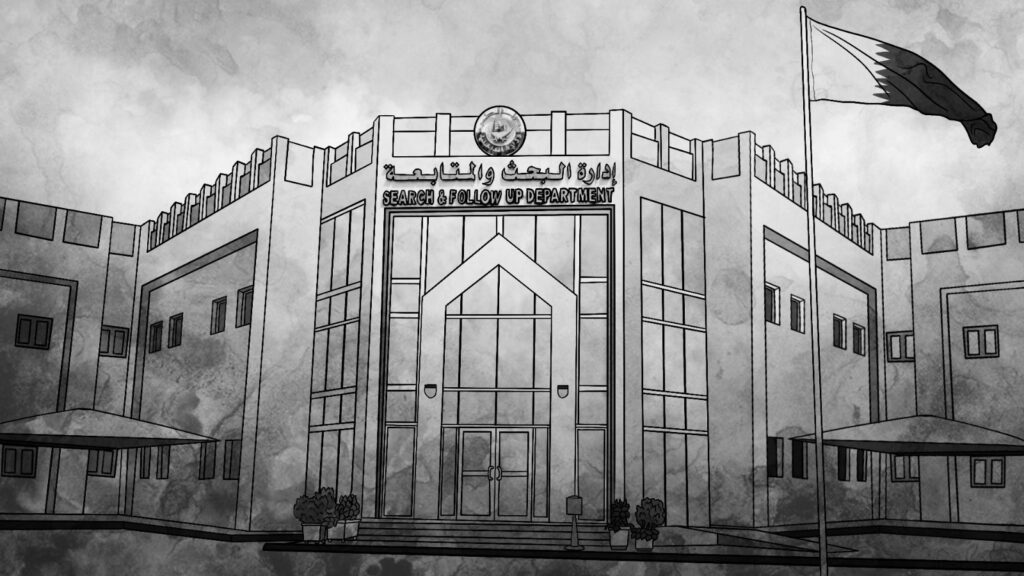
But the ground reality is entirely different from what was prophesied. For instance, Fatima* (name changed on request), a young girl in her mid-twenties, was brimming with joy when she got her offer letter as the Customer Relationship Manager with a leading Indian Restaurant based in the UAE, which had a celebrity chef’s name attached to it.
After doing her thorough research about the company that owned the restaurant and ignoring the major details like a work visa and a proper UAE government contract, she packed her bags. She left for the land of dreams and skyscrapers.
Her acquaintances said, “Many companies call on travel visas and issue a work visa in two to three months.”
Some who were more aware tried to stop her by saying, “They are frauds. Someone who cannot pay for your travel ticket and calls you on a work visa is deemed to exploit human resources.”
Being the first generation in her household to have an opportunity abroad, her and her family’s excitement was beyond imagination. She invested all her savings in buying the travel visa and the flight ticket.
It is often said that when the time is about to test your waters, the subtle warnings of the Universe are also ignored.
She conveniently waved off the employers’ red flags, such as, “At the immigration, don’t tell them about us.” She said, “You can show our Emirates ID (electronically) and say you’ll be staying with a friend.”
The celebrity chef’s name made her gullible enough to accept everything, and she marched on, only to realize that the firm was a fraud.
After toiling for a month and working 17 hours a day, there was no possibility of getting a work visa or a salary.
They insisted she keep on working for free for a minimum of six months, after which they would decide whether to give her a permanent spot in the company.
With a heavy heart and a choked throat, Fatima recalls, “…after a lot of humiliation, I left the job without a salary and was left with just a 10 Dirham note.”
“It was a harrowing time; I didn’t know what to do, and thus, slowly, I slipped into depression.”
On the pretext of fasting, as the month of Ramadan was ongoing, I often didn’t eat for two days.
Despite being well educated, she started looking for small-time jobs to help me stay afloat, as seeking money from home back in India was not an option.”
For some time, she didn’t even share her situation with them.
She said, “I remember walking the streets one day and breaking into tears while waiting to break the fast at an outlet where the food was free.”
A few elderly ladies grew concerned and asked about her well-being and whereabouts. After listening to her story, they said, “Jald bazi cardi tumne, bachche aaj kal ke,” which roughly translates to, “You acted in a hurry, the kids nowadays.”
They wanted to buy me some food for Ramadan, but I refused, saying, “I don’t want alms; I want a job.”
A lady of girt that Fatima is, she didn’t give up but rather kept looking for a job but to no avail.
In 6 months, she switched three companies, some of which gave her a salary, but none issued a work visa.
After she completed the groundwork in her last firm, the owners asked her to look for another job. This was the last nail in the coffin.
She says, “I was infuriated and thus wrote to the Ministry of Human Resources and Emiratisation (MOHRE), attaching all my offer letters and stating that none of the firms gave me a proper work visa.”
“I even started a chain on X and the Instagram platforms, which eventually garnered the attention of the officials and many others in similar circumstances.”
While her acquaintances warned her about being so vocal, Fatima feels her initiative helped many others and that the UAE amnesty program for illegal immigrants was a result of the chain she started.
While the truth behind the UAE government’s efforts in the past months to regulate travel visa conditions remains undercover, stories of people like Fatima are worth mentioning and inspire many.
Vulnerable Homesickness
In another case, we have Salma (name changed on request), a lady in her mid-fifties who has spent more than two decades as a domestic help in the UAE and is highly grateful for the opportunity.
Salma hails from Pakistan and is happily married with three kids. While her marriage wasn’t harmonious, she had no complaints from anybody.
As a pious wife, she cared for her in-laws, her husband and her kids, but that wasn’t it.
She says, “The skies fell when my husband sought permission to marry another woman..”
She said yes, with the condition that she wouldn’t leave her house or her in-laws.
As it was a doable condition for the whole family, she soon became friends with her husband’s second wife, but “the expenses were skyrocketing, and the income wasn’t that much.
While perusing the newspaper one day, I saw an ad for housemaids in the Gulf, and without giving a second thought, I moved to the UAE,” she says.
It was fate that caused the second wife to leave her husband, and the responsibility of all the kids fell upon her shoulders. She took that up with a smile.
Her motto in life is, “Never say never. Life is full of surprises, and we mustn’t be scared of working hard.”
Having worked for over twenty years, Salma has helped her family achieve a better life where all her children are well-educated and settled.
She says, “I owe everything in life to my employers and this country; my sons and daughters today are doctors and engineers, and it wouldn’t have been possible if I hadn’t decided to move from my homeland”.
A woman of dignity, she has even helped women like her become independent and take charge of their lives.
Yours truly is also an expat who first travelled to the GCC sector in 2019 as a theatre artist.
And “wallahi” (roughly translating to ‘by God’ and being colloquially used by everyone in the GCC sector ) was love at first sight.
I was then associated with a New Delhi-based theatre group called Pierrot’s Troupe, known for its Urdu, Hindi, and English plays.
We performed for the Sharjah Children’s Reading Festival and thus were state guests.
All was honkey dorey, the only factor missing was the number of Dirhams in my wallet, and somehow the count was zero.
Yes, dear readers, my first trip to the land of dreams was with a 10 rupee INR note.
The exposure there gave me hope and dreams of settling abroad, and eventually, after six years, I was finally able to make it through, Alhamdulillah! for this.
However, there are many challenges, and so are the facilities. The trips made as an artist were sponsored, so the sky was the limit, but as a working professional, I’d say coming via proper channels is a must.
To be honest, I am in awe of the Qatar Government and how everything was managed at the Qatar Visa Centre in my home country. The sense of security is immense, and the embassy assures us of it.
Packing bags is never easy, nor is turning your back and moving towards a foreign land, yet people often make hard decisions for a better life and better living conditions.
While some face dire situations, others thrive and become successful. Recently, the governments of the GCC sector have become more aware of and strict about implementing labour laws for the well-being of expats.
Though the black sheep (the ones exploiting human resources) in the community are not that easy to catch, every expat must go through the regulations laid by the respective countries and then take a leap of faith.
To quote Ryszard Cholewinski from the International Labor Organization, “This is a complex area and cannot be addressed in one piece of legislation overnight.”
To quote Ryszard Cholewinski from the International Labor Organization, “This is a complex area and cannot be addressed in one piece of legislation overnight.”