Mohammed Ihsan is a young Pakistani man who has lived in Qatar for more than three decades. He works as a government transactions clearance agent and has many clients who rely on his skills and abilities to complete their transactions with government authorities. Because he was highly efficient and completed tasks quickly, he often earned generous tips.
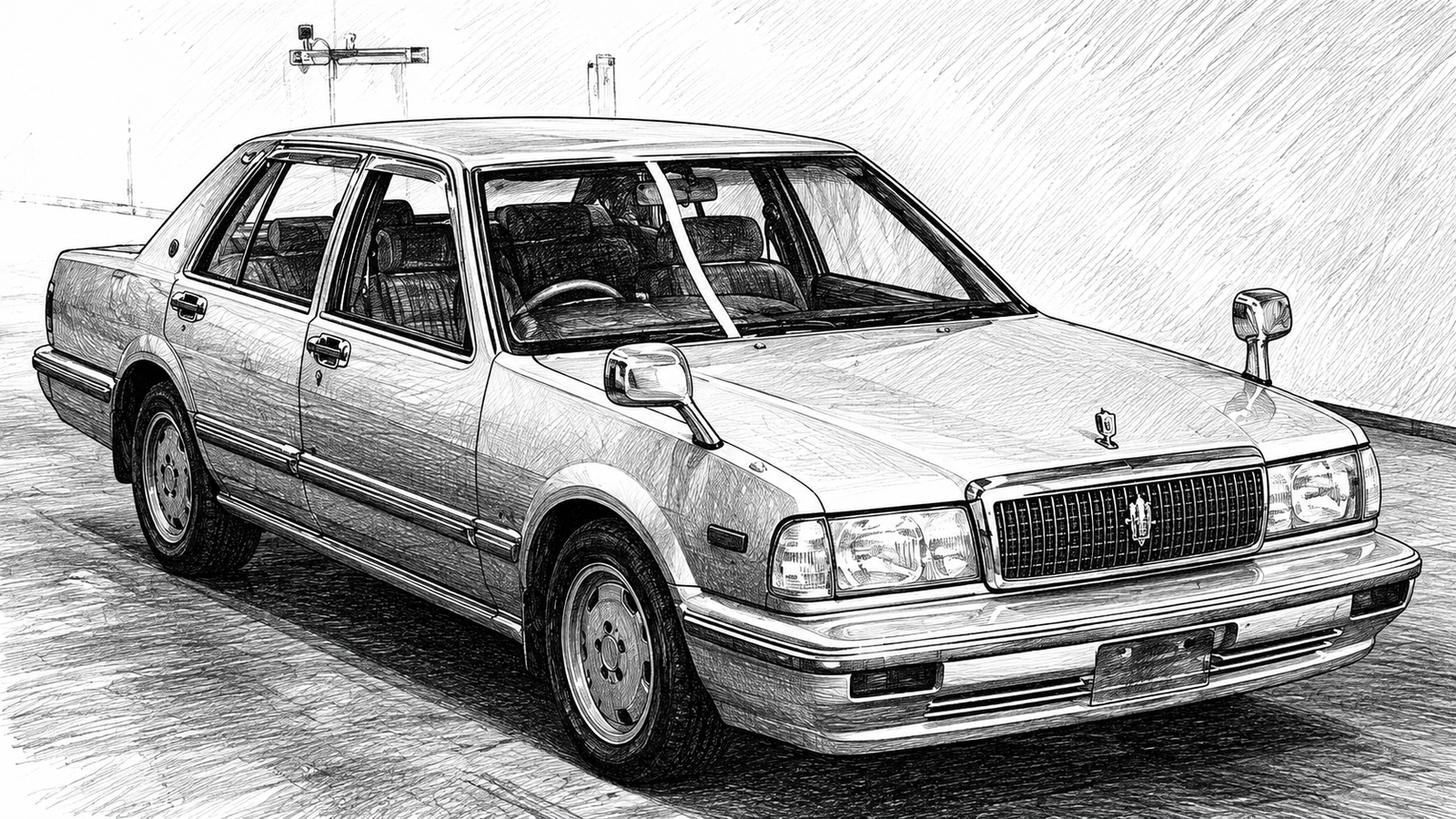
Ihsan was able to purchase a 1992 Nissan Cedric saloon, which he bought in the mid-1990s. At the time, the car had not been heavily used and had no significant problems. It had a six-cylinder engine, a spacious and elegant interior, and luxurious burgundy upholstery.
Ihsan loved his Cedric dearly. He hung decorative ornaments from the dashboard and fitted protective covers over the seats to keep them from being damaged. On the right side of the rear window, he placed a sticker reading “Masha’Allah”, while on the left he placed another that read “Cedric, and the Heart Knows”, reflecting his deep attachment to the car.
When Ihsan bought his car, vehicle registration was an entirely manual process that required visiting the Traffic and Licensing Department, where files and information were stored in large paper registers and records within the department’s archives. At the time, there were no electronic payments or credit cards as there are today. Transactions, stamp fees, and registration renewal fees were all processed and paid in cash at employee service counters.
Ihsan drove his car carefully and made sure to change the engine oil every 5,000 kilometres. He paid close attention to mechanical and operational factors, chemical and environmental interactions, fluids and oils, and generally ensured that the vehicle remained technically and legally fit to be driven on the road.
But life does not remain rosy forever. Three decades later, Ihsan had grown older, his strength had diminished, and his movements had become slower. He was no longer the young man who could walk into officials’ offices and get procedures completed without regard for queue numbers or waiting lines.
Much like Ihsan’s own body, his Cedric had also deteriorated with age. Its paint had faded, its hoses had dried out, its rubber components had cracked, and most of its mechanical and electronic parts had worn down. This meant that the vehicle was no longer safe to drive and was completely unfit to pass Qatar’s technical inspection, as these faults posed a direct risk to his safety and that of other road users.
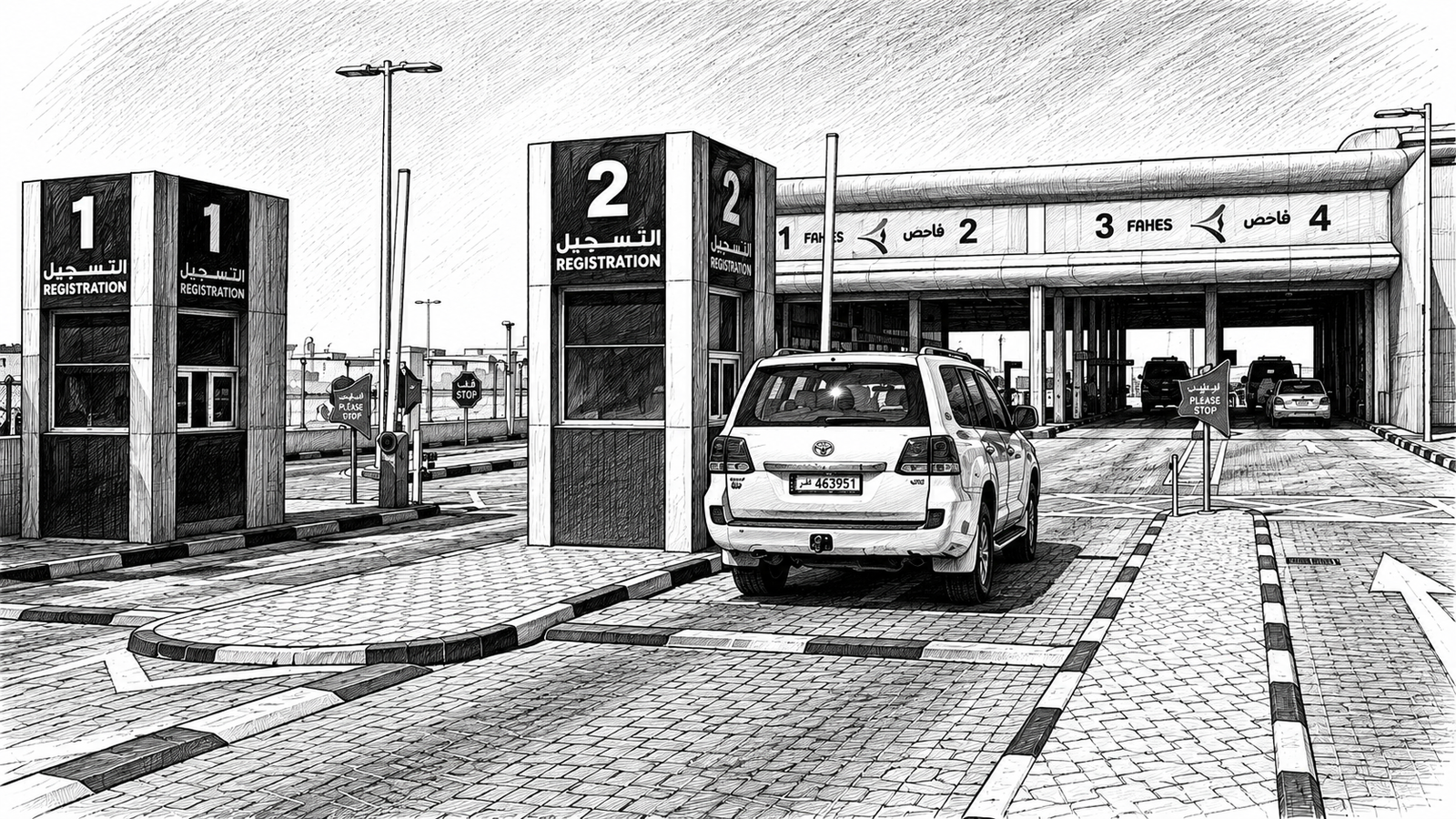
Periodic technical vehicle inspections in Qatar officially began with the establishment of Qatar Technical Inspection Company, which initially operated a single centre in the Industrial Area. This was pursuant to Minister of Interior Decision No. (2) of 2003, designating the entity responsible for conducting technical inspections of motor vehicles, officially issued on 8 February 2003.
In 2009, Qatar Fuel Company (WOQOD) acquired Qatar Technical Inspection Company, which was fully integrated into the company and subsequently rebranded as FAHES. Over time, the operation expanded from a single inspection centre to more than 12 fixed and mobile centres today. The system was also electronically integrated with the Ministry of Interior’s systems, allowing vehicle registration to be renewed immediately after passing the inspection, without the need to visit a Traffic Department office.
Despite the increasingly rigorous standards and scrutiny of the Traffic Department, they were no match for Ihsan and the methods he used to get his own car—and those of his clients—approved. Year after year, he managed to renew its registration without difficulty. He knew how to make mechanical faults appear minor in the eyes of the officers and persuade them to register and approve the vehicle, year after year.
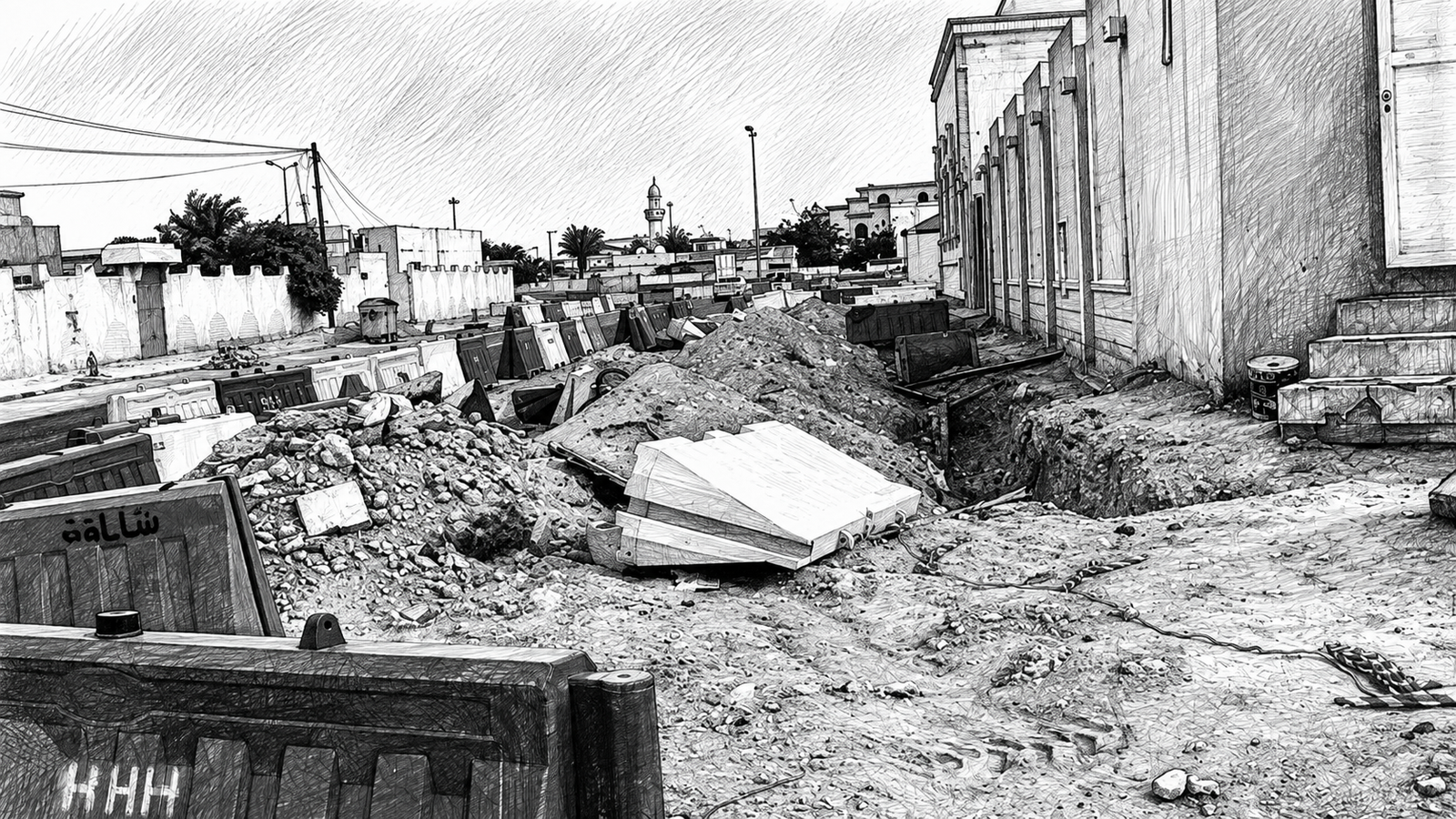
In recent years, Ihsan’s residential neighbourhood has seen a noticeable increase in projects to develop and pave internal roads, as well as infrastructure improvements aimed at enhancing rainwater drainage. Eventually, these works reached the street where he lived, forcing him to park his car in an open area near his home.
Ihsan repeatedly tried to contact the Public Works Authority (Ashghal), the official government authority responsible for the planning, design, implementation, and management of infrastructure and public building projects across the country. He informed them that the project had blocked the entrance to his home. He even suggested installing temporary panels or backfilling the affected area to allow his car and family to cross safely, but his requests were ignored.
He contacted them again, explaining that the neighbourhood had become filled with excavations and roadworks, creating considerable disruption and stress due to the dust, noise, and difficulty of moving around the area. His daily life had become extremely exhausting, yet his complaints continued to be ignored, as the state was implementing a comprehensive national plan to modernise infrastructure in both old and new neighbourhoods and ensure its sustainability for many years to come.
To make matters worse, one day he discovered a yellow notification sticker on his car instructing him to report to the municipality because the vehicle had been left neglected and covered in dust in a location where it was considered detrimental to the general appearance of the area, pursuant to Public Hygiene Law No. 18 of 2017.
Article (4) stipulates that: “It is prohibited to leave marine vessels, vehicles, equipment, machinery, temporary structures, or parts thereof abandoned on streets, pavements, public spaces, or public squares.” The municipality classifies a heavily dust-covered vehicle or one left unattended for an extended period as an abandoned vehicle that negatively affects the aesthetic and urban appearance of the area.
When Ihsan went to the customer service office and requested to meet with a municipal inspection official or a member of the relevant committee to discuss the vehicle’s situation, he discovered that he was required to pay a fine of QAR 2,000, pursuant to Item No. (1) of the reconciliation schedule attached to Law No. (6) of 2023.
When Ihsan went to the customer service office and requested to meet with a municipal inspection official or a member of the relevant committee to discuss the vehicle’s situation, he discovered that he was required to pay a fine of QAR 2,000, pursuant to Item No. (1) of the reconciliation schedule attached to Law No. (6) of 2023.
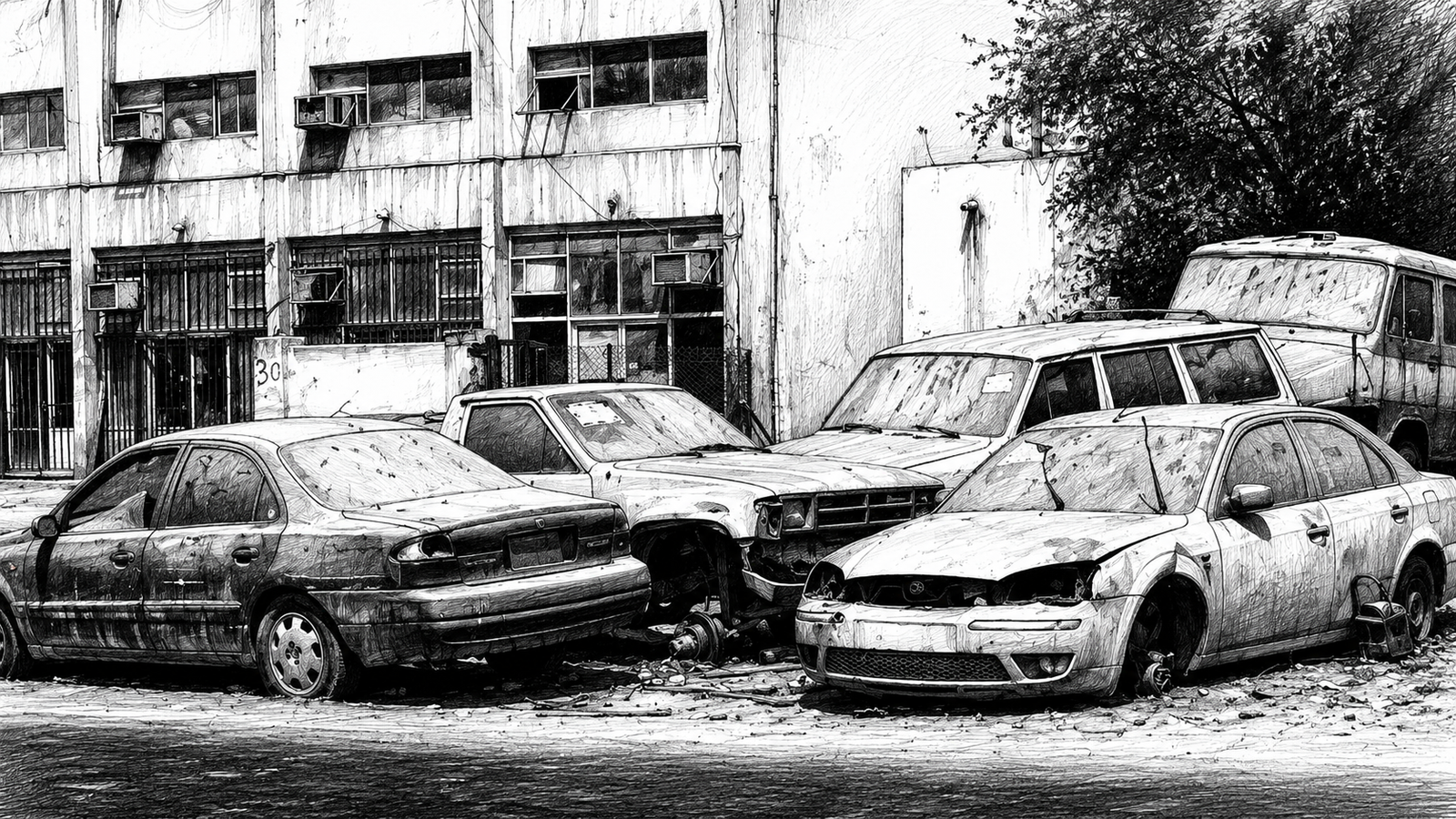
Ihsan explained to the official that the accumulation of dust and sand was a direct result of the infrastructure excavations and roadworks near his home, which constituted circumstances beyond his control rather than deliberate neglect that harmed the appearance of the neighbourhood. The official informed him that the law allowed him to submit a grievance and contest the violation in order to have it withdrawn or cancelled before payment, provided that he could prove these circumstances.
A grievance and objection against a municipal violation can be submitted electronically through the Ministry of Municipality’s website or in person by visiting the Inspection Department at the municipality building. Ihsan chose the electronic option, uploading photographs he had taken of the car alongside the road excavations. He also attached a written letter explaining that the dust was caused by the ongoing roadworks in the area and that access to his home had been blocked by the excavations.
Once the violation is identified and registered in the system, the case is automatically referred to the Joint Committee for the Removal of Abandoned Vehicles to carry out the vehicle’s removal. Since an electronically submitted grievance may take several days to review, Ihsan needed to remove all the dust from the vehicle to demonstrate to inspectors that it had not been abandoned, and move it either into his home garage or to an official paved parking space belonging to the property until a decision was made on his grievance. This, however, did not happen.
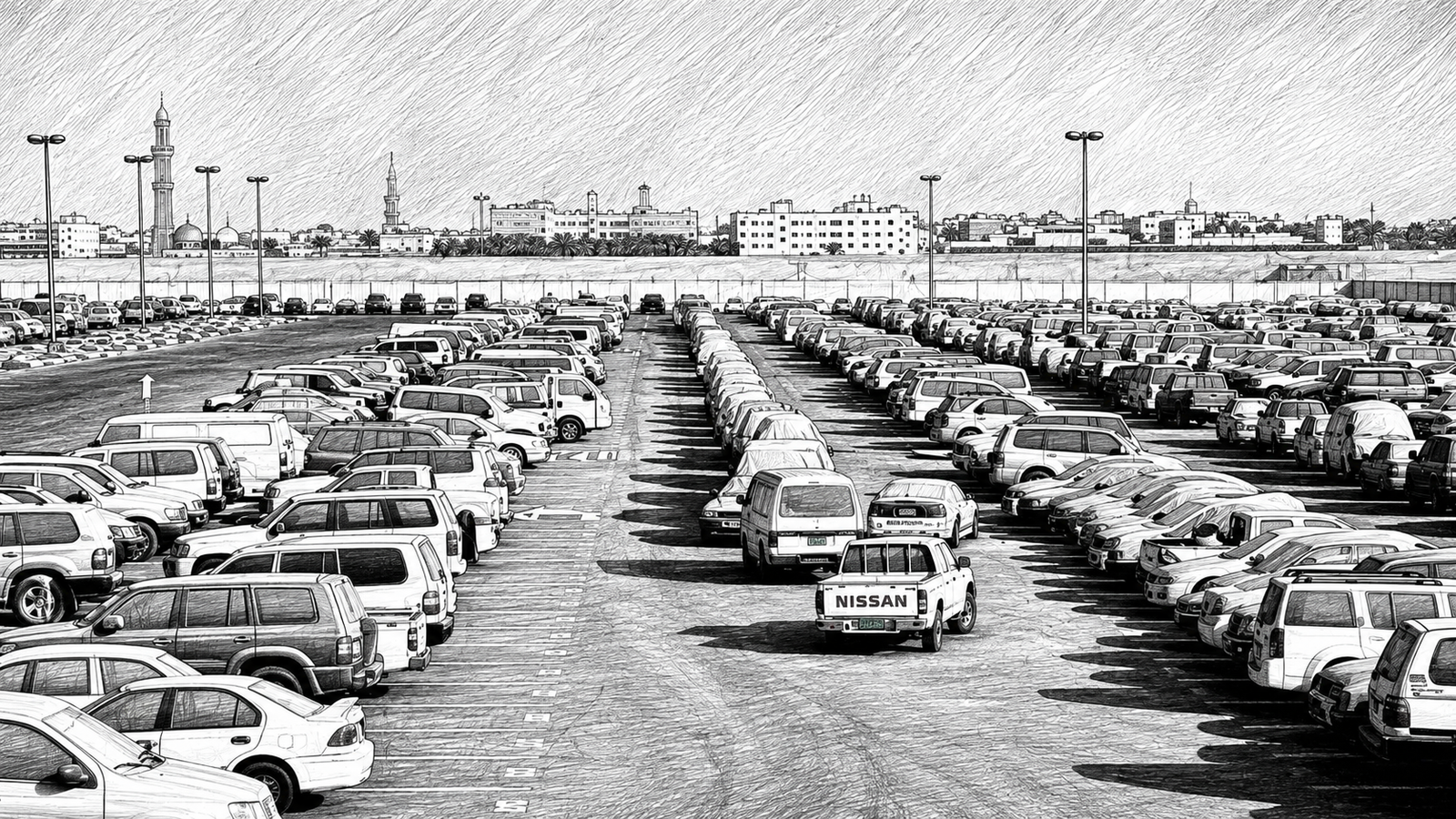
After the three-day grace period expired, the car disappeared. The Joint Committee for the Removal of Abandoned Vehicles had towed it away and transferred it to one of the impound yards. An additional QAR 500 was added as towing and transportation fees, bringing the total amount due to QAR 2,500.
Naturally, Ihsan was furious. It seemed blatantly unfair that he should have to bear the consequences of dust and debris caused by government projects and excavation works in his neighbourhood, only to suddenly find himself facing a QAR 2,500 bill with his car impounded.
He therefore returned to meet the responsible inspector, showing him photographs of the excavations and the violation notice. Visibly angry and frustrated by what he considered an unfair situation, Ihsan vented his anger at the inspector and demanded that he immediately issue an order cancelling the violation, waiving the fees, and providing an official letter authorising the release of the vehicle free of charge.
Following this reckless behaviour, Ihsan’s position shifted from that of a person asserting his rights to that of an accused individual. Municipal inspectors have judicial enforcement authority, meaning they are legally empowered to draw up an official report of an incident immediately and may even refer the accused directly to the police and the Public Prosecution.
Qatar Penal Code No. 11 of 2004 stipulates stricter penalties for verbally or physically assaulting a public official, or even insulting them through gestures or threats, while they are performing their duties or because of those duties. Article 166 provides that anyone who commits such an act may be punished by imprisonment for a period not exceeding six months, a fine not exceeding QAR 3,000, or either of these two penalties.
The inspector called a police patrol to formally document the insult he had been subjected to and the obstruction of his work. Ihsan was then held in pre-trial detention for one week pending investigation by the Public Prosecution, as a standard legal procedure for investigating misdemeanours. The entire case was subsequently referred to the Criminal Court, which applied the provisions of Article 166 in full. The court imposed the maximum fine of QAR 3,000, while suspending the prison sentence in consideration of his circumstances and the fact that he had no previous convictions.
As soon as Ihsan was released, he went directly to retrieve his car from the impound yard, where it had been left completely exposed to direct sunlight. It had accumulated even more dust, been exposed to the wind, and sustained some superficial damage that had clearly occurred during the towing and crane-loading process.
Ihsan was deeply saddened by what had happened to his car. From an economic perspective, selling the vehicle would not even cover the cost of the fine and the fees that had accumulated. Old scrap vehicles are generally valued according to their weight as scrap metal. Furthermore, because the car was inside the municipality’s impound yard, scrap dealers would have to bear the cost of removing it with a specialised tow truck and transporting it to the Industrial Area. This would further reduce the price offered to Ihsan in order to offset the transportation costs.
Another issue was that the car was a 1992 model, making it extremely old. Demand for Nissan Cedric spare parts in the local market was virtually non-existent compared with newer models. As a result, a buyer would gain little from dismantling the vehicle and selling its components as spare parts. In addition, the bodywork and interior trim had been damaged by dust and prolonged exposure to the sun, further reducing any remaining value the car might have had.
Ihsan therefore had little choice but to pay QAR 2,500 through the municipality’s Oun application, in order to protect his name and legal record from any further traffic complications or accumulating fines. Once the payment was made, he went directly to the Traffic Department and requested that the vehicle be permanently deregistered. He then left the car’s body at the municipality’s impound yard without collecting it, as the municipality would dispose of it through its own procedures once the statutory period had expired. With that, Ihsan finally closed the matter completely and regained his peace of mind.