
My mother, Wafaa Fawaz, was born in Sohag, Upper Egypt, in the early 1940s. After the death of her father when she was thirteen years old, she was raised in Cairo alongside her mother, her three brothers, and her only sister. Following her graduation, she worked as an internal medicine physician in the mid-1960s at Dar Al Shifa Hospital. She later retired after more than thirty years of service at Agouza Hospital. Prior to that, she worked alongside my father in the early 1970s while he was pursuing his doctorate in surgery in Cardiff, Wales, and later in Al-Hofuf, Riyadh, and Taif.
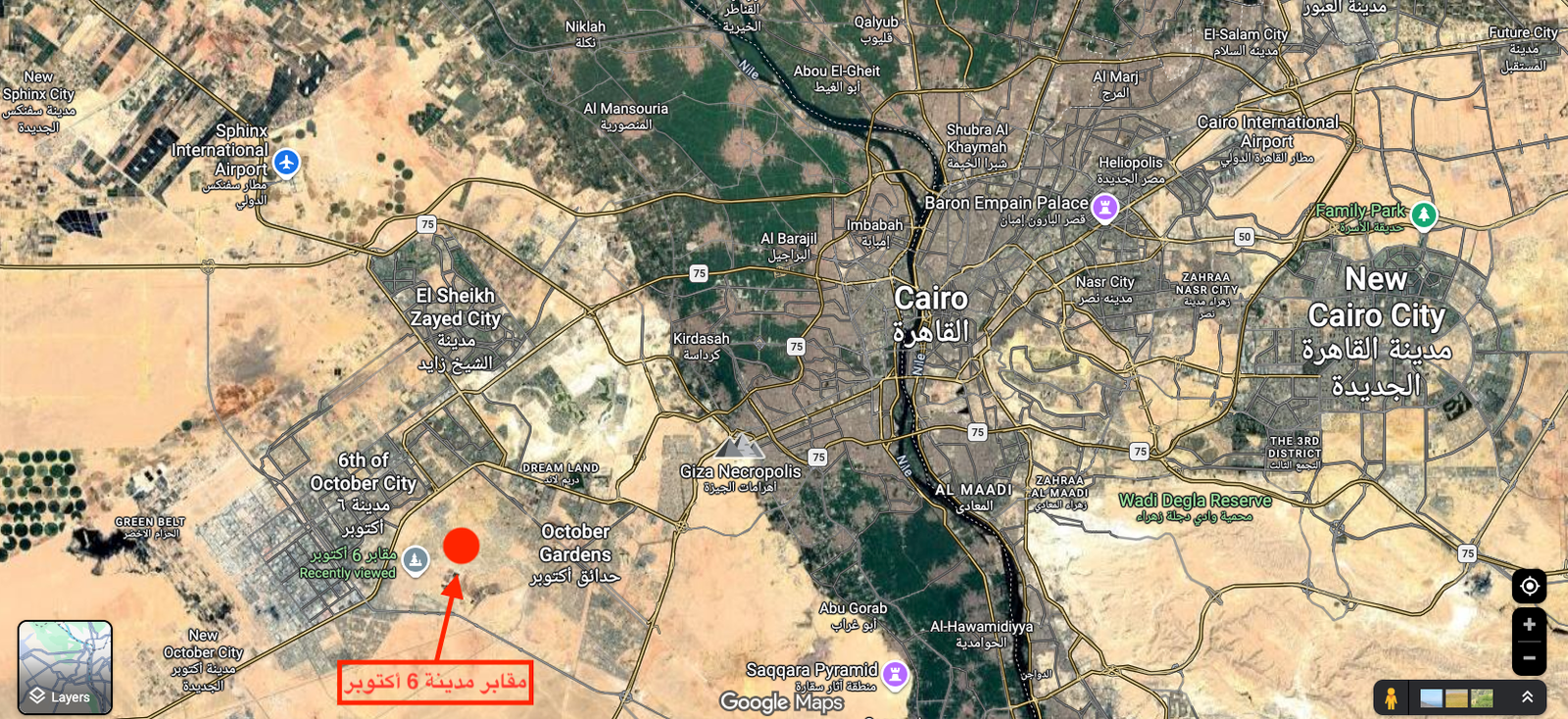
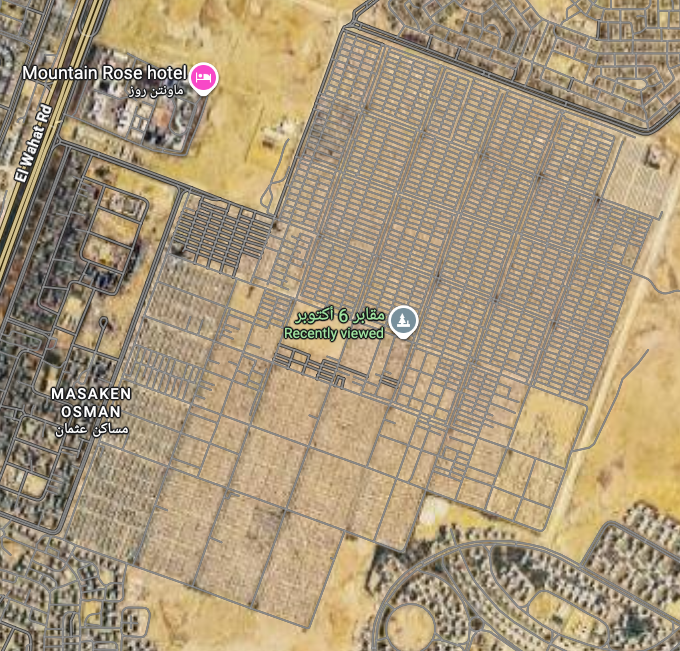
After a long journey spanning seventy-two years across East and West, she passed away in Doha in 2013, six weeks after visiting me, following two sudden pulmonary embolisms. She was buried in the family cemetery owned by my grandmother under a usufruct arrangement granted by the state in 6th of October City, west of Greater Cairo.
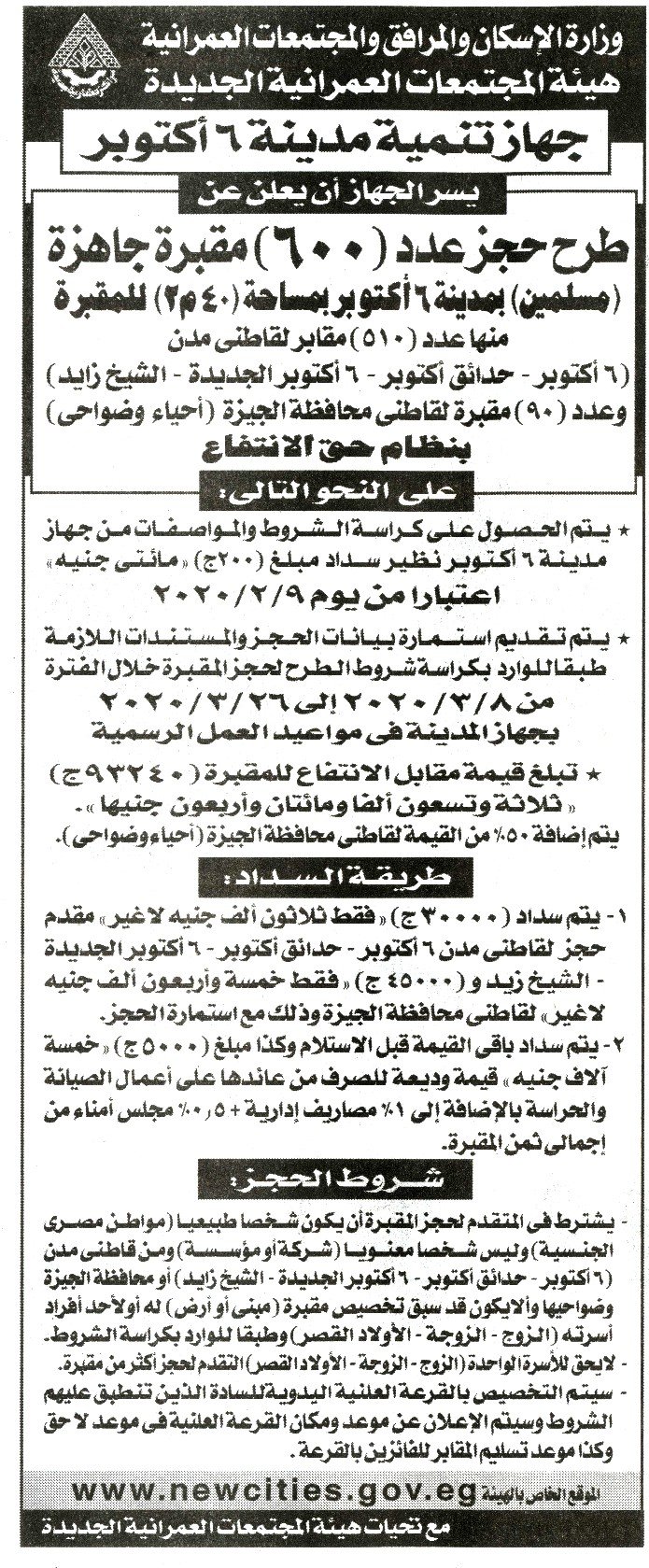
The publications of Egypt’s New Urban Communities Authority (NUCA) have outlined the procedures required to acquire a cemetery plot in 6th of October City under a usufruct-right system.
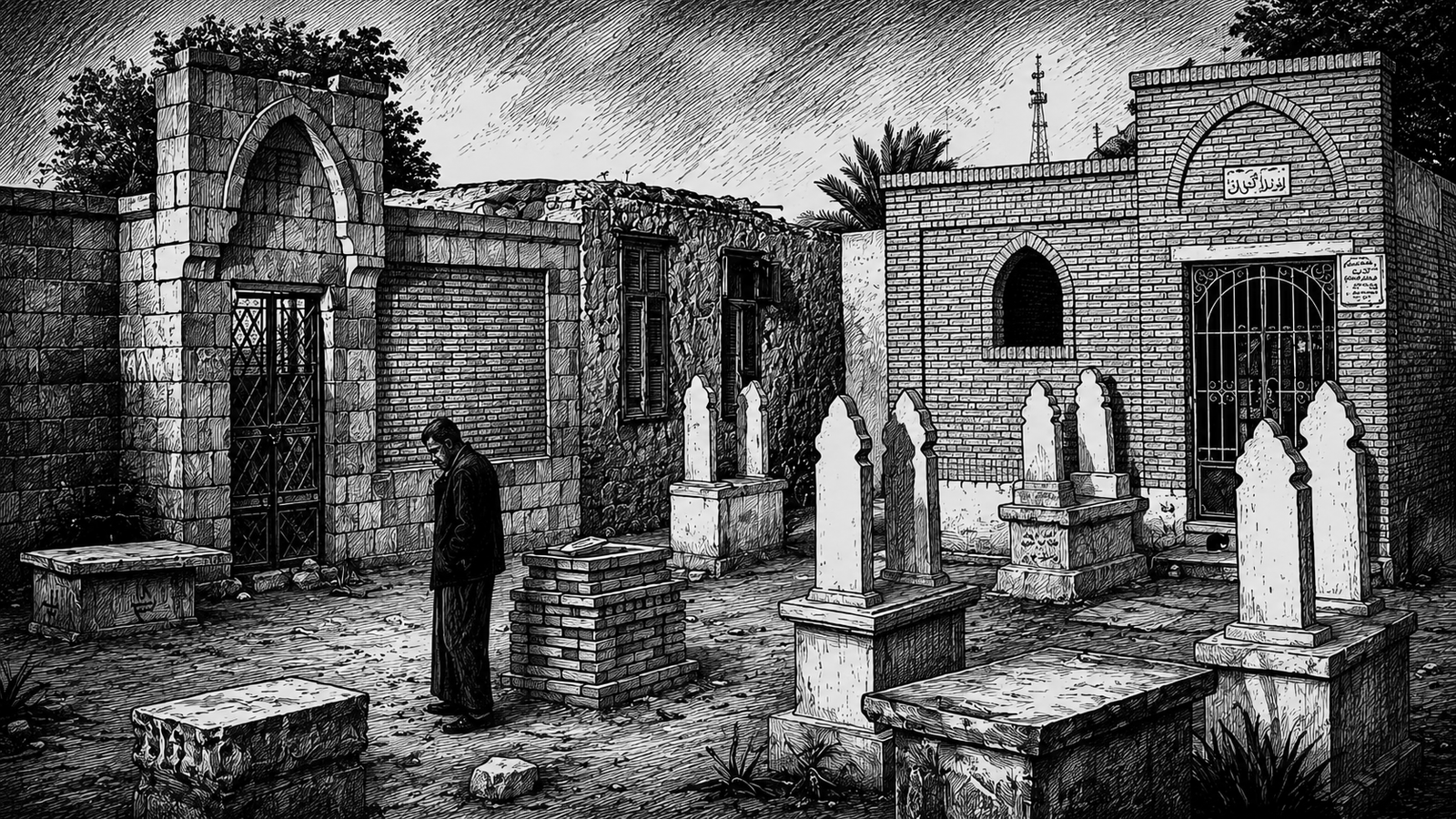
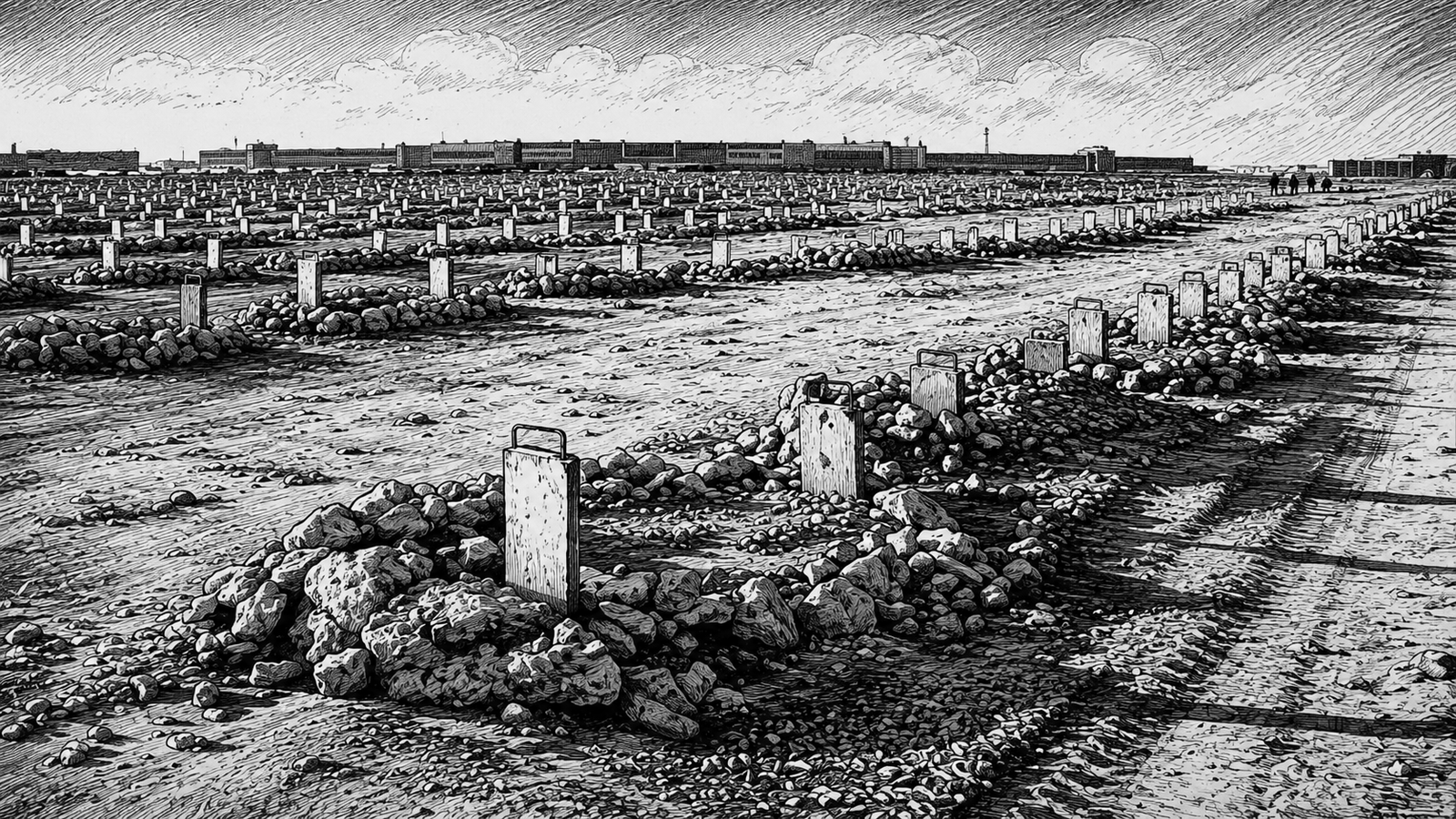
Egyptians have a unique way of burying their dead, a practice that some Muslims criticize because it does not follow the lahd (side niche grave) prescribed in the Prophetic tradition. Some even compare it to the ancient Egyptian custom of burying the dead in constructed chambers. Contemporary Egyptians often bury their deceased in underground concrete-built rooms resembling basements. The deceased is laid on the sandy floor of the chamber, which is known as an “ayn” (vault). Typically, each family tomb contains two such chambers: one for males and another for females. The chamber is reopened whenever a family member dies, and the deceased is placed beside those who were buried there before.
My mother's burial chamber was new; no one had been buried in it before. Together with my relatives, I carried her body into the chamber, descended with it, and laid her on the sandy floor. After loosening the ties of her shroud, we sprinkled some sand over it. As I climbed out of the chamber, I struck my head violently against its low ceiling. It was perhaps the hardest blow I had ever received to my head. I was so certain it must have caused heavy bleeding that I immediately touched my scalp in disbelief, only to find no trace of blood on my hand.
Then, about a year later, during my next visit to Egypt, a young driver from our neighborhood—someone we frequently dealt with and who had helped us bury my mother—told me that when he buried my grandmother, who had passed away roughly six months after my mother, he found my mother's shroud collapsed inward. It had once been filled by her body when she became the first occupant of that grave, but now it had sunk and shrunk. About a year later, or perhaps less, I learned that this same young man had himself died unexpectedly from a heart attack, despite his young age.
Although I had signed the paperwork at Hamad Hospital for my mother to be buried in Mesaimeer Cemetery in Doha, two Egyptian friends who stood by me during those difficult circumstances insisted, with great persistence, that I transport her body to Egypt so that she could be buried in her homeland. The only exception they would have accepted was if she were to be buried in Al-Baqi' Cemetery in Madinah or in Makkah.
Regarding the virtue of dying in Madinah, Abdullah ibn Umar reported that the Messenger of Allah ﷺ said:
“Whoever among you is able to die in Madinah, let him do so, for I will intercede for those who die there.”
At the time, I wondered silently: Is not God's earth vast when we seek our livelihood? Why, then, should it become narrow at death?
I was not convinced by their argument at all. They suggested that I call my cousin, an anesthesiologist. Before I could hesitate or postpone the matter, they took my phone and dialed his number themselves. His response was immediate: he disagreed with me and supported their opinion without debate.
And so it was done. I shipped her body in a coffin that I purchased from a supplier specializing in shipping caskets in the Al Najma district of Doha. In doing so, one of her old prophecies came true. Whenever her mother annoyed her with unsolicited advice and interference, she would angrily say that she would leave Egypt to work abroad, far away from her, and would one day return to her in a box.
The coffin was red, and I felt that the color was inappropriate. Perhaps it had been intended for deceased Zoroastrians from Asia or for Buddhists. Yet it was the only one available. I wished it had been green, the color commonly associated with Islam. Then I dismissed the thought and wondered: Does Islam even have a color?
Early the next morning, one of those two friends drove me in his car. We followed the body in the ambulance as it departed from the Hamad Hospital morgue, where she had been washed, perfumed with camphor, and shrouded free of charge. When we arrived at the oversized cargo terminal at Doha Airport, I received the coffin from the ambulance crew, placed it on a forklift pallet, and moved it into the cargo hall alongside the luggage.
A short while later, I received a notification through the Metrash e-government application informing me that my mother had departed Qatar.
I then completed my own travel procedures and boarded the very same aircraft—myself in the passenger cabin, and she somewhere beneath me in the belly of the plane.
Strangely enough, the cost of shipping her body one way exceeded by more than double the cost of her round-trip airfare when she had still been alive.
To this day, I remain deeply grateful to those two friends. Yet despite that gratitude, I once exploded in anger at one of them several years later during a phone call, irritated by what I felt was his interference in one of my personal affairs. Today I deeply regret rebuking him. I wish I had tolerated his foolishness. He had stood beside me sincerely for God's sake during some of the hardest days of my life.
Nearly thirteen years later, those memories returned to me as vividly as if they had happened yesterday. I was accompanying a German delegation as an interpreter during an official inspection of airport facilities. There, in a gray-walled room with no door, my eyes fell upon a long coffin resting in a corner. The Qatari official hosting us explained that it contained a body awaiting completion of its shipping procedures before being loaded onto an aircraft.
Sometimes a question comes to me out of sheer curiosity: Has the person who will one day bury me already been born, or not yet? Is there any chance that I might know him?
And will I ever visit my own grave? Or perhaps I will not be buried at all.
I once mourned my mother with these words in a Facebook post:
“On this day a year ago, when I visited her in the hospital on the afternoon of the last day of her life, she was fully conscious. She complained of intense thirst, so I wandered through the hospital corridors searching for a vending machine.
An Indian nurse had kindly given me a few riyals because I had asked her to break a larger bill and had no small change.
I ran through the corridors of the hospital to bring her a carton of orange juice.
While running, I lost my way and found myself moving alongside the walls of the morgue.
At that moment, a thought crossed my mind that perhaps this was a sign, a preparation, and a mercy—that soon I would be taking her to the mortuary refrigerator.
I returned with the juice, and she drank the carton eagerly. Then she asked for a second one.
I reminded her that this was a large amount for a diabetic patient, but she insisted on drinking the second carton.
Shortly afterward, she reassured me that she was fine and told me that I should go.
I asked her to pray for me, forgetting to mention my sister, and she prayed for me.
I left, and three hours later a doctor called me and said that her heart had stopped several times and that she had been placed on a ventilator.
I asked him directly: ‘Tell me plainly, has she died?’
He replied, ‘I cannot determine the answer at this moment.’
I arrived to find her unconscious. Her heart would beat, then stop, and the doctors would again attempt to revive it by pressing forcefully on her chest. Her heart would resume beating, only to stop once more.
I recited Surah Ya-Sin to her.
I prompted her with the Shahadah in her ear five times.
I said to her, word for word:
‘I bear witness that there is no god but Allah, and I bear witness that Muhammad is the Messenger of Allah. He conveyed the message, fulfilled the trust, advised the nation, through him Allah removed hardship, and he left it upon the clear path, whose night is like its day; none deviates from it except one who is doomed.’
I pray that Allah, the All-Hearing, allowed her to hear it and to utter the word of truth.
O Allah, make my mother among the people of truth, and reunite me with her in the Abode of Truth, among the prophets, the righteous, the truthful, and the martyrs.”
Some Muslims believe that dying away from one's homeland is a form of martyrdom, while others do not. Abdullah ibn Abbas reported that the Messenger of Allah ﷺ said:
“The death of a stranger is martyrdom. When death approaches him and he looks to his right and left and sees no one but strangers, then remembers his family and children and sighs, Allah erases two million sins for every breath he takes and records for him two million good deeds.”
And Abdullah ibn Amr reported:
“A man who had been born in Madinah died there, and the Messenger of Allah ﷺ offered the funeral prayer over him and said: ‘Would that he had died somewhere other than the place of his birth.’ They asked, ‘Why is that, O Messenger of Allah?’ He replied: ‘When a person dies away from his birthplace, he is granted in Paradise the distance between his birthplace and the farthest point reached by his footsteps.’”
Article 5 of the amended Martyrs Foundation Law No. 3 of 2006 in Iraq stipulates that:
“A martyr is every Iraqi citizen who lost his or her life as a result of opposing the former regime in opinion, belief, political affiliation, sympathy with its opponents, or assistance to them, through an act committed directly by the regime, or as a result of imprisonment, torture, or surviving either of them, or due to acts of genocide, victims of chemical weapons, crimes against humanity, extrajudicial executions, or forced displacement.”
The Martyrs Foundation Law No. 2 of 2016 in Iraq grants the families of martyrs a range of rights and privileges, including:
Honoring and commemorating martyrs.
Establishing monuments and museums dedicated to them.
Facilitating administrative and governmental procedures for their families.
Transferring employment service records between ministries.
Allocating quotas for employment and educational opportunities.
Granting study leave and educational scholarships.
Exempting them from certain academic requirements.
Paying accumulated salaries and financial entitlements.
Guaranteeing their right to remain in public service until the age of 68.
These provisions are intended to recognize the sacrifices of martyrs and provide ongoing support to their surviving family members.
An article on the Arab Post website titled Starting at $7,000 and Exceeding $30,000 Depending on the State: Why Is Dying in America So Expensive? ddiscusses the difficulties faced by Muslims and Arabs in the United States due to the high costs of burial and repatriating deceased family members. Death has become a significant financial burden on many families and immigrant communities.
The article recounts the story of a young Tunisian man who died in New York. His body remained in a morgue refrigerator for three weeks because of difficulties in contacting his family and covering the costs of either burial or transporting his remains back to Tunisia. Burial expenses in the United States were estimated at around $5,000, while repatriating the body to his home country could cost as much as $25,000.
Mosques often assist affected families by coordinating with Islamic funeral homes and organizing fundraising efforts, especially on Fridays when mosque attendance is highest. The shortage of Islamic cemeteries in New York has also forced some Muslims to seek burial plots in other states, such as New Jersey, which can conflict with the Islamic preference for prompt burial.
Cremation remains a cheaper alternative and is therefore sometimes considered, but it is rejected by most Muslims, leaving many families in a difficult position.
On the opposite side of the world, in East Asia, Japanese parliamentarian Mizuho Umemura called for the cremation of Muslims who die in Japan. According to an article on the Japanese website Arab News Japan titled Japanese Politician Cites Imperial Preferences in Muslim Burial Dispute, she opposed expanding burial sites for Muslims, arguing that Japan is a country whose funeral culture is based on cremation in accordance with traditions endorsed by the Japanese Emperor. This has left Muslims in Japan facing difficult choices: either searching for an Islamic cemetery—which is extremely rare in the country—transporting the body abroad at considerable expense, or accepting cremation.
The article presents the controversy as a conflict between those who believe Japan should preserve its traditional cremation-based funeral system and those who argue that providing burial facilities for Muslims is a matter of religious freedom, human dignity, and minority rights. It also notes that some local residents have opposed the construction of Muslim cemeteries because of environmental concerns regarding the potential impact of burials on groundwater.
Regarding the permissibility of cremation in Islam, the website IslamWeb, in an article titled “Cremation of the Dead: An Islamic Legal Perspective,” states that the cremation of a deceased person's body is not permissible under Islamic law. The article argues that the dead possess sanctity and dignity just as the living do, citing a hadith narrated by Aisha bint Abu Bakr, in which the Messenger of Allah ﷺ said: “Breaking the bone of a dead person is like breaking it while he is alive.”
Based on this principle, the article maintains that violating a deceased person's body through cremation constitutes an infringement upon that person's dignity and sanctity, and is no less serious than burning a living person.
Personally, however, I was struck by a Prophetic narration that I found particularly remarkable, in which Allah forgave a man who had requested that his body be burned after his death.
Abu Hurairah reported that the Messenger of Allah ﷺ said:
“A man who had never done any good deed said to his family: ‘When I die, burn my body, then scatter half of my ashes on land and half in the sea. By Allah, if Allah gains power over me, He will punish me with a punishment unlike that inflicted on anyone else in the world.’
When the man died, they carried out his instructions. Allah commanded the land to gather what was within it, and He commanded the sea to gather what was within it. Then Allah asked him: ‘Why did you do this?’
He replied: ‘Out of fear of You, my Lord, and You know best.’
So Allah forgave him.”