


Regulations and Laws
Ministerial Decision No. (4) of 1989 includes a set of procedures and forms related to applications for building, demolition, and maintenance permits, as well as review notifications and work stoppage warnings, and violation reports.
The decision states that no construction work may commence without issuing a building permit, and starting construction before issuance is considered a violation. When the application is submitted to the concerned administration, ownership documents must be attached. The application will then be reviewed in three stages: submission to the Urban Planning Administration, approval by the Building Permit Complex, and finally, the issuance of the permit.
In the first stage, the application is submitted along with ownership documents for initial review. The competent authority may request additional plans. Approved applications are then submitted for detailed review by the Technical Affairs Department or the Building Regulation Department, including site plans and service-related drawings to obtain approvals from the relevant departments (electricity, water, communications, firefighting, roads, traffic).
Construction can begin after the permit is issued and the site boundaries are reviewed. The permit holder must place a sign with the permit information at the work site and keep a copy of it.
The permit can be canceled in case of violations, providing false information, or not starting construction within 12 months. In such cases, a renewal application can be submitted with the required fees.
The Building Regulation Law No. (4) of 1985, issued by Sheikh Khalifa bin Hamad Al Thani, sets the rules for construction in Qatar.
The law stipulates that no building or construction work, such as extensions, demolitions, or maintenance, can be undertaken without obtaining a permit from the relevant municipality.
The law also specifies the responsibilities of municipalities in issuing permits and establishes the necessary architectural and technical standards. It outlines the process for submitting permit applications, the required documents, and the timeframe for their approval, in addition to the duties of licensed contractors and engineers to ensure compliance with approved plans and specifications.
Moreover, the law includes penalties for violations and grants municipalities the authority to halt unauthorized works and impose necessary corrections.
It also allows for exceptions in specific cases and mandates that public utilities cannot be connected to buildings without obtaining the necessary certifications.
The law and its provisions have been amended and updated several times to ensure compliance with contemporary requirements.
Home Construction Phase
The second and most crucial step is searching for a reputable and well-known construction company. Those interested in building should take their time and avoid rushing into choosing a company, ignoring the promotions and discounts some companies advertise to attract customers.
The selection should be based on the company’s reputation and its previous construction achievements, as advised by Dr. Al-Minawi. He states, “Property owners should not sign a contract without having it reviewed by a professional lawyer to understand their rights and obligations.”
This review will help both parties avoid future disputes, as informal contracts often fail to protect the owner’s rights. If the company breaches any terms, the owner won’t be able to claim their rights in court.
Dr. Al-Minawi continued on the subject of contracts, emphasizing, “The owner must negotiate before contracting. Rushing to sign the contract without focusing on the negotiation phase, which should occur before signing, can lead to problems during construction.”
He further explained, “An annex should be added to the contract detailing all construction materials used and structural specifics, such as the type of tiles, quantities and proportions of concrete, types of electrical wires and connections, sewage pipes, as well as paints and water insulation. The annexes attached to the contract are integral parts of it and must include all these details. If the company fails to adhere to the agreed specifications, it will be easier to prove the owner’s rights in court.”
Contractor’s Obligations
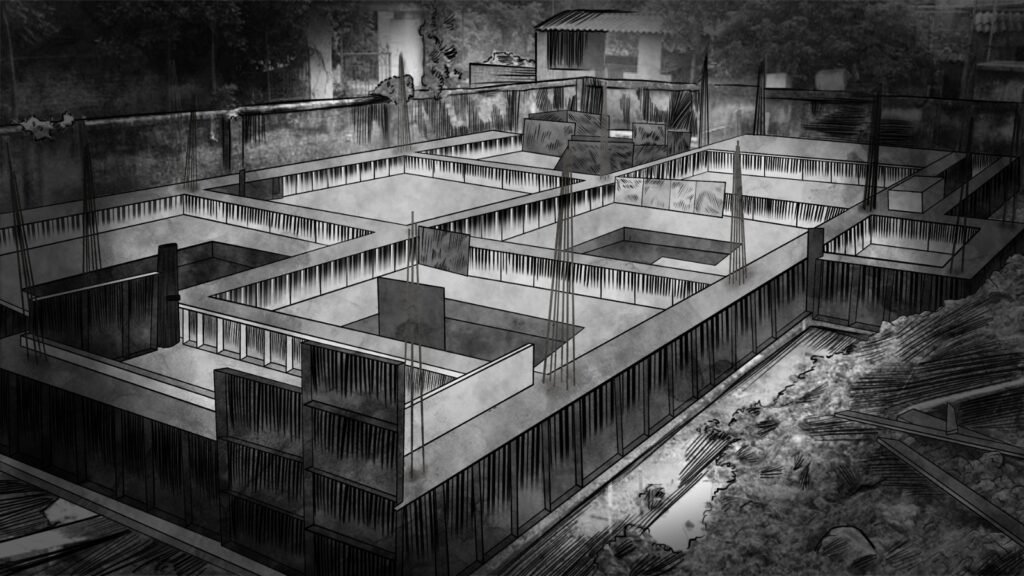
The Qatari Civil Code has established several clauses outlining the contractor’s obligations in Law No. 22 of 2004.The contractor is required to ensure the quality of work as per the agreed-upon conditions and within the specified time frame in the contract to avoid defects or violations. Additionally, the contractor is responsible for compensating the owner for any damages or losses resulting from the contractor’s failure to fulfill their contractual obligations.
Article 687 mandates that the contractor complete the work according to the contract terms and within the agreed duration. Article 688 states that the contractor must not perform the work defectively or contrary to the contract. The owner can warn the contractor to correct the execution method within a reasonable period. If the contractor fails to correct the situation, the owner may request contract termination or obtain a court authorization to fulfill the obligation at the contractor’s expense.
The law also specifies that if the contractor delays starting or completing the work or shows an intention not to fulfill their obligation, the owner can request contract termination. The contractor is not entitled to claim dues if the work is destroyed due to an unforeseen accident before its delivery. However, if the owner is responsible for the construction delay, they cannot claim their rights unless the contractor is in breach of their obligation.
Choosing the Right Consultant for Construction
Starting the construction of a house involves more than just selecting a contracting company; choosing the right consultant can make a significant difference in ensuring the project’s success. The consultant supervises on-site work and should be appointed by the owner.
The consultant represents the owner on-site in front of the contractor and their team, supervising the workflow and the quality of raw materials and building materials. They conduct site inspections to verify that the work is executed according to the agreed-upon plans.
Selecting the right consultant can be as challenging and important as choosing a contracting company. It is essential to ensure that the consultant has the necessary experience, expertise, and professionalism to complete the work effectively.
Choosing the wrong or random consultant can lead to irreversible errors in both design and execution. Evaluating the cost and benefits of hiring a good consultant is crucial for ensuring that the work proceeds correctly.
Dr. Al-Miniwai emphasizes that the consultant should be independent of the construction company and not related to the contractor. He adds, “Some owners, when signing with a construction company, may be offered a specific consultant, which is illogical because how can the judge and the defendant be the same?”
Selecting the right consultant for a construction project is vital, requiring careful attention to several factors, starting with ensuring no direct relationship between the two parties and considering experience, reputation, and integrity.
Starting the construction of a house and achieving the best results is not an easy task, especially if it is the project of a lifetime. It is undeniable that construction errors are a global problem, not just local. While it may be impossible or extremely difficult to eliminate them entirely, they can be minimized by applying state-approved engineering standards and technical specifications.
It is not an exaggeration to say that construction errors are increasing significantly, which is reflected in the number of court cases related to the construction field. However, choosing the right engineer, contractor, and consultant, along with their coordinated efforts and the owner’s supervision, ensures that the work proceeds correctly.
It is not an exaggeration to say that construction errors are increasing significantly, which is reflected in the number of court cases related to the construction field. However, choosing the right engineer, contractor, and consultant, along with their coordinated efforts and the owner’s supervision, ensures that the work proceeds correctly.