
The Serbian Massacres in Bosnia and Herzegovina
The specter of genocide still haunts Europe even in modern times, as seen in the genocide in Bosnia and Herzegovina that devastated the country in the 1990s.
In the past, Josip Broz Tito, who ruled Yugoslavia from 1953 to 1980, managed to contain these conflicts. However, after his death, subsequent leaders failed to foster a collective Yugoslav identity. With the absence of a unifying ideology, Yugoslavians gradually began to define themselves primarily by their ethnic and religious identities, making the Yugoslav federation increasingly fragile.
As a result, when Yugoslavia collapsed in 1991 following the disintegration of the Soviet Union, which had dominated Eastern Europe, separation was not peaceful, and armed conflicts erupted immediately, lasting from 1991 to 2001.
The genocide in Bosnia occurred amid the dissolution of Yugoslavia, as wars broke out among its former members, including Serbia, Bosnia and Herzegovina, Kosovo, Croatia, Macedonia, Montenegro, and Slovenia.
Macedonia was allowed to secede peacefully, but Slovenia and Croatia fought wars for independence from Yugoslavia. Serbia, which had a majority Christian Serbian population, was not willing to let Yugoslavia break apart entirely.
Serbia, alongside Montenegro, attempted to become the successor state of Yugoslavia. Serbs controlled most of the power in Yugoslavia and dominated the Yugoslav People’s Army. They did not want independent states to emerge but sought to maintain their dominance and influence.
This led to the rise of ethnic nationalist leaders who exploited these divisions to consolidate their power. Among them were Slobodan Milošević of Serbia, Franjo Tuđman of Croatia, and Radovan Karadžić of the Bosnian Serb minority. These leaders manipulated ethnic and religious identities, rewrote historical narratives, and instilled fear of the “other” to solidify their rule.
The Bosniaks (Bosnian Muslims) made up more than half of Bosnia and Herzegovina’s population. The Christian Orthodox Serbs accounted for about one-third, while the remaining 17% were Croats.
For a long time, these groups coexisted in relative peace, united under the shared ideology of communism within Yugoslavia. However, with growing aspirations for independence, no group wanted to end up in a new state dominated by the other.
During my time studying in Germany in the 1990s, I met an Algerian student who shared a strange story. He recalled that during a visit to Yugoslavia before its breakup, he was shocked to see mosques with minarets but found no other visible signs of Islam in the country. Later, he learned from Arab students who had studied there before the war that many Bosnian Muslim parents preferred to marry their daughters to their Christian Serbian or Croatian neighbors rather than to Arab students.
Following a 1992 independence referendum, in which 99% voted in favor of secession, Bosnia and Herzegovina officially declared independence. Croatia immediately recognized the new state.
This decision angered the Bosnian Serb minority, who then declared their own independence from the new state and established the Republika Srpska under Radovan Karadžić’s leadership. They sought assistance from the Yugoslav central government, which was still controlled by Serbs. The government did not hesitate to provide military support, and war officially erupted in the same year, marking the beginning of the Bosnian War.
The Bosniaks and Croats allied against the Yugoslav People’s Army and the Bosnian Serb forces. However, tensions arose between Bosniaks and Croats, leading to localized conflicts in what was later described as a “war within a war.”
The Serbian-led genocide against Bosniaks began with a series of coordinated massacres carried out both officially and by nationalist groups. One of the most infamous atrocities was the Sarajevo Market Massacre, where the crowded marketplace was shelled twice, once in 1994 and again in 1995, resulting in dozens of deaths and hundreds of injuries.
Other massacres followed, including the Tuzla Massacre in 1995, where Serbian artillery targeted Kapija Square, a bustling area filled with young people, killing 71 civilians.
Between 1992 and 1996, Serbian forces imposed a siege on Sarajevo, the capital of Bosnia and Herzegovina, making it the longest siege in modern warfare history. The blockade resulted in the deaths of 12,000 people, with more than 40% of the city’s population forcibly displaced.
However, despite the sheer brutality of these crimes, they represented only a fraction of the atrocities committed. The most horrifying acts were the systematic ethnic cleansing massacres, such as the Vlasenica Massacre in 1992, where all Bosniaks in the town were either killed or forcibly expelled. By mid-1992, the town’s population shifted from over 60% Bosniak to being 100% Serbian.
Serbian forces also established rape camps, where at least 25,000 Bosnian women of all ages were repeatedly assaulted. Many were only released upon becoming pregnant. Numerous UN reports meticulously documented these atrocities.
One such report stated:
“These acts were premeditated, carefully organized, and intended to humiliate and degrade the entire ethnic group. They were not merely a byproduct of war but were deliberately carried out in front of victims’ families and even within their communities.”
An article titled Sexual Violence in Bosnia recounted the case of a Bosnian girl, 18 years old, who was recovering in a Tuzla hospital after undergoing an abortion. She had become pregnant after being raped multiple times by Serbian soldiers at a rape camp in Pale, a Serbian stronghold outside Sarajevo.
The article further described her ordeal:
“During ten weeks of captivity, she was burned with cigarette butts, cut with razor blades, and subjected to constant humiliation for being Muslim. She was raped 16 times, often under the threat of knives or firearms. She was told that there were too many Muslim women and that many of them would give birth to Serbian children.”
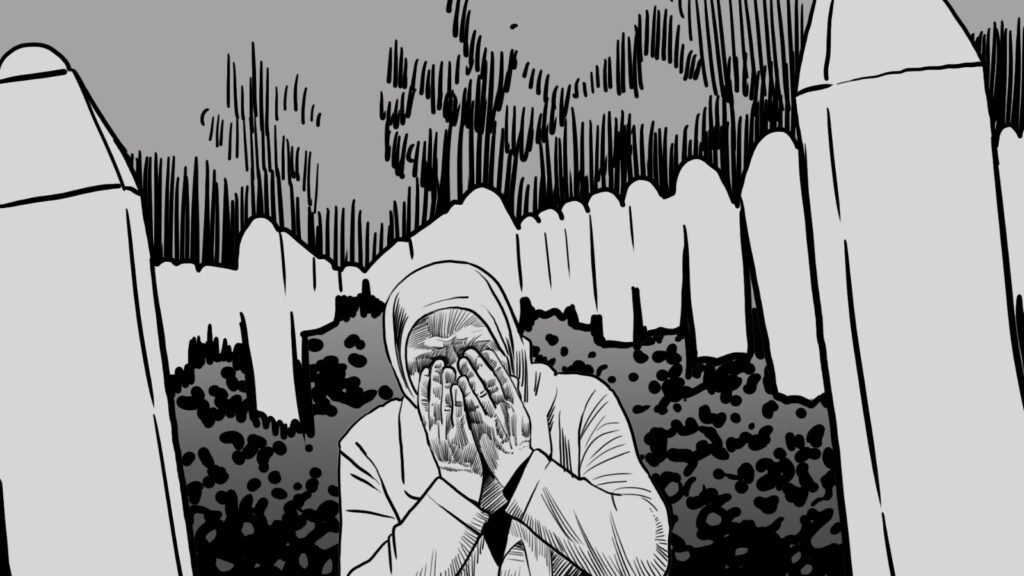
The most horrific atrocities took place in Srebrenica, where tens of thousands of Bosniaks sought refuge from massacres, relying on the protection of United Nations forces. However, in July 1995, Serbian forces led by Ratko Mladić stormed the town, forcing women and children onto buses for deportation, while separating men and boys from their families.
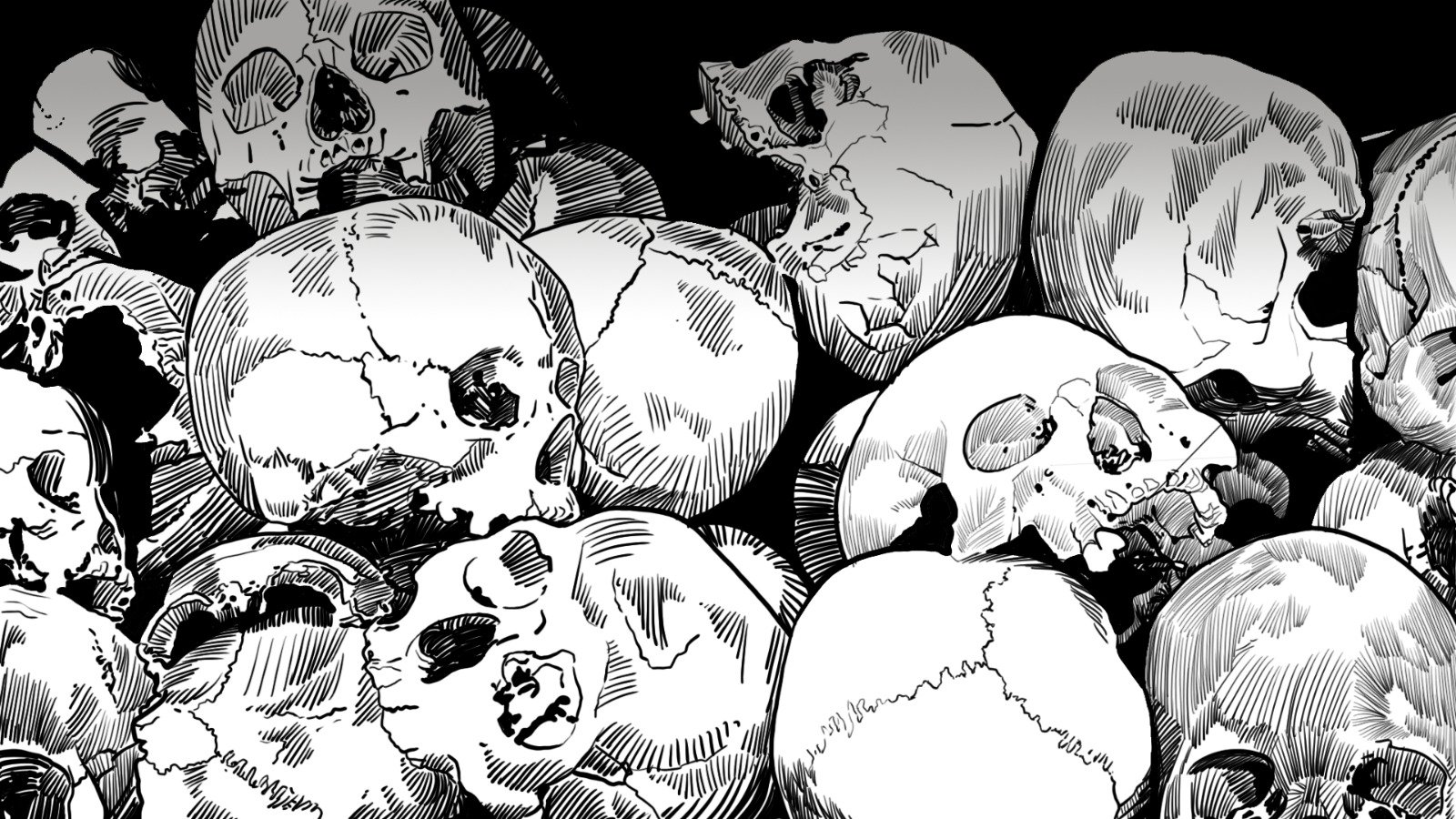
Over the next several days, more than 8,000 Bosnian men and boys were systematically executed in mass killings. Their bodies were buried in mass graves, which were later exhumed and relocated in an attempt to conceal evidence of the genocide.
To this day, the Dutch UN peacekeeping forces, known as the “Blue Helmets,” remain haunted by accusations of complicity in allowing the massacre of Bosniaks under their protection in Srebrenica.
How can a human being kill his fellow human simply for being different, without even flinching?
How can someone be so blinded by hatred that they take pride in false heroics, carrying their shame to the grave—an unforgivable stain in the pages of history?
What kind of diabolical ideology drives some people to commit such atrocities?
Surely, the only hope lies in spreading a counter-ideology, one that draws its legitimacy from the power of justice, rather than the justice of power.
Surely, the only hope lies in spreading a counter-ideology, one that draws its legitimacy from the power of justice, rather than the justice of power.