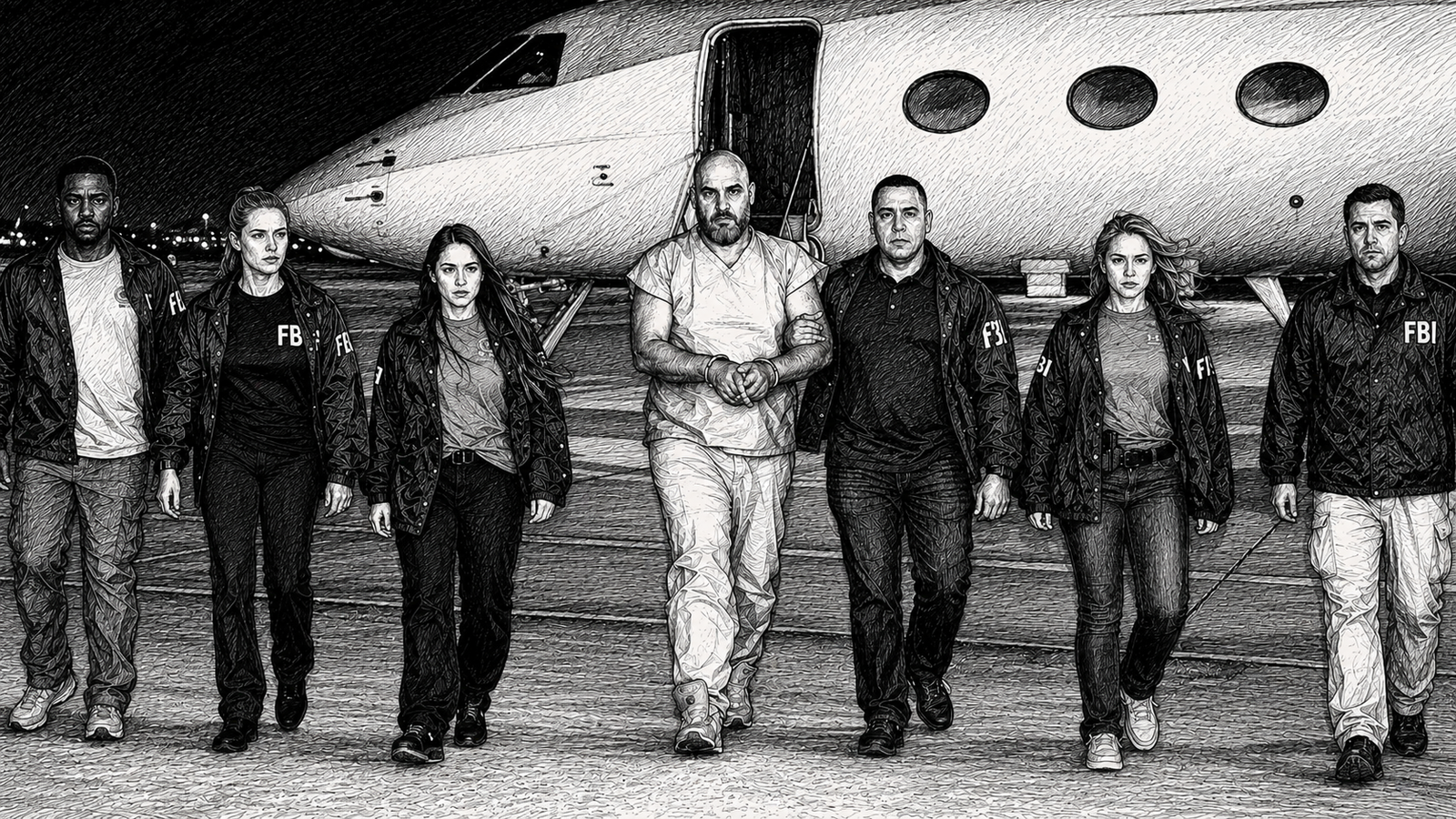
Within just one week in mid-June 2026, two planes landed in the United States, each carrying a man in handcuffs after a period spent as a fugitive abroad.
The first was Ibrahim Khaldoon Hilmi, an Arab-American businessman residing in Florida, accused of orchestrating a $3.7 billion fraud scheme through two medical services companies. The second was Herbert Leon Kimble, accused of turning a call centre in the Philippines into an operation for healthcare fraud schemes exceeding $1.2 billion.
The two men do not know each other and had never been involved in a criminal partnership. Yet their stories reveal fraud schemes targeting nearly $5 billion in American taxpayers’ money through one of the country’s most sensitive government programmes: the health insurance programme for the elderly and people with disabilities known as Medicare.
According to the U.S. Centers for Medicare & Medicaid Services, Medicare is the main federal health insurance programme in the United States and one of the largest government healthcare programmes in the world. It was established in 1965, when U.S. President Lyndon Johnson signed the legislation that created Medicare and Medicaid.
The programme primarily serves people aged 65 and older who meet citizenship or residency requirements. However, in 1972, eligibility was expanded to include certain people with disabilities, as well as those with end-stage renal disease or amyotrophic lateral sclerosis.
Medicaid, meanwhile, is a joint federal and state programme primarily serving certain groups of people with limited incomes.
According to the latest data published in 2026 by the U.S. Centers for Medicare & Medicaid Services, approximately 70 million people are enrolled in Medicare, with those aged 65 and older accounting for more than 90% of all beneficiaries.
Medicare is funded through two main trust funds held by the U.S. Treasury. Funding comes from payroll taxes paid by employees, employers, and self-employed workers, while another portion comes from funds appropriated by Congress and premiums paid by beneficiaries. Total Medicare spending exceeded $1.1 trillion in 2024.
Returning to the two fraud cases involving Medicare, the schemes differ significantly in their technical details, but they intersect in almost every other respect: from medical companies and equipment suppliers submitting fraudulent bills to Medicare under the names of patients who knew nothing about what was happening, to both cases ending with flight abroad, an international manhunt, and eventual extradition through coordination between different governments.
Why Medicare Specifically?

Before delving into the details of the two cases, this question deserves some consideration: why is Medicare repeatedly targeted in fraud cases involving billions of dollars?
The answer lies in the structure of the programme itself, which operates through a vast, centralised billing system covering tens of millions of beneficiaries. It accepts claims from registered medical service and equipment providers, and payments are often processed relatively quickly compared with the level of scrutiny applied to each individual claim.
This means that someone who owns an officially registered company and has a list of patients that appears credible on paper can potentially generate billions of dollars in claims before the fraud is detected.
In a statement on February 26, 2026, Dr. Mehmet Oz, the Turkish-American physician who appeared as a guest in more than 60 episodes of The Oprah Winfrey Show, estimated fraud, waste, and abuse in U.S. healthcare spending at approximately $300 billion annually. His estimate was cited in an article by Emily St. Martin in the Los Angeles Times titled Oprah Winfrey Put Dr. Phil and Dr. Oz on the Map. Now She’s Talking About Where They Ended Up.
Oz made the statement in his capacity as Administrator of the U.S. Centers for Medicare & Medicaid Services during a live broadcast from the White House, after being introduced by U.S. Vice President JD Vance.
These figures place the cases of Ibrahim Hilmi and Herbert Kimble, despite the enormous sums involved, within a much broader problem that extends beyond the two cases to widespread fraud, waste, and abuse across the U.S. healthcare system.
Oz focused particularly on fraud involving durable medical equipment covered by Medicare, such as wheelchairs and orthopaedic braces. He explained that some fraudsters steal beneficiaries’ identification numbers and submit claims for equipment that was never delivered, allowing companies with virtually no inventory or employees to generate millions of dollars through fraudulent billing. He also referred to a recent fraud case involving approximately $1.1 billion in fraudulent claims for orthopaedic braces.
Ibrahim Khaldoon Hilmi
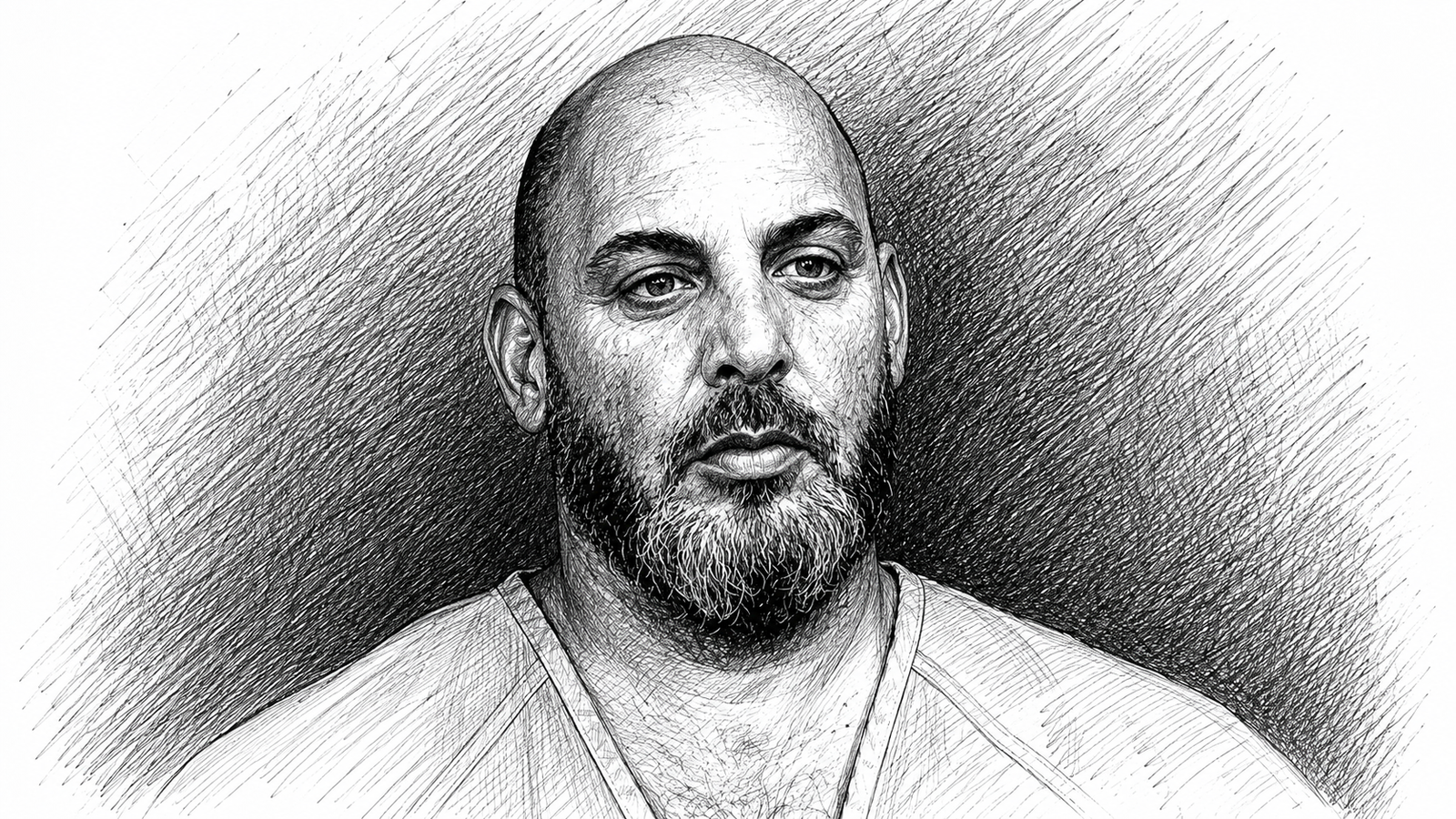
According to the Office of Inspector General at the U.S. Department of Health and Human Services, Ibrahim Khaldoon Hilmi is a 58-year-old American businessman residing in Delray Beach, Florida. He was not a widely known public figure before this case.
As for the fraud scheme he allegedly employed, according to the indictment issued by the federal court in the Southern District of Florida, Hilmi and his associates took control of two companies, ABRH Care, Inc. and Sunshine Senior Solutions, LLC, and turned them into fronts that provided no actual services to customers. Instead, they effectively operated as mailboxes for receiving checks and correspondence involving Medicare, Medicaid, the Federal Employees Health Benefits Program (FEHB), and other private insurance companies.
Claims were submitted under the names of patients, many of whom had never requested any service, had received nothing at all, or were no longer alive. The claims covered durable medical equipment such as wheelchairs, urinary catheters, knee braces, continuous glucose monitors, and wound dressings.
According to FBI Director Kash Pramod Patel, speaking at a press conference on June 23, 2026, the total amount of fraudulent claims submitted to Medicare reached approximately $3.7 billion. Remarkably, however, only $5.7 million was actually collected and deposited into the two companies’ accounts. Hilmi later transferred a significant portion of this relatively small fraction of the amount claimed to a private entity in Hong Kong, with additional transfers made to shell companies in China and Indonesia.
FBI Director Patel personally announced the arrest through his account on X, crediting the FBI’s Miami office, the Department of Justice, Turkish authorities, and U.S. Ambassador to Türkiye Tom Barrack. Patel said: “Hilmi is accused of one of the largest Medicare fraud schemes in history, orchestrating a massive $3.7 billion scheme to defraud the programme. He had been a fugitive since May 2025... but we caught him.”
Patel added that the operation was part of a broader effort led by a White House task force headed by Vice President JD Vance, saying: “Any criminal actor who steals from the American taxpayer will be caught, regardless of where they try to hide.”
For years, Hilmi managed to evade scrutiny, largely because he used dozens of companies that appeared legitimate to avoid the warning signs that would normally trigger Medicare’s automated audits. His claims included legitimate-looking business names, real types of medical equipment, and patient records that appeared credible on paper.
The scheme began to unravel when individuals posted negative reviews on social media complaining about notices from Medicare claiming that they had received equipment from Sunshine Senior Solutions that they had neither requested nor actually received. These public complaints and online comments were among the first warning signs to draw attention to the company. At the same time, a broader federal investigation was examining the transnational criminal network to which these companies allegedly belonged. When Hilmi realised that investigators were closing in, he chose his final option: flight. He left the United States in May 2025 before authorities could arrest him.
Hilmi remained a fugitive for slightly more than a year before Turkish authorities tracked him down and arrested him in Kyrenia, in the northern part of Cyprus under Turkish administration, while official FBI statements referred only to Türkiye in general.
Following his arrest, the FBI’s Critical Incident Response Group (CIRG) carried out what is known as an international rendition operation, a formal mechanism for transferring a suspect from a foreign country into U.S. custody. Hilmi was returned to South Florida on June 19, 2026, aboard a private aircraft, where he was photographed on the airport tarmac wearing light-blue detention clothing, blindfolded and handcuffed, and surrounded by federal agents.
Hilmi appeared before a federal court in Miami on June 22, 2026. He was charged with offences including healthcare fraud, wire fraud, and conspiracy to commit money laundering. The judge ordered that he remain in custody pending trial and final judgment.
Previous Ruling in a Similar Case
According to the U.S. Department of Justice, in a similar case, 57-year-old Reinaldo Wilson was sentenced on February 26, 2026, to seven years in prison and ordered to pay approximately $28 million in restitution for his involvement in defrauding Medicare through two telemedicine companies that he operated in Bayonne, New Jersey, between 2017 and 2019.
According to the ruling, Wilson’s criminal scheme relied on paying illegal kickbacks to medical providers in exchange for signing orders for orthopaedic braces that Medicare beneficiaries did not need.
These signed orders were then sold to marketing companies and often resold to orthopaedic brace suppliers, which in turn used them to submit claims to Medicare.
Wilson and his associates also worked to persuade beneficiaries to accept as many braces as possible. Providers working with his companies signed orders for four or more braces for more than 3,000 beneficiaries, while more than 40 beneficiaries had orders issued for 10 or more braces.
Wilson also attempted to conceal his activities by establishing a new telemedicine company in the name of a member of his church. After convincing her that it was an investment opportunity and taking $20,000 from her, he had her open the company and its bank accounts in her name before taking control of them himself.
Wilson and his associates submitted more than $56 million in false claims to Medicare, of which approximately $28 million was actually paid. Wilson had pleaded guilty in March 2021 to conspiracy to commit wire fraud and healthcare fraud.
The Court Agreement Broken by Herbert Kimble, the Fraudster Behind the Fake Orthopaedic Braces Scheme from Manila
Herbert Leon Kimble was born in Chicago in 1966. An American businessman who worked in international telemarketing, he operated call centres primarily based in the Philippines between 2011 and 2019. These centres became the marketing engine behind one of the largest Medicare fraud schemes in U.S. history. At the time of his arrest in 2026, he was 60 years old.
Kimble’s operation functioned much like an integrated fraud assembly line. It began with television and online advertisements targeting elderly Medicare beneficiaries and offering them free medical braces for back, knee, shoulder, and wrist pain. When a beneficiary called the toll-free number shown in the advertisement, they underwent a quick screening to confirm their Medicare eligibility. They were then persuaded—sometimes through persistent pressure and sometimes by being warned that they could lose their Medicare benefits if they refused—that they needed a brace. In many cases, they were encouraged to request more than one brace during the same call.
The call was then transferred to a telemedicine company, where a doctor or nurse practitioner would issue a prescription with little genuine consideration of the patient’s actual medical need. In many cases, the consultation lasted no more than three minutes. Many of these doctors later admitted that they were paid for each prescription they signed. The payments were presented on invoices as telemedicine service fees, when in reality they were illegal kickbacks.
Kimble’s organisation would then repackage these prescriptions as qualified customer leads and sell them to well-known medical equipment companies with branches across the United States. These companies would, in turn, bill Medicare amounts that could exceed $1,000 for a single brace. Altogether, the scheme generated approximately $1.2 billion in fraudulent billings.
Kimble’s scheme was uncovered as part of a federal investigation. He chose to cooperate with investigators early on and pleaded guilty in April 2019 to charges including conspiracy to defraud the United States, submitting false claims, mail and wire fraud, healthcare fraud, and paying illegal kickbacks.
Some of the audio recordings Kimble himself provided to investigators were later used as evidence in other cases against parties involved in the network. As part of his initial agreement with prosecutors, he agreed to pay $40 million in restitution in exchange for a recommendation that he receive no prison sentence, given his extensive cooperation with the authorities.
However, the story did not end with his guilty plea. According to the U.S. Department of Justice, Kimble failed to appear for his sentencing hearing more than once, prompting the federal court in Columbia, South Carolina, to issue a warrant for his arrest for failure to appear.
It later emerged that Kimble had been hiding in the Philippines for nearly two years. As a result, the FBI placed him on a new list launched in June 2026 called the Most Wanted Fraudsters, offering a $150,000 reward for information leading to his whereabouts.
Less than a week after his name was added to the list, the Philippine Bureau of Immigration’s Fugitive Search Unit arrested him on June 11, 2026, inside a casino in Pasig City in Metro Manila.
Kimble was deported from the Philippines on June 18, 2026, and returned to the United States. He appeared before the federal court in Columbia on June 22, 2026—the same day Ibrahim Hilmi appeared before a separate court in Miami, thousands of miles away—in a striking coincidence involving the first two cases on the Most Wanted Fraudsters list.
Following his return, Kimble formally pleaded guilty again under new terms that took his flight from justice into account. The updated agreement provides for a prison sentence of between 15 and 20 years, along with approximately $200 million in restitution, plus an additional $9 million due at final sentencing. This was substantially higher than his original $40 million commitment, directly reflecting the consequences of having fled justice for years.
FBI Director Patel commented in a post on his X account that, in just over two weeks—referring to Ibrahim Khaldoon Hilmi—the second person on the FBI’s Most Wanted Fraudsters list had been arrested as part of efforts led by Vice President Vance and the White House task force to combat fraud.
Herbert Leon Kimble was arrested in the Philippines and has now been returned to the United States after remaining a fugitive since 2024. He had been accused of involvement in $1.2 billion in healthcare fraud schemes targeting Medicare, with elderly beneficiaries particularly affected, during the period from 2014 to 2019.
Common Threads
The arrests of Hilmi and Kimble within just a few days of each other were not coincidental. Rather, they were part of a broader U.S. campaign to combat fraud targeting government healthcare programmes, led by the White House task force on fraud. In just two weeks in June 2026, the campaign resulted in the arrests of the first two individuals on the FBI’s newly launched Most Wanted Fraudsters list.
The issue of Medicare fraud in the United States is as politically complex as it is criminally. During Donald Trump’s two presidential terms, he pardoned or commuted the sentences of more than 70 people convicted in fraud cases, according to an investigation by The New York Times.
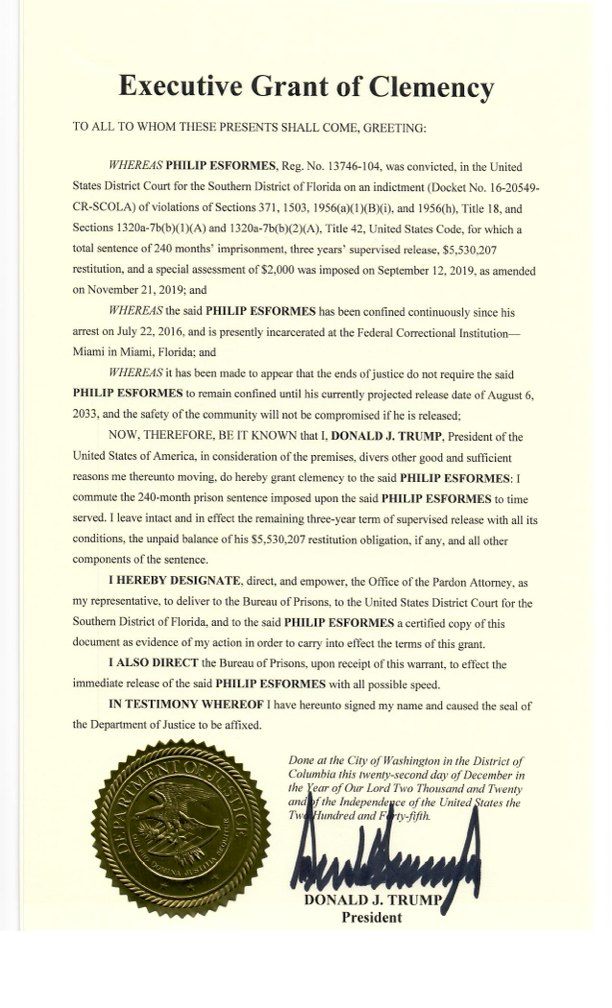
Among them was Philip Esformes, whose $1.3 billion case was, until recently, considered the largest individual healthcare fraud case in U.S. history. In 2020, U.S. President Donald Trump commuted his sentence through a presidential grant of executive clemency, which stated:
“Be it known that I, Donald J. Trump, President of the United States of America, in consideration of the premises, divers other good and sufficient reasons me thereunto moving, do hereby grant clemency to the said Philip Esformes, commuting the 240-month term of imprisonment imposed upon the said Philip Esformes to time served, leaving intact and in effect the remaining three-year term of supervised release with all its conditions, as well as the unpaid balance, if any, of his $5,530,207 restitution obligation, and all other components of the sentence.”
This detail adds another dimension to the cases of Hilmi and Kimble. While authorities pursue fugitives around the world with full force, the ultimate fate of those who are convicted may still depend on factors that extend beyond the scale of the crime itself.