The birth of India and Pakistan in the mid-twentieth century resulted from a geographical partition that took place in the summer of 1947. Sadly, it was the final and bloodiest chapter in a long and complex historical process that had begun more than a century earlier.
Across the intellectual and historical span between British politician Thomas Babington Macaulay’s Minute on Indian Education in 1835 and the Indian Rebellion of 1857—also known as the Sepoy Rebellion, with the word “sepoy” derived from the Persian term for an infantry soldier—the failure of the uprising ultimately led to the downfall of the last Mughal emperor, Bahadur Shah Zafar.
Then came the shock of the abolition of the Ottoman Caliphate in 1924, followed by the rise of Muhammad Ali Jinnah and Abul A'la Maududi. During this period, the Indian subcontinent was transforming from an ancient imperial world into a vast laboratory in which the modern nation-state was being shaped and profound existential questions about religion, identity, and sovereignty were being raised.
It is difficult to view Bahadur Shah Zafar, Macaulay, Jinnah, and Maududi as figures belonging to separate stories. Each, in his own way, stood at a different stage of the same pressing question: What happens to a people when the political authority they have known for centuries collapses, a foreign colonial power takes control and reshapes their institutions, education, and language, and then suddenly departs, leaving communities behind to decide who they are, under which flag, and in which state they wish to live?
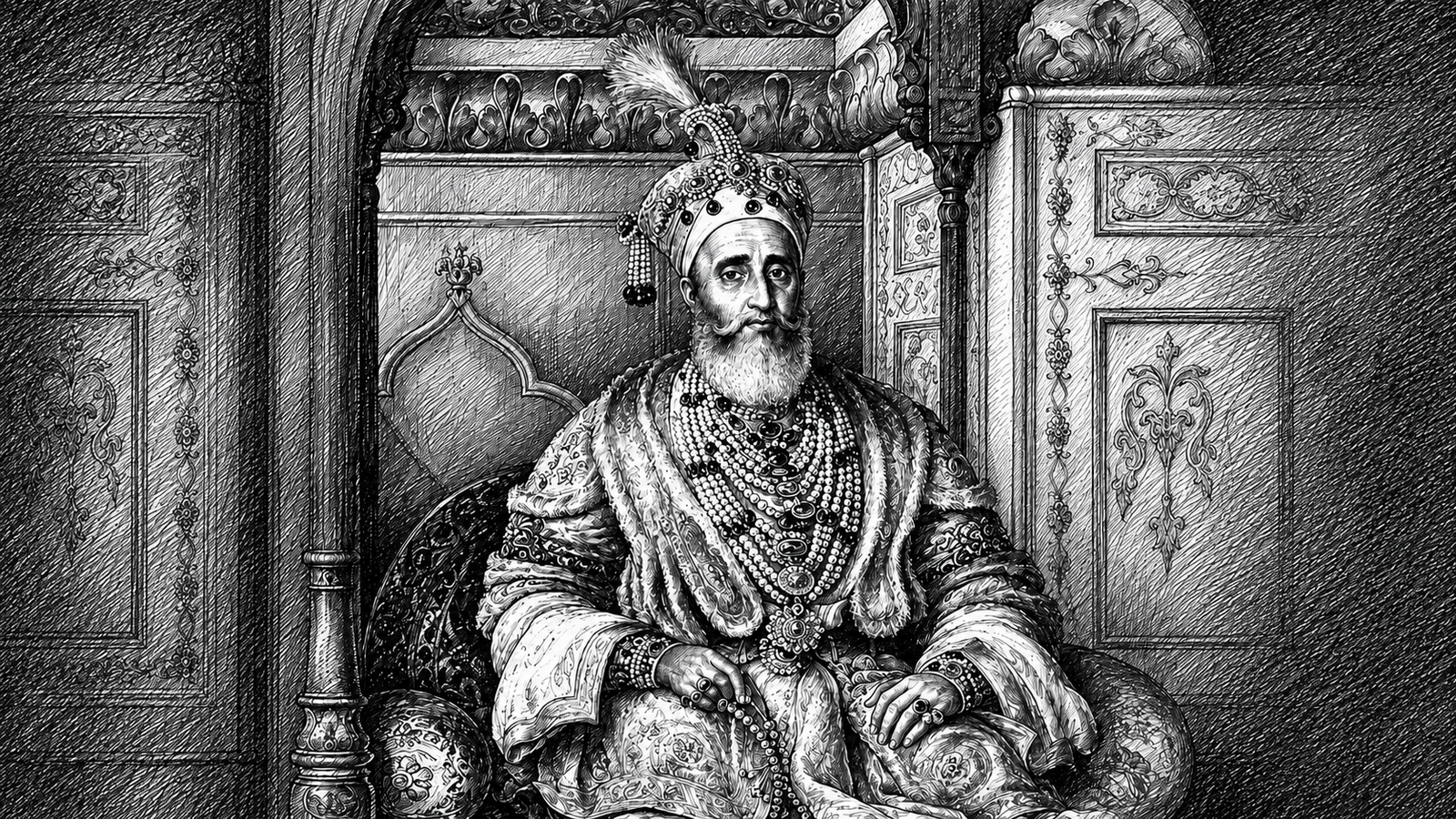
When Abu al-Zafar Siraj al-Din Muhammad Bahadur Shah Zafar was born in 1775, he belonged to one of the greatest ruling dynasties in history.
The Mughals had ruled vast parts of the Indian subcontinent since Babur founded their empire in the sixteenth century, reaching the height of their glory and power during the reigns of Akbar, Shah Jahan, and Aurangzeb.
But the world Bahadur Shah inherited was very different from that of his ancestors. Since the death of Emperor Aurangzeb in 1707, central authority had steadily fragmented. Meanwhile, the British East India Company was gradually transforming from a foreign trading enterprise into a formidable military and political power that controlled both land and troops.
By the time he ascended the throne in 1837, his imperial title was far greater than the actual authority he possessed. Little remained under his control beyond the Red Fort and a very limited sphere of influence in Delhi. The Company paid him a monthly allowance of 90,000 rupees and closely monitored the royal court through its political representative, while gradually stripping him of his remaining powers, including discontinuing the currency that had been minted in his name.
Yet the loss of political power did not mean the cultural disappearance of the royal court. Zafar was a sensitive poet who wrote in Urdu and adopted “Zafar,” meaning “victory,” as his literary name—a poignant irony for a man who never experienced military victory.
His palace welcomed some of Delhi’s greatest poets, including Ghalib and Zauq. In its final years, the court appeared to exist in a state of dreamlike denial: the old political centre was dying, yet it continued to produce poetry and art, preserving within it the memory of an entire nation.
British control was not limited to cannons and unjust agreements. In 1835, two years before Zafar ascended the throne, Lord Thomas Babington Macaulay wrote his famous Minute on Indian Education, one of the most significant documents expressing the cultural dimension of colonial domination.
The administrative question was straightforward: where should the government spend its education funds? Should it continue financing education in Arabic, Persian, and Sanskrit, or should it shift towards English and Western sciences?
Macaulay’s answer went far beyond financial considerations, effectively passing a civilizational death sentence on Eastern culture. With striking arrogance, Macaulay famously wrote: “A single shelf of a good European library was worth the whole native literature of India and Arabia.”
Macaulay’s objective was not to educate millions of Indians, but to create a hybrid elite that would lead society on behalf of the colonial ruler. He stated his aim explicitly: to form “a class who may be interpreters between us and the millions whom we govern; a class of persons, Indian in blood and colour, but English in tastes, in opinions, in morals, and in intellect.”
At this point, colonialism moved from occupying the land to occupying the mind. The question was no longer simply, “Who rules India?” but rather, “In what language does the educated Indian think?”
Religious schools were closed, support for Arabic was withdrawn, and a deep fracture began to emerge within Indian identity, making education the first major battleground of a civilizational struggle.
Political grievances, economic injustices, and cultural anxieties continued to accumulate until they erupted in May 1857 in what Indians came to know as the Great Indian Revolt and the British referred to as the Indian Mutiny.
The initial spark was associated with the story of cartridges for the Enfield rifle, which were widely believed to have been greased with cow and pig fat—an issue that offended the religious beliefs of both Hindus and Muslims.
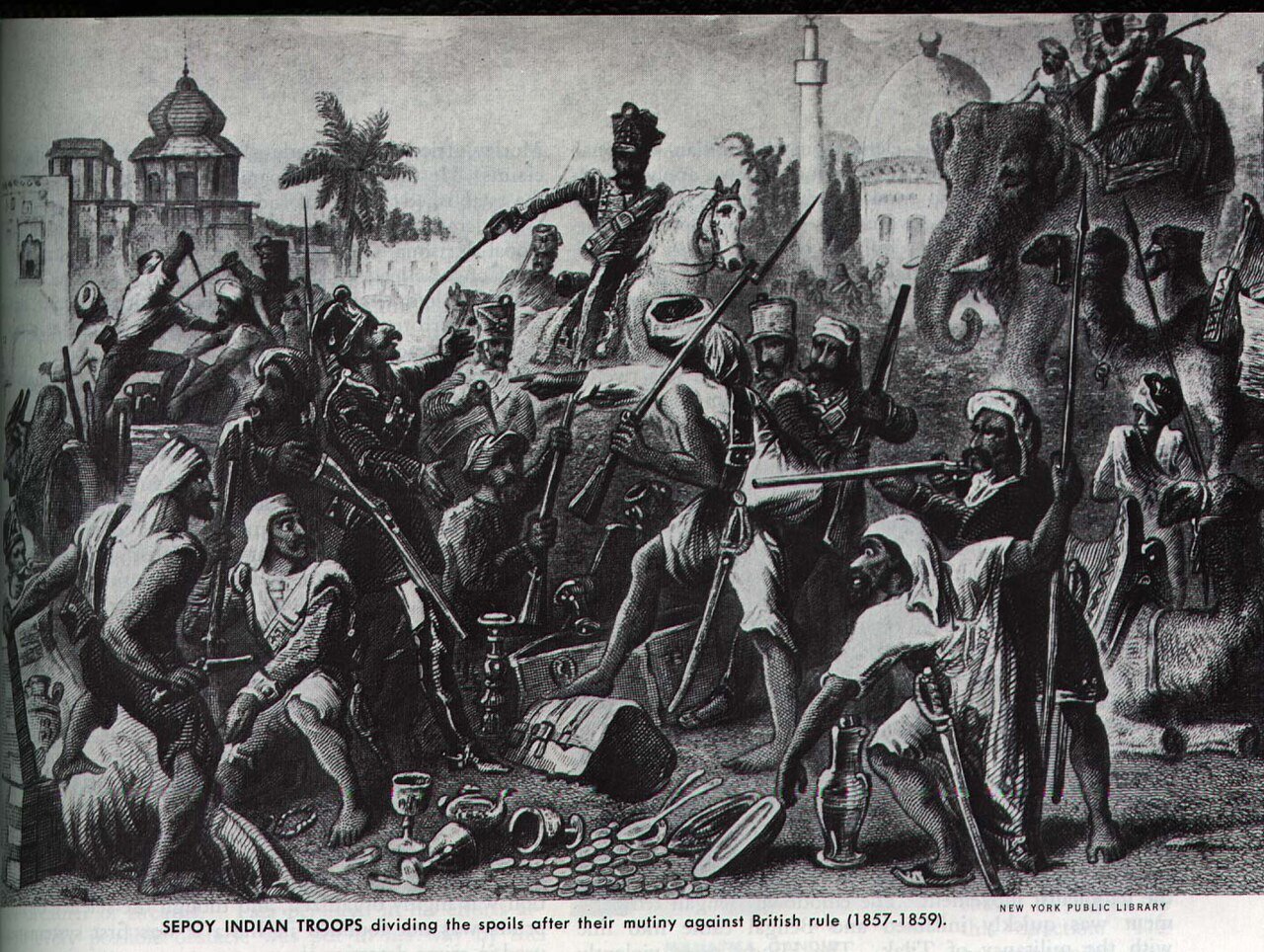
The soldiers rebelled and killed British troops, then rushed towards Delhi, stormed the Red Fort, and asked Bahadur Shah Zafar to lead their movement.
But the eighty-year-old emperor had neither an army nor the machinery of a state, and he had no desire for such an open confrontation. The rebels, however, were searching for a symbol. They needed a name that would give their uprising historical legitimacy beyond that of merely being mutinous soldiers.
The emperor eventually yielded and issued proclamations of jihad, making Zafar’s tragedy twofold: he lacked the power to refuse leadership of the revolt, yet he also lacked the power to control its armed factions.
After a prolonged siege, the British recaptured Delhi in September 1857 with extreme brutality. Rebels were tied to the mouths of cannons and their bodies torn apart by cannon fire. Bahadur Shah eventually surrendered after receiving assurances that his life would be spared.
What followed was one of the bloodiest and most arrogant episodes of colonial rule. Captain Hodson arrested the emperor’s sons and grandson, stripped them of their clothes, and killed them in cold blood. He then fabricated a story of armed resistance in an attempt to create personal glory for himself.
Then came the judicial spectacle: the emperor’s trial in 1858. In his book Sovereignty, Subjecthood and Colonial Justice: Rethinking the Trial of Bahadur Shah, 1858, Kripal Chandra Yadav exposes the glaring contradiction at the heart of the proceedings.
How could a company called the East India Company put a sovereign emperor—whose legal status it had recognised until only recently—on trial for treason?
The British themselves struggled to determine the nature of the proceedings: was it a military court or a commission of inquiry? Ultimately, Zafar was tried for treason against the Company, symbolically demonstrating that the colonial system was not merely putting a man on trial; it was burying a political order and an empire that had endured for more than three centuries.
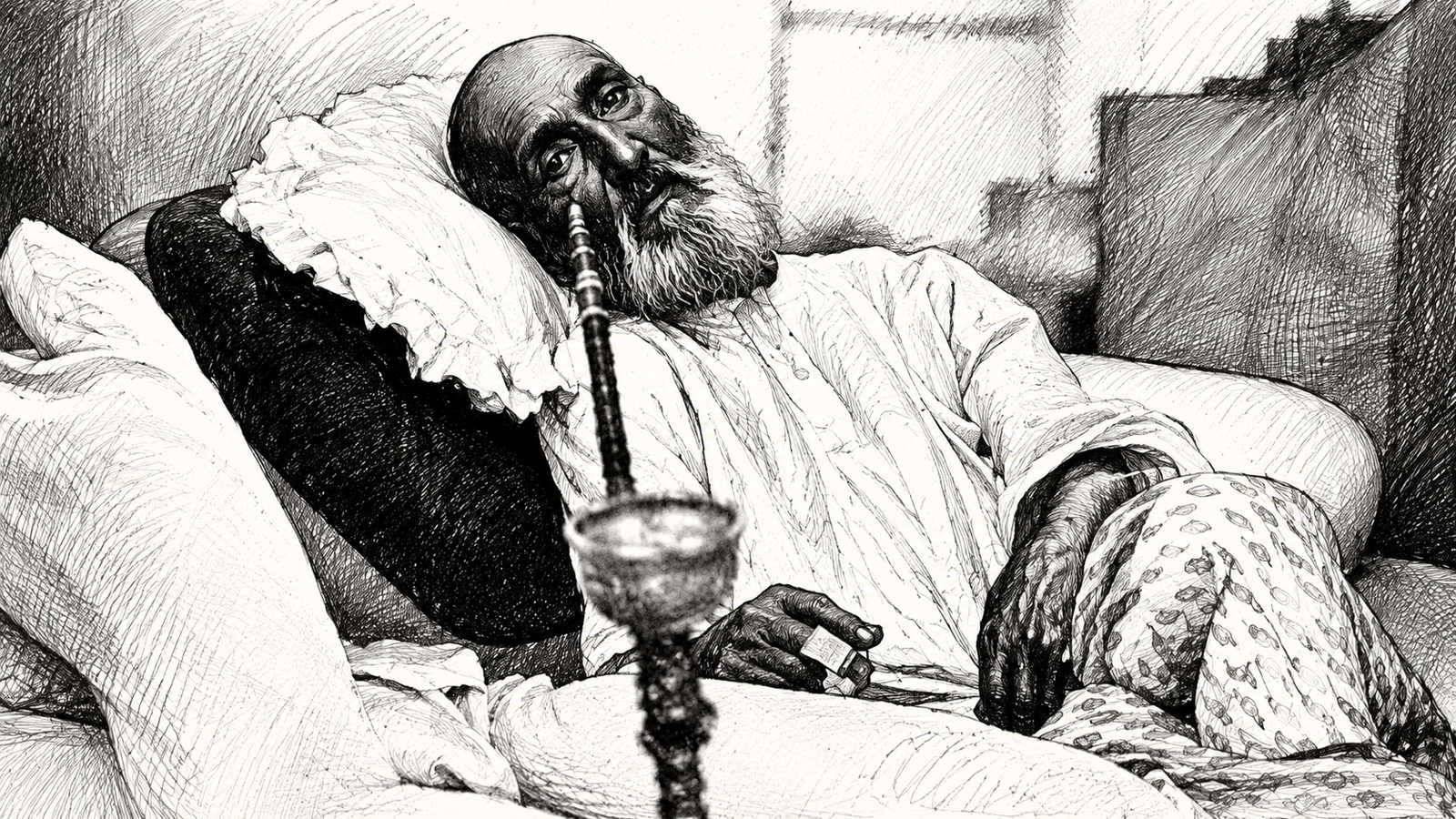
Zafar was convicted and exiled to Rangoon in Burma, where he spent the remainder of his life as a prisoner. Deprived of paper and pens, he wrote sorrowful poetry on the walls using pieces of charcoal. What could be preserved of his poetry was later collected in a volume entitled Kulliyat-e-Zafar.
In the final years of his life in exile, the British government provided him and his family with only 11 rupees a day, increasing the allowance by a single rupee on one day of the week as a further humiliation. He remained in exile until his death in 1862.
The British concealed the location of his grave to prevent it from becoming a shrine or a symbol around which Indians might once again rally. His burial place was only rediscovered by chance nearly 130 years later, in 1991, when municipal workers were excavating the area to install drainage pipes.
With the fall of Delhi, India officially became the jewel in the British Crown, and Muslims found themselves facing an impasse: political power had been lost, so how could their identity be preserved?
This led the Indian Muslim response to split into two main paths. The first was one of cultural fortification and isolation, represented by the Deoband school, founded by Hanafi scholars in 1866 as a cultural stronghold dedicated to preserving Islamic sciences and the Arabic language. Deoband completely rejected the teaching of English and Western sciences, fearing the cultural alienation associated with Macaulay’s project.
The other path was one of pragmatic accommodation, represented by Aligarh under the leadership of Sir Syed Ahmad Khan. He believed that the survival of Muslims required reconciliation with the British, mastery of their language, and the study of modern sciences in order to integrate into the institutions of the new state.
The disagreement was not merely about educational curricula; it embodied a fundamental question of identity: how could Muslims enter the modern age without becoming distorted copies of the coloniser? Amid the growing trend of Westernisation, movements regarded as deviant, such as the Qadiani and Ahmadiyya movements, emerged under British patronage, further deepening divisions among Muslims.
The last great symbol to which the Muslims of India remained attached was the Ottoman Caliphate. Muslims established the Khilafat Movement in India to support the Ottomans, but Mustafa Kemal Atatürk’s decision to formally abolish the Caliphate in 1924 came as a profound shock that shook their sense of identity and political belonging.
At the heart of this upheaval was a young journalist and thinker named Abul A'la Maududi, son of Ahmad Hasan Maududi. He recognised that the crisis was not merely political, but also civilisational and ideological. In writings such as Towards Understanding Islam and Islam in the Face of Contemporary Challenges, Maududi presented a critical analysis aimed at deconstructing Western philosophies.
His father was a successful lawyer, but he suddenly chose to sacrifice his wealth by leaving the legal profession to avoid defending wrongdoers. He also imposed a rigorous system of home education on his son, keeping him away from the British educational system and ensuring that he studied Arabic and Persian alongside Urdu. His father died at an early age, leaving Maududi to face severe poverty, which forced him to confront hardship from a young age.
Maududi did not stop at rejecting Macaulay’s vision; he challenged the intellectual foundations of the West itself. He criticised Darwinism, regarding it as an attempt to justify the colonial law of the jungle through the principle of survival of the fittest. He also attacked Marxism for reducing the human being to an economic animal driven by material needs rather than by spirit and principles.
In 1932, Maududi founded the magazine Tarjuman al-Qur'an. Some of his writings were later translated into Arabic, including Islam in the Face of Contemporary Challenges, published in Arabic in 1971.
For Maududi, the declaration “There is no god but Allah” was not merely a religious statement; it was a declaration of political revolution, affirming that sovereignty belongs to God alone and rejecting the subjugation of human beings by other human beings, whether through British colonialism or modern secular nationalism. Maududi was not advocating individual religiosity alone, but a reimagining of Islam as a comprehensive system of life.
As British colonial rule approached its end in the 1940s, a new question emerged: what would happen to millions of Muslims if India became a democracy governed by a Hindu majority with exclusionary nationalist tendencies?
Muhammad Ali Jinnah, leader of the All-India Muslim League, believed that the solution was to establish a separate political homeland that would guarantee the rights and security of Muslims. From this emerged the Pakistan Movement. Jinnah envisioned a modern nation-state in which Muslims would form the majority, but which would remain secular in its legal orientation.
Meanwhile, Abul A'la Maududi founded Jamaat-e-Islami in Lahore in 1941. He initially opposed the partition of India, fearing that establishing a Western-style state, even one with a Muslim majority, would produce a secular state that did not govern according to Islamic law. His central question was: what system would govern this new homeland?
In the summer of 1947, the British decided to withdraw rapidly. British lawyer Cyril Radcliffe, who had never previously visited India, was tasked with drawing the borders between India and Pakistan in just five weeks. The boundary line was announced two days after independence.
Almost overnight, millions found themselves transformed into minorities in countries where they feared for their lives. Fear turned into panic, and panic triggered one of the largest and most horrific mass migrations in human history.
Horrific sectarian massacres erupted across Punjab and Bengal. Villages were attacked, homes were burned, and tens of thousands of women were raped as an instrument of sectarian humiliation.
Trains packed with refugees became “trains of death,” arriving at stations carrying the bodies of those who had been killed. Between more than 600,000 and one million people were killed, while over ten million were displaced.
But once Pakistan was established and Maududi settled there, the equation changed. Through Jamaat-e-Islami, he embarked on a difficult political and constitutional struggle to establish an Islamic character for the newly founded state.
Maududi’s movement clashed with political and military regimes, and he was arrested. In 1953, he was even sentenced to death because of his positions critical of the state regarding the Kashmir issue and the Ahmadiyya controversy. He refused to apologise or plead for mercy, prompting demonstrations in his support, and his sentence was later commuted.
Nevertheless, his constitutional struggle eventually bore fruit when the 1956 Constitution declared the country the Islamic Republic of Pakistan. Maududi regarded this as a historic victory that brought Islamic political forces into the structure of the modern state.
Jamaat-e-Islami later evolved and witnessed the separation of Bangladesh in 1971, which it opposed. It subsequently allied with General Zia-ul-Haq in his project to Islamise the state and in the Afghan jihad against the Soviets.
Between the Red Fort, from which Emperor Bahadur Shah was taken away as a prisoner in 1858, and the Constituent Assembly in Karachi and Islamabad lay more than ninety years of seismic transformation.
Bahadur Shah was the last symbol of an imperial legitimacy founded on dynastic rule. With his fall, the way was opened for a British cultural invasion led by Macaulay that sought to reshape the Muslim mind. When the Ottoman Caliphate subsequently collapsed, Muslims found themselves politically and historically exposed.
At this point, Jinnah advanced the project of a homeland to save the Muslim community from sectarian dissolution, while Maududi advanced a project of identity and faith to preserve its soul and frame the new state according to higher governing values. His vision sought to transform Islam from a communal religious identity into a comprehensive system for governing the modern state.
The history of the Muslims of India and Pakistan represents one of the most significant chapters in humanity’s search for an answer to a question imposed by modernity and colonialism.
When our old world collapses and our sovereignty is taken from us, an urgent question arises: how do we build a future without losing ourselves?
That question, first expressed through Bahadur Shah’s silence in exile and later articulated by Maududi in his writings, continues to echo throughout the Muslim world to this day.